North Attleboro planners pitch Multiuse Overlay to encourage adaptive reuse
February 16, 2026 | North Attleborough Public Schools, School Boards, Massachusetts
This article was created by AI summarizing key points discussed. AI makes mistakes, so for full details and context, please refer to the video of the full meeting. Please report any errors so we can fix them. Report an error »
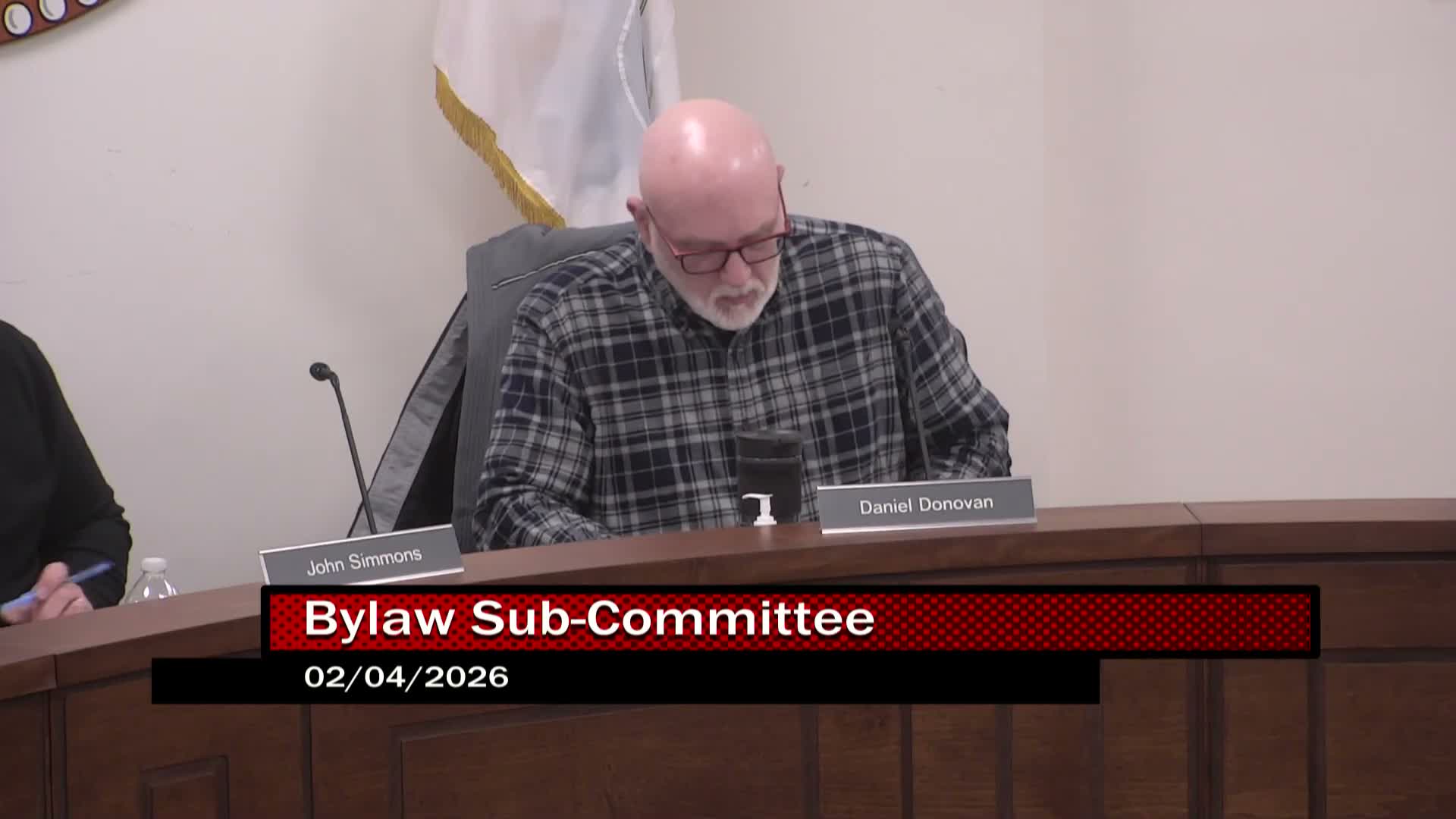
Planning board leaders presented a proposed Multiuse Overlay (MXO) zoning bylaw to the North Attleboro Bylaw Subcommittee on Feb. 4, pitching the change as a tool to encourage adaptive reuse of underused commercial property and broaden the town’s economic base.
Jason Gittle, chairman of the Planning Board, said the draft bylaw grew from a year of work and three core elements: the bylaw text, design and dimensional standards, and mapped overlay boundaries. "We decided to climb an altitude and take a look at the town as a whole," Gittle said, arguing the overlay targets gateway corridors and sites of ‘cement sprawl’ where different uses could be appropriate.
Town Planner Gil Hilario told the committee the MXO would not replace existing zoning but would sit on top of it as an optional overlay. "The underlying zoning remains," Hilario said. "MXO is available if you want to come talk to us and check us out." He and Gittle emphasized that most applications would be reviewed under the special-permit process so the town retains control over outcomes.
Committee members praised the intent but pressed staff on legal and practical safeguards. Councilor Wagner warned that denying a special permit without concrete, defensible findings can lead to litigation; Hilario and Gittle responded that the overlay preserves the underlying district’s rights and that denials would be tied to standard criteria such as change to neighborhood character. Chair Donovan asked staff to obtain a formal opinion from the town attorney on the appeal timeline and defensibility under Massachusetts General Laws.
The presentation also covered design standards and waivers. Planners said the draft balances a short list of required standards with a broad waiver mechanism meant to encourage higher-quality development without unduly constraining innovative proposals. Councilors recommended leaning toward preferred rather than mandatory standards where possible and clarifying how waivers would be evaluated.
Planners noted a marketing and outreach component—branding the MXO and creating a public-facing web viewer and GIS map prepared with Stantec—to help residents understand what the overlay would and would not allow. Members asked that the public map use a single, clear color scheme and that any design distinctions between districts be explicit.
No formal vote was taken on the substance of the MXO. The committee unanimously voted to continue Measure 2026-046 to the Feb. 18 meeting so staff can provide additional legal guidance, map clarifications and any edits requested by the subcommittee.
The subcommittee expects further public hearings and more detailed materials, including a standardized zoning map and a town-attorney memo on appeal procedures, before the measure advances to a council vote.
Jason Gittle, chairman of the Planning Board, said the draft bylaw grew from a year of work and three core elements: the bylaw text, design and dimensional standards, and mapped overlay boundaries. "We decided to climb an altitude and take a look at the town as a whole," Gittle said, arguing the overlay targets gateway corridors and sites of ‘cement sprawl’ where different uses could be appropriate.
Town Planner Gil Hilario told the committee the MXO would not replace existing zoning but would sit on top of it as an optional overlay. "The underlying zoning remains," Hilario said. "MXO is available if you want to come talk to us and check us out." He and Gittle emphasized that most applications would be reviewed under the special-permit process so the town retains control over outcomes.
Committee members praised the intent but pressed staff on legal and practical safeguards. Councilor Wagner warned that denying a special permit without concrete, defensible findings can lead to litigation; Hilario and Gittle responded that the overlay preserves the underlying district’s rights and that denials would be tied to standard criteria such as change to neighborhood character. Chair Donovan asked staff to obtain a formal opinion from the town attorney on the appeal timeline and defensibility under Massachusetts General Laws.
The presentation also covered design standards and waivers. Planners said the draft balances a short list of required standards with a broad waiver mechanism meant to encourage higher-quality development without unduly constraining innovative proposals. Councilors recommended leaning toward preferred rather than mandatory standards where possible and clarifying how waivers would be evaluated.
Planners noted a marketing and outreach component—branding the MXO and creating a public-facing web viewer and GIS map prepared with Stantec—to help residents understand what the overlay would and would not allow. Members asked that the public map use a single, clear color scheme and that any design distinctions between districts be explicit.
No formal vote was taken on the substance of the MXO. The committee unanimously voted to continue Measure 2026-046 to the Feb. 18 meeting so staff can provide additional legal guidance, map clarifications and any edits requested by the subcommittee.
The subcommittee expects further public hearings and more detailed materials, including a standardized zoning map and a town-attorney memo on appeal procedures, before the measure advances to a council vote.
Don't Miss a Word: See the Full Meeting!
Go beyond summaries. Unlock every video, transcript, and key insight with a Founder Membership.
✓
Get instant access to full meeting videos
✓
Search and clip any phrase from complete transcripts
✓
Receive AI-powered summaries & custom alerts
✓
Enjoy lifetime, unrestricted access to government data
30-day money-back guarantee
