North Attleboro committee weighs licensing, inspections and fees for backyard chickens
February 16, 2026 | North Attleborough Public Schools, School Boards, Massachusetts
This article was created by AI summarizing key points discussed. AI makes mistakes, so for full details and context, please refer to the video of the full meeting. Please report any errors so we can fix them. Report an error »
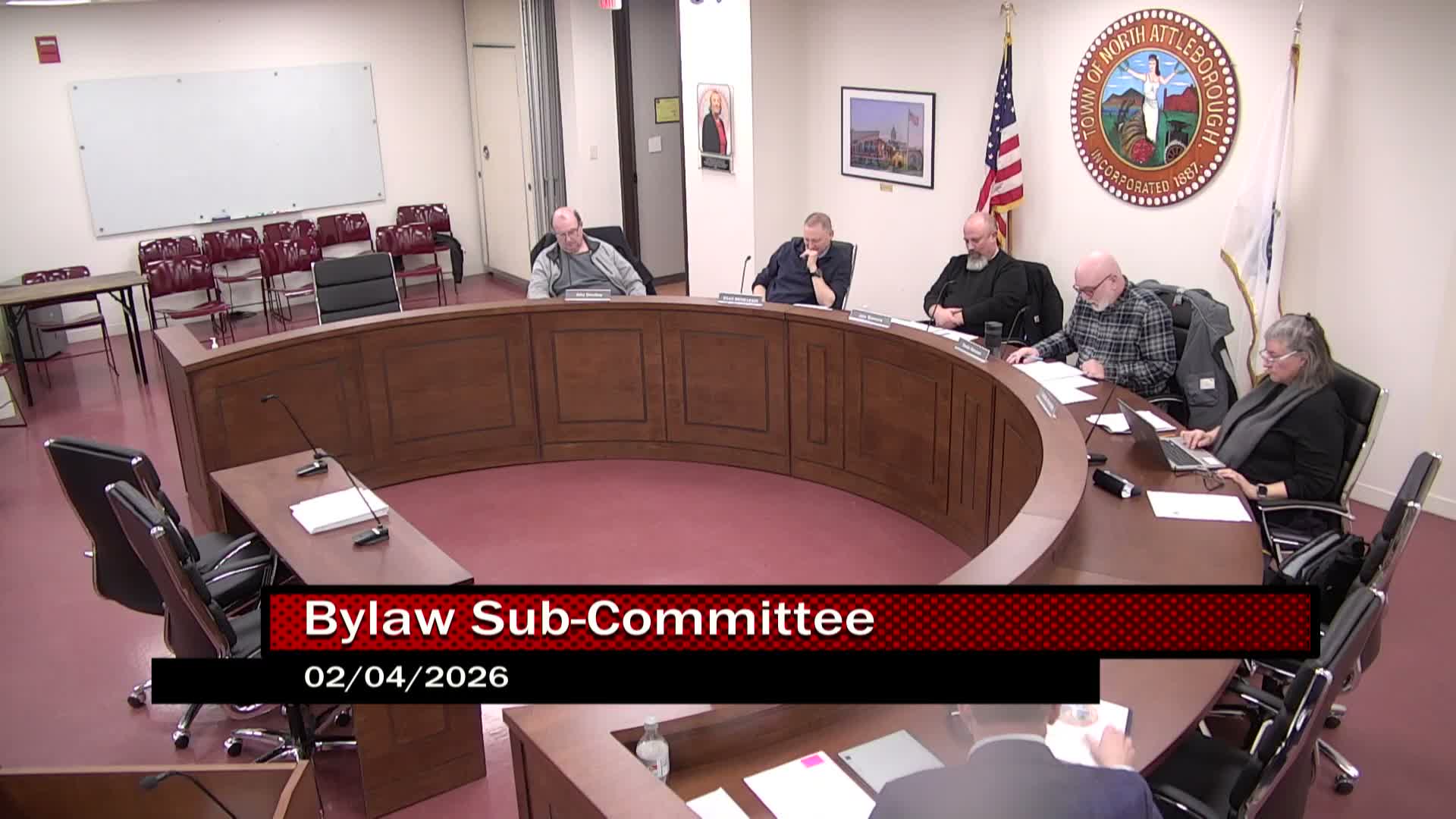
The Bylaw Subcommittee took up Measure 2026-042 on Feb. 4, a rewrite of proposed regulations for backyard chickens that would expand where poultry are permitted while adding licensing, inspection and sanitation provisions.
Councilor Wagner, who helped redraft the measure, said the committee narrowed the language to allow chickens without opening the door to other livestock, added a requirement that property owners give written permission for renters, and included pre-inspection by the Board of Health to assess site suitability and rodent concerns. "Prior to an application of a license, a board of health agent will look at the location," Wagner said, describing a pre-inspection to evaluate coop and run design.
The draft includes quantifiable guidance on coop and run sizing—roughly 2 to 4 square feet per bird inside a coop and 8 to 10 square feet per bird in a run—and revised setbacks (coops to be set back 15 feet from an adjoining property line) and a prohibition on placing coops within required front setbacks.
Town administration supplied an operational and financial analysis. Staff estimated roughly 120 existing coops in town and projected an additional 80 coops if the bylaw expands allowance. Administration estimated about one hour of staff time per inspection (animal control officer and health agent combined), producing a potential aggregate inspection burden of hundreds of hours. To avoid creating an ongoing budget gap, managers proposed a fee regime and suggested a part-time (under-19-hour) hire; an illustrative number discussed was a $125 licensing fee and a mix of initial and annual fees to make the program budget-neutral.
Councilors debated annual inspections versus an initial inspection with complaint-driven follow-ups. Several members, including Councilor Simmons, signaled support for limiting annual inspections to an initial inspection plus complaint-triggered visits; Health Director Ann Marie Fleming and others recommended combined pre-inspections (health agent and animal control officer) and at least periodic town oversight to protect neighbors and animal welfare.
Committee members asked staff to return with a fee schedule, a proposed grandfather clause for existing coops and refined language on waste management and run surfaces. The subcommittee voted to continue the chicken measure to the March 5 meeting to allow staff to model fees and staffing and to consult further with the Health Department.
Next steps: administration will propose a fee schedule and staffing options, and the Health Department and Animal Control will recommend coop/run sizing and enforcement language for the next meeting.
Councilor Wagner, who helped redraft the measure, said the committee narrowed the language to allow chickens without opening the door to other livestock, added a requirement that property owners give written permission for renters, and included pre-inspection by the Board of Health to assess site suitability and rodent concerns. "Prior to an application of a license, a board of health agent will look at the location," Wagner said, describing a pre-inspection to evaluate coop and run design.
The draft includes quantifiable guidance on coop and run sizing—roughly 2 to 4 square feet per bird inside a coop and 8 to 10 square feet per bird in a run—and revised setbacks (coops to be set back 15 feet from an adjoining property line) and a prohibition on placing coops within required front setbacks.
Town administration supplied an operational and financial analysis. Staff estimated roughly 120 existing coops in town and projected an additional 80 coops if the bylaw expands allowance. Administration estimated about one hour of staff time per inspection (animal control officer and health agent combined), producing a potential aggregate inspection burden of hundreds of hours. To avoid creating an ongoing budget gap, managers proposed a fee regime and suggested a part-time (under-19-hour) hire; an illustrative number discussed was a $125 licensing fee and a mix of initial and annual fees to make the program budget-neutral.
Councilors debated annual inspections versus an initial inspection with complaint-driven follow-ups. Several members, including Councilor Simmons, signaled support for limiting annual inspections to an initial inspection plus complaint-triggered visits; Health Director Ann Marie Fleming and others recommended combined pre-inspections (health agent and animal control officer) and at least periodic town oversight to protect neighbors and animal welfare.
Committee members asked staff to return with a fee schedule, a proposed grandfather clause for existing coops and refined language on waste management and run surfaces. The subcommittee voted to continue the chicken measure to the March 5 meeting to allow staff to model fees and staffing and to consult further with the Health Department.
Next steps: administration will propose a fee schedule and staffing options, and the Health Department and Animal Control will recommend coop/run sizing and enforcement language for the next meeting.
View the Full Meeting & All Its Details
This article offers just a summary. Unlock complete video, transcripts, and insights as a Founder Member.
✓
Watch full, unedited meeting videos
✓
Search every word spoken in unlimited transcripts
✓
AI summaries & real-time alerts (all government levels)
✓
Permanent access to expanding government content
30-day money-back guarantee
