Mount Clemens commission interviews four teams to design combined City Hall–fire station; deadline set to narrow field
February 16, 2026 | Mount Clemens, Macomb County, Michigan
This article was created by AI summarizing key points discussed. AI makes mistakes, so for full details and context, please refer to the video of the full meeting. Please report any errors so we can fix them. Report an error »
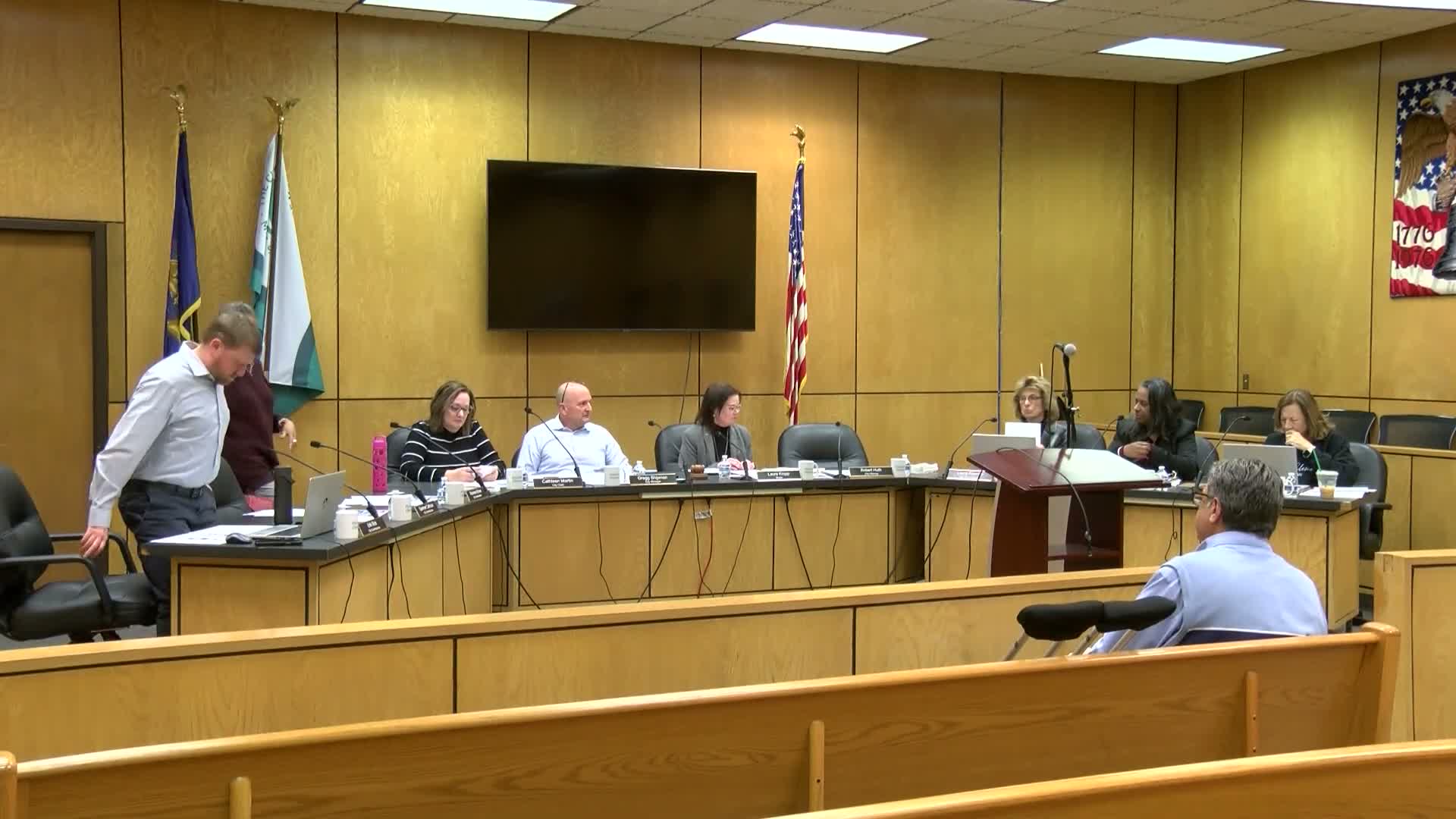
Mount Clemens — The City Commission on (work session) night interviewed four architectural and engineering teams competing to design a combined City Hall and fire station and asked commissioners to submit their preferences to city staff by the end of the workday Friday so the commission can narrow candidates at its regular meeting Tuesday.
The interviews followed a standardized process: each commissioner asked the same set of pre‑distributed questions of each team. Firms represented were Whiteman; Detroit Architectural Group (with BKB Group and Matrix Consulting Engineers as partners); Auger Klein Architects; and Partners in Architecture, a local Mount Clemens firm that performed the city’s earlier feasibility work.
Firms described a phased delivery that begins with programming and stakeholder workshops, moves through schematic design and design development, then produces construction documents, bidding and construction administration. DAG and Auger Klein cited schedules in the range of roughly 20–28 weeks for the design phases; Whiteman stressed that compressing the RFP schedule increases the risk of change orders.
Several firms recommended early field verification and geotechnical work to limit unknowns in the renovation. As one presenter put it, the team begins "with the end in mind" and tries to verify existing conditions early to avoid the surprise change orders that often accompany renovations. Partners in Architecture reminded the commission it had already performed a feasibility assessment for the city and offered an inclusive-fee approach that, the firm said, eliminates routine reimbursables such as travel.
Cost control and fee structure were recurring themes. One team described its fee as a fixed percentage (6.2%) of a project budget they used as a baseline for pricing, noting that reimbursables such as environmental testing or specialty surveys may be quoted separately. Several teams said furniture, fixtures and equipment (FF&E) selection is commonly treated as an additional service, not included in base design fees.
Public engagement approaches ranged from small steering committees and one‑on‑one stakeholder interviews to larger town halls and online polling. Firms said engaging potential critics early often produces better outcomes and local advocates who can support the project through approvals.
Commissioners discussed next steps and procurement constraints in the final discussion. Staff asked each commissioner to email Greg (city staff) with their top choices by Friday so the commission can either place a nomination on the Tuesday agenda or continue discussion. Commissioners also noted the city’s purchasing policy that gives preference to local firms when proposals are close; the commission confirmed there are no state grant or union requirements that would mandate union labor for this work.
The meeting concluded with a motion to adjourn and a voice vote.
The interviews followed a standardized process: each commissioner asked the same set of pre‑distributed questions of each team. Firms represented were Whiteman; Detroit Architectural Group (with BKB Group and Matrix Consulting Engineers as partners); Auger Klein Architects; and Partners in Architecture, a local Mount Clemens firm that performed the city’s earlier feasibility work.
Firms described a phased delivery that begins with programming and stakeholder workshops, moves through schematic design and design development, then produces construction documents, bidding and construction administration. DAG and Auger Klein cited schedules in the range of roughly 20–28 weeks for the design phases; Whiteman stressed that compressing the RFP schedule increases the risk of change orders.
Several firms recommended early field verification and geotechnical work to limit unknowns in the renovation. As one presenter put it, the team begins "with the end in mind" and tries to verify existing conditions early to avoid the surprise change orders that often accompany renovations. Partners in Architecture reminded the commission it had already performed a feasibility assessment for the city and offered an inclusive-fee approach that, the firm said, eliminates routine reimbursables such as travel.
Cost control and fee structure were recurring themes. One team described its fee as a fixed percentage (6.2%) of a project budget they used as a baseline for pricing, noting that reimbursables such as environmental testing or specialty surveys may be quoted separately. Several teams said furniture, fixtures and equipment (FF&E) selection is commonly treated as an additional service, not included in base design fees.
Public engagement approaches ranged from small steering committees and one‑on‑one stakeholder interviews to larger town halls and online polling. Firms said engaging potential critics early often produces better outcomes and local advocates who can support the project through approvals.
Commissioners discussed next steps and procurement constraints in the final discussion. Staff asked each commissioner to email Greg (city staff) with their top choices by Friday so the commission can either place a nomination on the Tuesday agenda or continue discussion. Commissioners also noted the city’s purchasing policy that gives preference to local firms when proposals are close; the commission confirmed there are no state grant or union requirements that would mandate union labor for this work.
The meeting concluded with a motion to adjourn and a voice vote.
Don't Miss a Word: See the Full Meeting!
Go beyond summaries. Unlock every video, transcript, and key insight with a Founder Membership.
✓
Get instant access to full meeting videos
✓
Search and clip any phrase from complete transcripts
✓
Receive AI-powered summaries & custom alerts
✓
Enjoy lifetime, unrestricted access to government data
30-day money-back guarantee
