Guam bill proposes wider appointment sources, lower quorum and administrative penalties for Ethics Commission
February 16, 2026 | General Government Operations and Appropriations , Legislative, Guam, International
This article was created by AI summarizing key points discussed. AI makes mistakes, so for full details and context, please refer to the video of the full meeting. Please report any errors so we can fix them. Report an error »
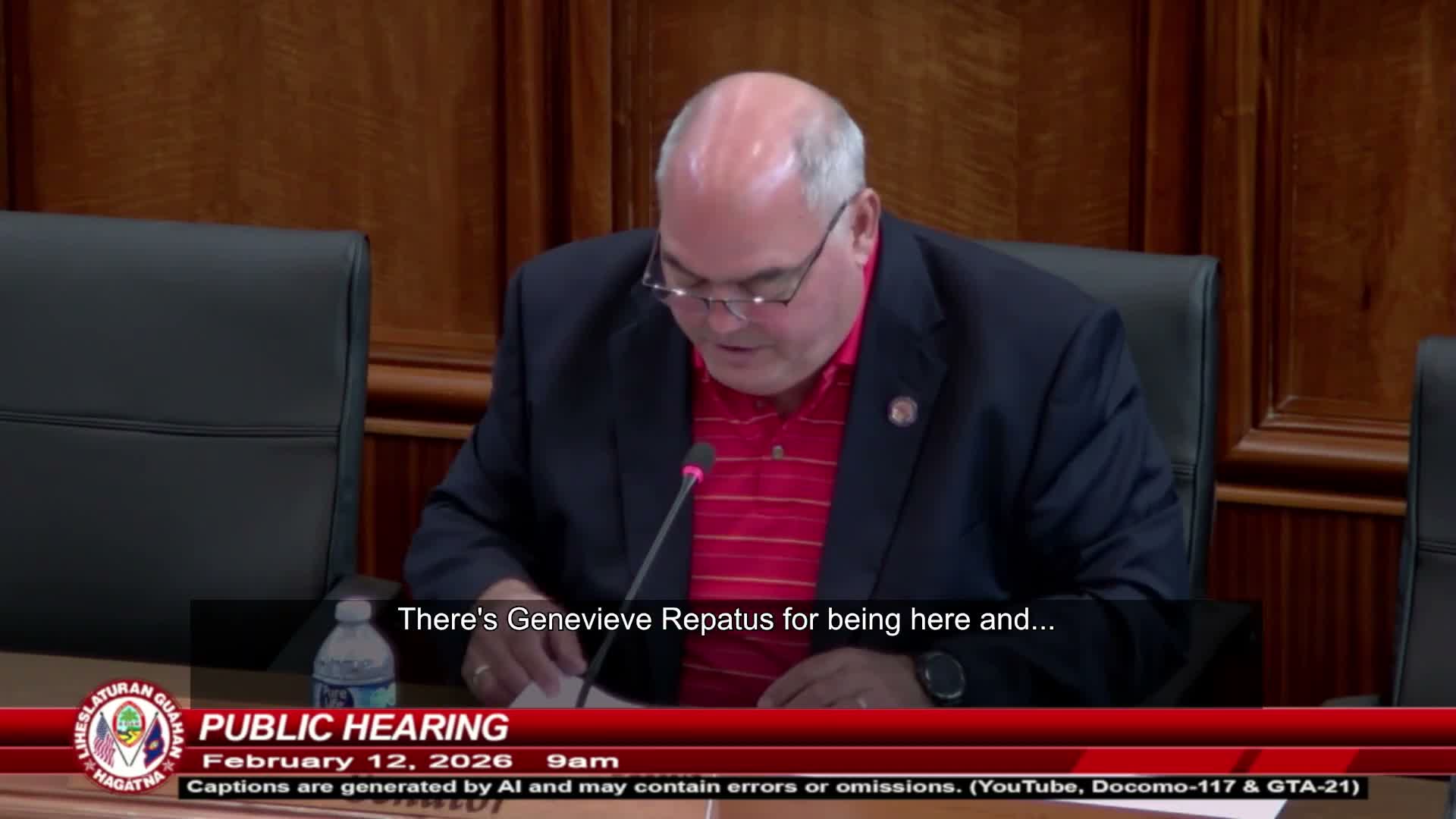
Bill 2‑14‑38, introduced by Senator Sean Gumatauto and heard Feb. 12 by the Committee on Finance and Government Operations, seeks to amend Article 3 of Chapter 15, Title 4 of the Guam Code Annotated to strengthen the independence and effectiveness of the Guam Ethics Commission.
Sponsor Sean Gumatauto said the measure responds to community suggestions and aims to address vacancies and quorum problems that have hampered the commission's work. "The bill proposes to modify the current composition of the Guam Ethics Commission," he said, noting the commission was established by Public Law 23‑105 and implemented in 2019.
Niko Fujikawa, the commission's executive director, said the commission supports the bill's intent and proposed specific amendments: allow a quorum of four members (instead of five) to prevent paralysis when vacancies occur, and authorize administrative penalties for ethics code violations so the commission may enforce outcomes rather than merely remanding matters to agencies. "A quorum of 4 will effectively allow our agency to carry out its duties in a timely and responsible manner," Fujikawa testified.
The judiciary, represented by Danielle Rossetti, Administrator of the Courts, urged caution on one draft provision that would allow the Chief Justice to appoint a member. Rossetti said the provision "would blur institutional boundaries" and could create the appearance of judicial entanglement in matters that may later be litigated. She recommended removing the Chief Justice appointment provision to preserve judicial neutrality.
Committee members and witnesses also discussed alternatives for non‑governor appointees, including retired judges, the Guam Bar Association, SHRM and chambers of commerce. Senator Gumatauto said the bill can be refined in committee markup and asked colleagues to submit written input. Fujikawa noted the commission is reviewing Hawaii's Chapter 84 as a model and that a revised statutory proposal is being adapted to Guam law.
The hearing ended with the author saying he looks forward to committee markup; no committee vote was taken during the public hearing.
Sponsor Sean Gumatauto said the measure responds to community suggestions and aims to address vacancies and quorum problems that have hampered the commission's work. "The bill proposes to modify the current composition of the Guam Ethics Commission," he said, noting the commission was established by Public Law 23‑105 and implemented in 2019.
Niko Fujikawa, the commission's executive director, said the commission supports the bill's intent and proposed specific amendments: allow a quorum of four members (instead of five) to prevent paralysis when vacancies occur, and authorize administrative penalties for ethics code violations so the commission may enforce outcomes rather than merely remanding matters to agencies. "A quorum of 4 will effectively allow our agency to carry out its duties in a timely and responsible manner," Fujikawa testified.
The judiciary, represented by Danielle Rossetti, Administrator of the Courts, urged caution on one draft provision that would allow the Chief Justice to appoint a member. Rossetti said the provision "would blur institutional boundaries" and could create the appearance of judicial entanglement in matters that may later be litigated. She recommended removing the Chief Justice appointment provision to preserve judicial neutrality.
Committee members and witnesses also discussed alternatives for non‑governor appointees, including retired judges, the Guam Bar Association, SHRM and chambers of commerce. Senator Gumatauto said the bill can be refined in committee markup and asked colleagues to submit written input. Fujikawa noted the commission is reviewing Hawaii's Chapter 84 as a model and that a revised statutory proposal is being adapted to Guam law.
The hearing ended with the author saying he looks forward to committee markup; no committee vote was taken during the public hearing.
Don't Miss a Word: See the Full Meeting!
Go beyond summaries. Unlock every video, transcript, and key insight with a Founder Membership.
✓
Get instant access to full meeting videos
✓
Search and clip any phrase from complete transcripts
✓
Receive AI-powered summaries & custom alerts
✓
Enjoy lifetime, unrestricted access to government data
30-day money-back guarantee
