Panel hears $890,000 request to modernize Legislature IT, citing outages and cybersecurity concerns
February 16, 2026 | General Government Operations and Appropriations , Legislative, Guam, International
This article was created by AI summarizing key points discussed. AI makes mistakes, so for full details and context, please refer to the video of the full meeting. Please report any errors so we can fix them. Report an error »
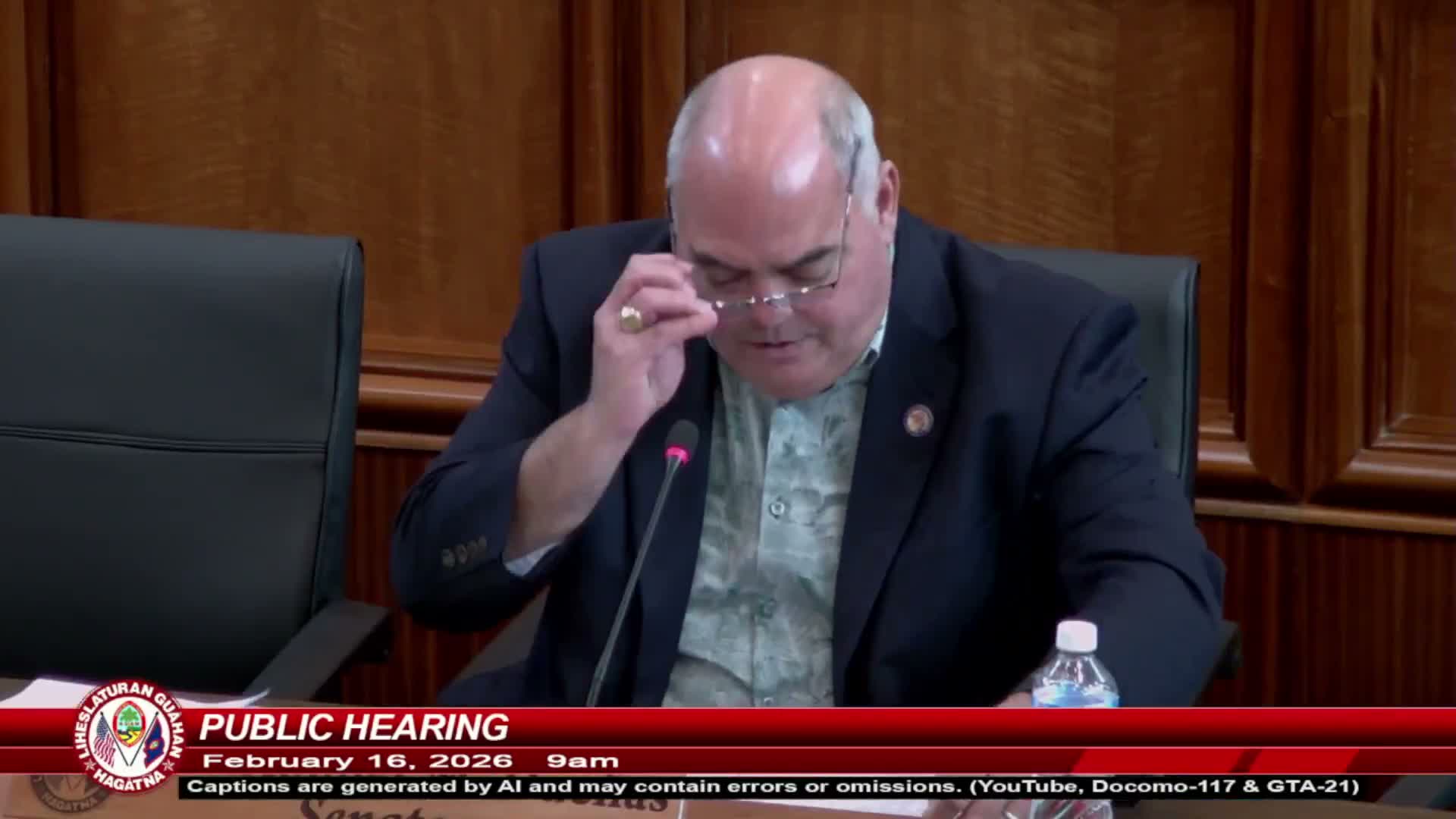
Supporters of Bill 262-38 told the committee on Feb. 16 that the Guam Legislature’s core network hardware and backup systems are obsolete, that recent failures disrupted operations, and that investing in enterprise network gear and cybersecurity controls is necessary to protect legislative functions and public access.
The bill, introduced on behalf of Vice Speaker Anthony Atta and presented by Chair (read statement), would appropriate $890,000 to replace end‑of‑life switches, routers and firewalls across the Guam Congress Building and district offices; procure updated legislative drafting, publishing and automation software; fund third‑party penetration testing; and establish cloud‑based imaging and off‑site backups to meet National Institute of Standards and Technology (NIST) and Center for Internet Security (CIS) baseline controls.
Joanne Camacho, executive director of the Legislature, said the upgrades are not luxuries but needed minimums to protect sensitive legislative records and to restore reliable public access to hearings and sessions. "Upgrades which have not occurred in more than 10 years are simply no longer acceptable," she said. Justin Paredo from MIS presented a slide deck describing common cyber threats, recent local incidents including a ransomware event at Guam Memorial Hospital and the Legislature’s own May 2025 financial server failure that caused two to three weeks of system slowdowns and a multi‑week recovery.
MIS described a drawdown of deficiencies: aging network equipment, insufficient bandwidth (currently about 100 Mbps where MIS recommended enterprise‑grade 1 Gbps), lack of standardized configuration management, missing off‑site backups, and limited policy enforcement. MIS recommended layered controls, continuous monitoring and mandatory staff and office compliance with written cybersecurity policies.
Some senators welcomed the bill and recounted personal incidents (hacked email, lost records), but others pressed for a written modernization plan and prioritized procurements that would immediately restore live streaming and archival continuity. Committee members asked the administration to document procurement options, consult judiciary and University of Guam technical teams, and pursue federal grant possibilities where eligible. The chair said the committee will continue the hearing and seek a stable funding path in markup if some grant or special revenues are unavailable.
No appropriation vote was taken during the hearing; senators asked for a detailed modernization plan and procurement timeline ahead of markup and floor consideration.
The bill, introduced on behalf of Vice Speaker Anthony Atta and presented by Chair (read statement), would appropriate $890,000 to replace end‑of‑life switches, routers and firewalls across the Guam Congress Building and district offices; procure updated legislative drafting, publishing and automation software; fund third‑party penetration testing; and establish cloud‑based imaging and off‑site backups to meet National Institute of Standards and Technology (NIST) and Center for Internet Security (CIS) baseline controls.
Joanne Camacho, executive director of the Legislature, said the upgrades are not luxuries but needed minimums to protect sensitive legislative records and to restore reliable public access to hearings and sessions. "Upgrades which have not occurred in more than 10 years are simply no longer acceptable," she said. Justin Paredo from MIS presented a slide deck describing common cyber threats, recent local incidents including a ransomware event at Guam Memorial Hospital and the Legislature’s own May 2025 financial server failure that caused two to three weeks of system slowdowns and a multi‑week recovery.
MIS described a drawdown of deficiencies: aging network equipment, insufficient bandwidth (currently about 100 Mbps where MIS recommended enterprise‑grade 1 Gbps), lack of standardized configuration management, missing off‑site backups, and limited policy enforcement. MIS recommended layered controls, continuous monitoring and mandatory staff and office compliance with written cybersecurity policies.
Some senators welcomed the bill and recounted personal incidents (hacked email, lost records), but others pressed for a written modernization plan and prioritized procurements that would immediately restore live streaming and archival continuity. Committee members asked the administration to document procurement options, consult judiciary and University of Guam technical teams, and pursue federal grant possibilities where eligible. The chair said the committee will continue the hearing and seek a stable funding path in markup if some grant or special revenues are unavailable.
No appropriation vote was taken during the hearing; senators asked for a detailed modernization plan and procurement timeline ahead of markup and floor consideration.
View the Full Meeting & All Its Details
This article offers just a summary. Unlock complete video, transcripts, and insights as a Founder Member.
✓
Watch full, unedited meeting videos
✓
Search every word spoken in unlimited transcripts
✓
AI summaries & real-time alerts (all government levels)
✓
Permanent access to expanding government content
30-day money-back guarantee
