CASLA releases regional democracy report; leaders urge continued pressure on Cuba, Venezuela and Nicaragua
This article was created by AI summarizing key points discussed. AI makes mistakes, so for full details and context, please refer to the video of the full meeting. Please report any errors so we can fix them. Report an error »
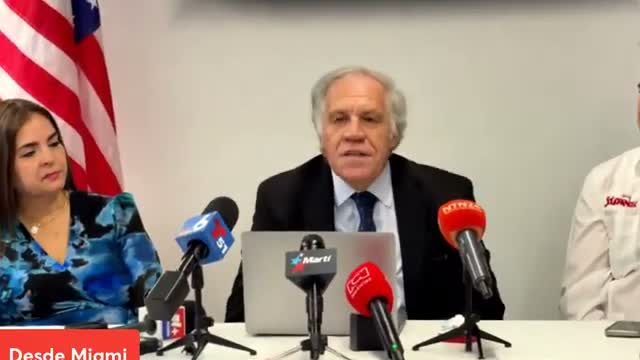
The CASLA Institute presented its first regional democracy report at a press conference that emphasized both recent shifts in Latin America and the continuing need for accountability. Former Organization of American States Secretary General Luis Almagro summarized the report, saying the regional context had changed "very sharply" after what participants repeatedly described as "3 de enero," and that democratic safeguards — from independent institutions to free, transparent elections — must be reinforced.
"The Inter‑American Democratic Charter is the fundamental instrument today for the defense of democracy in the region," Almagro said, adding that pressure and democratic institutions must operate in parallel to prevent backsliding. He listed Cuba, Nicaragua and Venezuela as countries where the institute will maintain early‑warning monitoring and assistance.
Tamara Suju, identified in the program as a lawyer and human‑rights advocate involved with CASLA's projects, described the institute's work assembling evidence for international processes and advocating for political prisoners. CASLA's stated projects include legal filings at the International Criminal Court, a sponsorship program to keep political prisoners visible, and human‑rights reporting intended to inform regional bodies.
Panelists framed the report as both a diagnosis and a tool for action. Almagro argued that transitions must avoid simple "cohabitation" with prior regimes and should instead include mechanisms for truth, justice and non‑repetition. The authors also urged continued use of electoral observation and institutional checks to challenge irregularities.
During a question‑and‑answer period, journalists pressed panelists on the practical implications of negotiations and on how the diaspora and international partners can support mobilization and evidence collection. The panel said that family groups, civil society and international partners should accompany domestic efforts with public visibility and legal support.
The press conference produced no formal actions or votes. Panelists said CASLA will continue to publish reporting and to support legal and advocacy work that can feed domestic and international accountability processes.
"The Inter‑American Democratic Charter is the fundamental instrument today for the defense of democracy in the region," Almagro said, adding that pressure and democratic institutions must operate in parallel to prevent backsliding. He listed Cuba, Nicaragua and Venezuela as countries where the institute will maintain early‑warning monitoring and assistance.
Tamara Suju, identified in the program as a lawyer and human‑rights advocate involved with CASLA's projects, described the institute's work assembling evidence for international processes and advocating for political prisoners. CASLA's stated projects include legal filings at the International Criminal Court, a sponsorship program to keep political prisoners visible, and human‑rights reporting intended to inform regional bodies.
Panelists framed the report as both a diagnosis and a tool for action. Almagro argued that transitions must avoid simple "cohabitation" with prior regimes and should instead include mechanisms for truth, justice and non‑repetition. The authors also urged continued use of electoral observation and institutional checks to challenge irregularities.
During a question‑and‑answer period, journalists pressed panelists on the practical implications of negotiations and on how the diaspora and international partners can support mobilization and evidence collection. The panel said that family groups, civil society and international partners should accompany domestic efforts with public visibility and legal support.
The press conference produced no formal actions or votes. Panelists said CASLA will continue to publish reporting and to support legal and advocacy work that can feed domestic and international accountability processes.
Don't Miss a Word: See the Full Meeting!
Go beyond summaries. Unlock every video, transcript, and key insight with a Founder Membership.
✓
Get instant access to full meeting videos
✓
Search and clip any phrase from complete transcripts
✓
Receive AI-powered summaries & custom alerts
✓
Enjoy lifetime, unrestricted access to government data
30-day money-back guarantee
