Short-form H.63 would pilot EV charging at service stations, bolster transit and study VMT targets, presenters say
February 14, 2026 | Transportation, HOUSE OF REPRESENTATIVES, Committees, Legislative , Vermont
This article was created by AI summarizing key points discussed. AI makes mistakes, so for full details and context, please refer to the video of the full meeting. Please report any errors so we can fix them. Report an error »
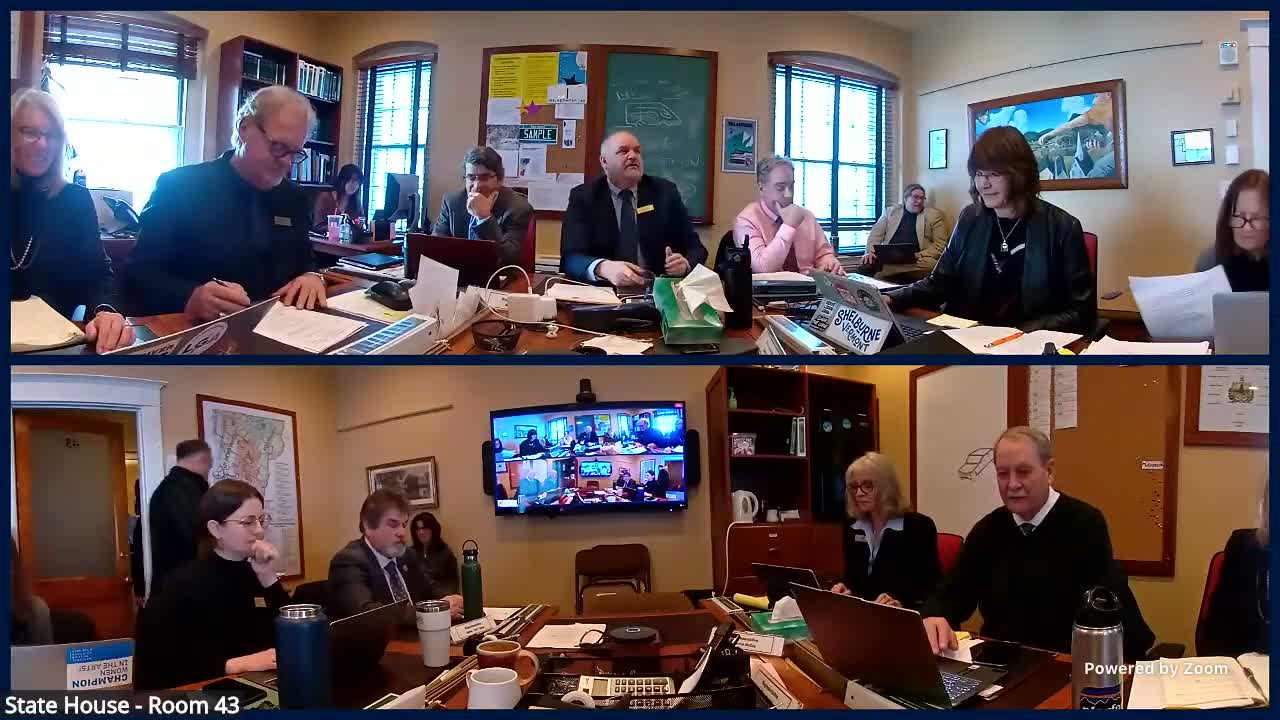
A representative introduced H.63 in short form and Candace White and others described the bill’s multi-part approach to transportation policy.
Candace White, speaking for bill proponents, described four brief pillars: a pilot program to incentivize service stations to install electric vehicle supply equipment and expand services at those sites; pilots to stabilize and expand public transit and explore autonomous vehicles; a potential state-run rideshare model to keep revenue local and support transit; and consumer incentives such as tax credits.
On tax credits White said the draft proposes a $5,000 nonrefundable tax credit for each new electric vehicle sold at retail and a $2,500 credit for used electric vehicles. "We're not asking for an appropriation" for the credit framework at introduction, she said, noting revenue impacts would require review by Ways and Means.
Section-level proposals described during the session included rebalancing the Transportation Alternatives Program from 50/50 (transportation/environmental mitigation) toward an 80/20 split favoring transportation alternatives, study and clarification of rules for EV chargers (including payment methods and rules for condos/HOAs), support for Drive Electric Vermont and e-bike incentives, pollinator habitat plantings in rights-of-way, and municipal salt-applicator training to reduce environmental impacts.
Committee members asked for cost estimates, details about appropriations (some sections contained placeholders), and how pilots would function in rural areas. Members also flagged questions about implementation in places with minimal ridership and how a state rideshare would interact with existing services and private platforms.
Presenters emphasized piloting and study in many sections rather than immediate large appropriations; several members asked staff to assemble a summary and requested follow-up testimony from state agencies and transit providers. No committee vote was taken on H.63 during the session.
Candace White, speaking for bill proponents, described four brief pillars: a pilot program to incentivize service stations to install electric vehicle supply equipment and expand services at those sites; pilots to stabilize and expand public transit and explore autonomous vehicles; a potential state-run rideshare model to keep revenue local and support transit; and consumer incentives such as tax credits.
On tax credits White said the draft proposes a $5,000 nonrefundable tax credit for each new electric vehicle sold at retail and a $2,500 credit for used electric vehicles. "We're not asking for an appropriation" for the credit framework at introduction, she said, noting revenue impacts would require review by Ways and Means.
Section-level proposals described during the session included rebalancing the Transportation Alternatives Program from 50/50 (transportation/environmental mitigation) toward an 80/20 split favoring transportation alternatives, study and clarification of rules for EV chargers (including payment methods and rules for condos/HOAs), support for Drive Electric Vermont and e-bike incentives, pollinator habitat plantings in rights-of-way, and municipal salt-applicator training to reduce environmental impacts.
Committee members asked for cost estimates, details about appropriations (some sections contained placeholders), and how pilots would function in rural areas. Members also flagged questions about implementation in places with minimal ridership and how a state rideshare would interact with existing services and private platforms.
Presenters emphasized piloting and study in many sections rather than immediate large appropriations; several members asked staff to assemble a summary and requested follow-up testimony from state agencies and transit providers. No committee vote was taken on H.63 during the session.
Don't Miss a Word: See the Full Meeting!
Go beyond summaries. Unlock every video, transcript, and key insight with a Founder Membership.
✓
Get instant access to full meeting videos
✓
Search and clip any phrase from complete transcripts
✓
Receive AI-powered summaries & custom alerts
✓
Enjoy lifetime, unrestricted access to government data
30-day money-back guarantee
