Committee hears testimony on H.514 to clarify minors' ability to change last name with one parent's consent
February 14, 2026 | Government Operations & Military Affairs, HOUSE OF REPRESENTATIVES, Committees, Legislative , Vermont
This article was created by AI summarizing key points discussed. AI makes mistakes, so for full details and context, please refer to the video of the full meeting. Please report any errors so we can fix them. Report an error »
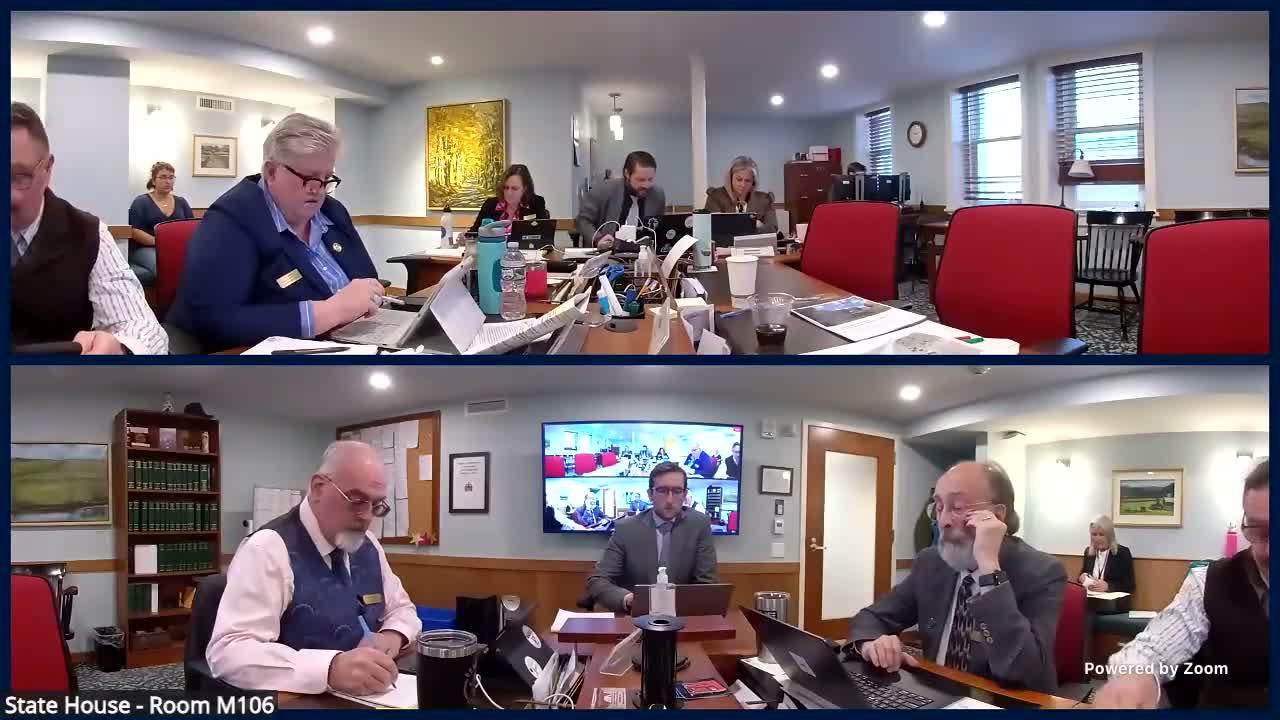
The Government Operations & Military Affairs committee on Feb. 13 heard testimony on H.514, a short-form bill proposing to amend statutes governing vital records and probate filings so a minor could change a legal name with the consent of one parent or guardian.
"The bill proposes to amend statutes governing vital records and court instruments that are used to change the legal name of a minor, and the proposal is to allow a minor to change the minor's name with consent of 1 parent or guardian," said Tucker Anderson, legislative counsel, summarizing the bill's purpose and offering to draft statutory language if the committee identifies a statutory gap.
Why it matters: Witnesses said some children face practical and safety barriers when a second parent's consent is sought. Brenda Siegel, executive director of End Homelessness Vermont, testified in her capacity as a mother and survivor that her family faced an expensive, years-long process to change a child's name after the child's father abandoned the family and the family feared contacting him. "It cost us a total of $800 to change all of his documents, and we still haven't changed his birth certificate," Siegel said, urging the committee to consider a statutory clarification that would reduce such barriers while preserving protections for children.
Siegel described the bill as a short form and offered possible guardrails the committee could consider, such as requiring a timeline of abandonment (for example, five years) or an age cutoff (for example, 14) before certain documents would be eligible for streamlined change. She also emphasized the bill would still require one parent's or a guardian's signature rather than allowing unilateral name changes by minors.
State court staff echoed the need for clarity but said the underlying statutory picture appears murky. "The statute doesn't require 2 parents' names," said Terry Corson (transcript: "state co administrator"), noting that probate courts routinely weigh a minor's "best interest" and that judges can schedule hearings, receive evidence, and in some cases waive notice requirements when safety concerns exist. Corson said the reference seen by some — described in testimony as a form or informational sheet — does not itself create a binding two-parent consent rule.
Committee members pressed staff on the separation between statutes and court rules. Counsel said he could not find an express statutory requirement for two-parent consent in the cited authorities and recommended working with judiciary attorneys and the probate-oversight bodies to determine whether statutory amendment is needed or whether the issue rests with court forms or rules.
Representative Hagen asked whether name-change hearings involving minors are confidential; Corson replied that most probate hearings are public unless they are in a juvenile or adoption docket, and that judges have discretion to protect privacy or waive notice when warranted by safety risks.
No motion or vote occurred during the session. Counsel offered to work with judiciary attorneys to trace overlapping authority between Title 18 (vital records) and Title 15 (probate/court documents) and to draft statutory language if the committee decides to proceed. Siegel offered contacts for additional witnesses, including her son Ajna Siegel, to provide firsthand accounts.
Next steps: The committee did not take action on H.514 and will reconvene on Tuesday, Feb. 17, when members may decide whether to request further research from counsel, hear additional witnesses, or consider drafting specific statutory language.
Sources: Testimony and answers by Tucker Anderson (legislative counsel), Brenda Siegel (executive director, End Homelessness Vermont), and Terry Corson (state co administrator) at the Government Operations & Military Affairs committee hearing on Feb. 13.
"The bill proposes to amend statutes governing vital records and court instruments that are used to change the legal name of a minor, and the proposal is to allow a minor to change the minor's name with consent of 1 parent or guardian," said Tucker Anderson, legislative counsel, summarizing the bill's purpose and offering to draft statutory language if the committee identifies a statutory gap.
Why it matters: Witnesses said some children face practical and safety barriers when a second parent's consent is sought. Brenda Siegel, executive director of End Homelessness Vermont, testified in her capacity as a mother and survivor that her family faced an expensive, years-long process to change a child's name after the child's father abandoned the family and the family feared contacting him. "It cost us a total of $800 to change all of his documents, and we still haven't changed his birth certificate," Siegel said, urging the committee to consider a statutory clarification that would reduce such barriers while preserving protections for children.
Siegel described the bill as a short form and offered possible guardrails the committee could consider, such as requiring a timeline of abandonment (for example, five years) or an age cutoff (for example, 14) before certain documents would be eligible for streamlined change. She also emphasized the bill would still require one parent's or a guardian's signature rather than allowing unilateral name changes by minors.
State court staff echoed the need for clarity but said the underlying statutory picture appears murky. "The statute doesn't require 2 parents' names," said Terry Corson (transcript: "state co administrator"), noting that probate courts routinely weigh a minor's "best interest" and that judges can schedule hearings, receive evidence, and in some cases waive notice requirements when safety concerns exist. Corson said the reference seen by some — described in testimony as a form or informational sheet — does not itself create a binding two-parent consent rule.
Committee members pressed staff on the separation between statutes and court rules. Counsel said he could not find an express statutory requirement for two-parent consent in the cited authorities and recommended working with judiciary attorneys and the probate-oversight bodies to determine whether statutory amendment is needed or whether the issue rests with court forms or rules.
Representative Hagen asked whether name-change hearings involving minors are confidential; Corson replied that most probate hearings are public unless they are in a juvenile or adoption docket, and that judges have discretion to protect privacy or waive notice when warranted by safety risks.
No motion or vote occurred during the session. Counsel offered to work with judiciary attorneys to trace overlapping authority between Title 18 (vital records) and Title 15 (probate/court documents) and to draft statutory language if the committee decides to proceed. Siegel offered contacts for additional witnesses, including her son Ajna Siegel, to provide firsthand accounts.
Next steps: The committee did not take action on H.514 and will reconvene on Tuesday, Feb. 17, when members may decide whether to request further research from counsel, hear additional witnesses, or consider drafting specific statutory language.
Sources: Testimony and answers by Tucker Anderson (legislative counsel), Brenda Siegel (executive director, End Homelessness Vermont), and Terry Corson (state co administrator) at the Government Operations & Military Affairs committee hearing on Feb. 13.
Don't Miss a Word: See the Full Meeting!
Go beyond summaries. Unlock every video, transcript, and key insight with a Founder Membership.
✓
Get instant access to full meeting videos
✓
Search and clip any phrase from complete transcripts
✓
Receive AI-powered summaries & custom alerts
✓
Enjoy lifetime, unrestricted access to government data
30-day money-back guarantee
