Lakeville panel seeks options on 179D energy review, declines immediate $18,000 approval
February 15, 2026 | Town of Lakeville, Plymouth County, Massachusetts
This article was created by AI summarizing key points discussed. AI makes mistakes, so for full details and context, please refer to the video of the full meeting. Please report any errors so we can fix them. Report an error »
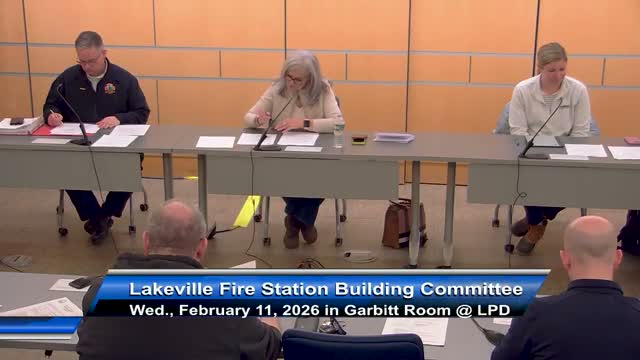
The Town of Lakeville Fire Station Building Committee agreed on Wednesday to seek additional options and accountant guidance before approving a proposed 179D energy‑efficiency study for the new fire station.
Chair (Speaker 1) opened agenda item No. 5 by asking the design team and energy advisory representatives to explain the proposed study and its implications for the town. Speaker 2, who represents the energy advisory perspective, said Lakeville has been a green community for more than a decade and supports independent review, but expressed concern about cost: "I don't love spending close to $18,000 on reviewing this, to be honest with you," Speaker 2 said.
Design/consultant representative Speaker 9 told the committee that the 179D federal tax deduction historically operates as a tax deduction that often benefits building designers and architects rather than municipalities, and that the firm had provided a separate, alternative proposal for a third‑party review. "My understanding of it is it only is a deduction for designers, and it can't be taken by anyone else," Speaker 9 said.
Committee members debated the likely returns and the risk to schedule. Speaker 3 said a full study might recommend changes that would be difficult or costly to implement for a purpose‑built station and warned that some recommendations could be "disastrous" if major systems were altered late in construction. Chief (Speaker 8) asked whether pursuing the study could delay the opening and affect operations, noting the station's role in public safety.
Several members proposed lower‑cost alternatives. Speaker 5 and others recommended starting with the project's commissioning agent or an envelope specialist to review specific detailing (framing, insulation, door seals) rather than commissioning a full energy model. Speaker 6 recommended first getting a firm accounting determination on whether 179D would produce municipal benefit for this project and then soliciting multiple (three to four) proposals.
The committee did not vote to fund the $18,000 proposal that evening. Instead members expressed consensus to: request an accounting opinion on 179D applicability to the town and contractor; solicit multiple proposals including lower‑cost envelope or commissioning reviews; and return to the committee with options. Speaker 6 said staff would begin outreach immediately and that a review could take roughly three to four weeks to complete once a vendor is engaged.
Next steps: staff will get accounting guidance on 179D, solicit alternative proposals, and present options to the committee for a future decision. The committee emphasized it would reject any recommendation that would jeopardize the project schedule or operational readiness.
Chair (Speaker 1) opened agenda item No. 5 by asking the design team and energy advisory representatives to explain the proposed study and its implications for the town. Speaker 2, who represents the energy advisory perspective, said Lakeville has been a green community for more than a decade and supports independent review, but expressed concern about cost: "I don't love spending close to $18,000 on reviewing this, to be honest with you," Speaker 2 said.
Design/consultant representative Speaker 9 told the committee that the 179D federal tax deduction historically operates as a tax deduction that often benefits building designers and architects rather than municipalities, and that the firm had provided a separate, alternative proposal for a third‑party review. "My understanding of it is it only is a deduction for designers, and it can't be taken by anyone else," Speaker 9 said.
Committee members debated the likely returns and the risk to schedule. Speaker 3 said a full study might recommend changes that would be difficult or costly to implement for a purpose‑built station and warned that some recommendations could be "disastrous" if major systems were altered late in construction. Chief (Speaker 8) asked whether pursuing the study could delay the opening and affect operations, noting the station's role in public safety.
Several members proposed lower‑cost alternatives. Speaker 5 and others recommended starting with the project's commissioning agent or an envelope specialist to review specific detailing (framing, insulation, door seals) rather than commissioning a full energy model. Speaker 6 recommended first getting a firm accounting determination on whether 179D would produce municipal benefit for this project and then soliciting multiple (three to four) proposals.
The committee did not vote to fund the $18,000 proposal that evening. Instead members expressed consensus to: request an accounting opinion on 179D applicability to the town and contractor; solicit multiple proposals including lower‑cost envelope or commissioning reviews; and return to the committee with options. Speaker 6 said staff would begin outreach immediately and that a review could take roughly three to four weeks to complete once a vendor is engaged.
Next steps: staff will get accounting guidance on 179D, solicit alternative proposals, and present options to the committee for a future decision. The committee emphasized it would reject any recommendation that would jeopardize the project schedule or operational readiness.
View the Full Meeting & All Its Details
This article offers just a summary. Unlock complete video, transcripts, and insights as a Founder Member.
✓
Watch full, unedited meeting videos
✓
Search every word spoken in unlimited transcripts
✓
AI summaries & real-time alerts (all government levels)
✓
Permanent access to expanding government content
30-day money-back guarantee
