U.S. Secretary of State urges renewed transatlantic alliance, warns of deindustrialization and migration pressures
February 14, 2026 | US Department of State
This article was created by AI summarizing key points discussed. AI makes mistakes, so for full details and context, please refer to the video of the full meeting. Please report any errors so we can fix them. Report an error »
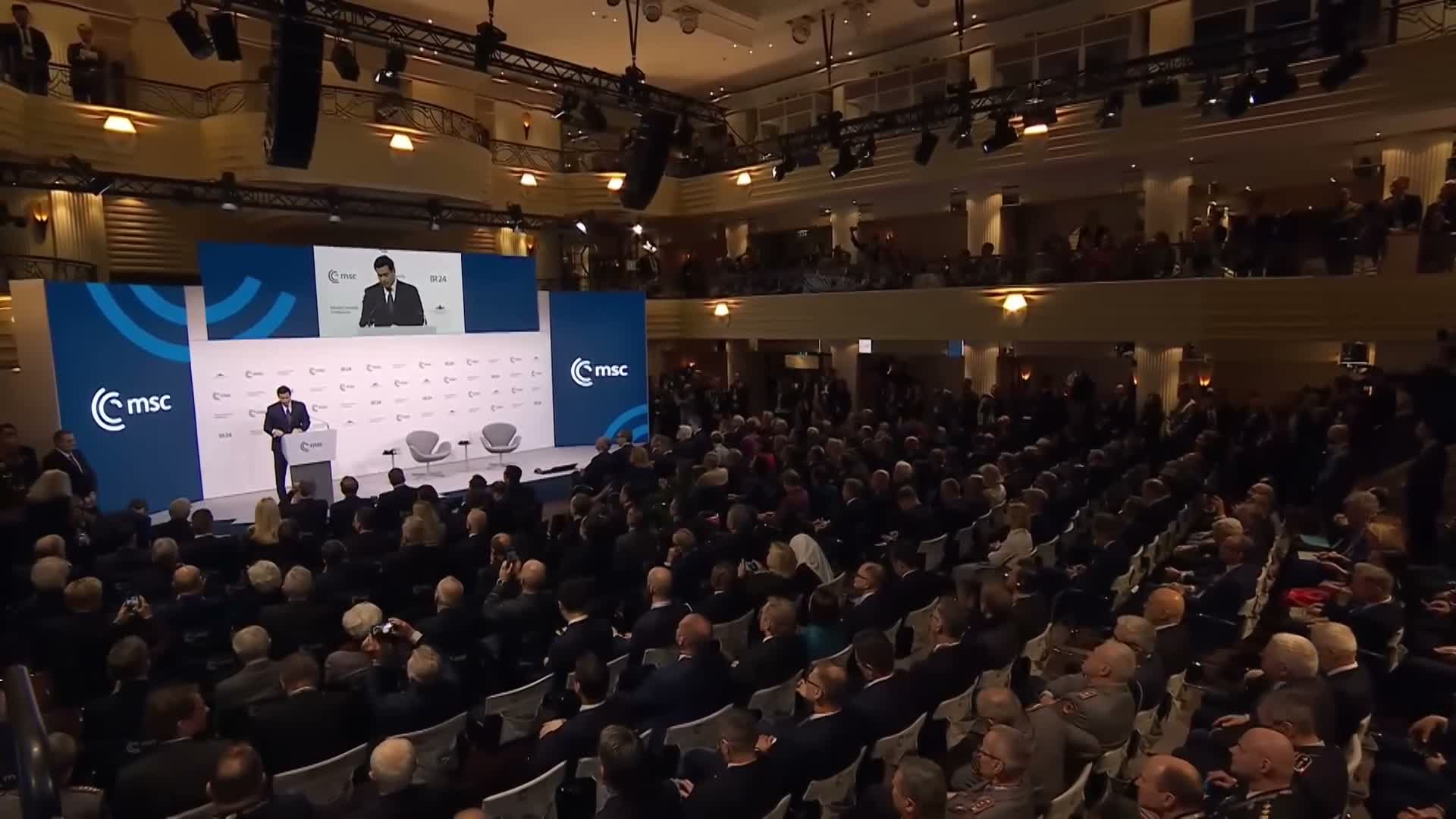
At the Munich Security Conference, the U.S. Secretary of State urged Western governments to rebuild industrial capacity and strengthen the transatlantic alliance to defend ‘‘a great civilization’’ and protect national interests. He framed the 1963 origins of the conference and the Cold War as proof the West can unite against existential threats, then warned that complacency after that victory produced damaging policies.
The Secretary argued that a post‑Cold War faith in unfettered trade failed to account for strategic competition, saying it ‘‘handed control of our critical supply chains to both adversaries and rivals’’ and contributed to the shuttering of domestic plants and lost middle‑class jobs. He described deindustrialization as ‘‘a conscious policy choice’’ that left some countries dependent on foreign suppliers.
He also criticized contemporary energy policies, saying, ‘‘To appease a climate cult, we have imposed energy policies on ourselves that are impoverishing our people,’’ and said competitors were exploiting fossil fuels for leverage. On migration, he described recent flows as ‘‘transforming and destabilizing societies’’ and framed border control as a ‘‘fundamental act of national sovereignty.’’
Arguing for economic renewal, the Secretary urged investment in commercial space travel, artificial intelligence, industrial automation, and secure supply chains for critical minerals. He said the West should compete for market share in the Global South while rebuilding capacity at home.
The speech included a pointed critique of international institutions: while the Secretary called the United Nations a ‘‘tool for good,’’ he said that on several pressing crises it had ‘‘no answers’’ and pointed to U.S. efforts in recent conflicts as evidence of American leadership. He cited Ukraine, Gaza, Tehran, and Venezuela as contexts in which the United States had taken decisive action.
The Secretary framed the agenda as a choice to renew Western strength rather than accept managed decline, closing by asking allies to be ‘‘proud’’ defenders of shared cultural and political traditions. The address ended with a brief question period.
The speech focused on strategic economic, security, and identity themes; it advanced policy priorities but did not announce new formal measures, budgets, or binding commitments during the session.
The Secretary argued that a post‑Cold War faith in unfettered trade failed to account for strategic competition, saying it ‘‘handed control of our critical supply chains to both adversaries and rivals’’ and contributed to the shuttering of domestic plants and lost middle‑class jobs. He described deindustrialization as ‘‘a conscious policy choice’’ that left some countries dependent on foreign suppliers.
He also criticized contemporary energy policies, saying, ‘‘To appease a climate cult, we have imposed energy policies on ourselves that are impoverishing our people,’’ and said competitors were exploiting fossil fuels for leverage. On migration, he described recent flows as ‘‘transforming and destabilizing societies’’ and framed border control as a ‘‘fundamental act of national sovereignty.’’
Arguing for economic renewal, the Secretary urged investment in commercial space travel, artificial intelligence, industrial automation, and secure supply chains for critical minerals. He said the West should compete for market share in the Global South while rebuilding capacity at home.
The speech included a pointed critique of international institutions: while the Secretary called the United Nations a ‘‘tool for good,’’ he said that on several pressing crises it had ‘‘no answers’’ and pointed to U.S. efforts in recent conflicts as evidence of American leadership. He cited Ukraine, Gaza, Tehran, and Venezuela as contexts in which the United States had taken decisive action.
The Secretary framed the agenda as a choice to renew Western strength rather than accept managed decline, closing by asking allies to be ‘‘proud’’ defenders of shared cultural and political traditions. The address ended with a brief question period.
The speech focused on strategic economic, security, and identity themes; it advanced policy priorities but did not announce new formal measures, budgets, or binding commitments during the session.
Don't Miss a Word: See the Full Meeting!
Go beyond summaries. Unlock every video, transcript, and key insight with a Founder Membership.
✓
Get instant access to full meeting videos
✓
Search and clip any phrase from complete transcripts
✓
Receive AI-powered summaries & custom alerts
✓
Enjoy lifetime, unrestricted access to government data
30-day money-back guarantee
