Lancaster staff outline tougher vacant‑property rules, yard‑conversion grants and new AI tools for code enforcement
February 14, 2026 | Lancaster City, Los Angeles County, California
This article was created by AI summarizing key points discussed. AI makes mistakes, so for full details and context, please refer to the video of the full meeting. Please report any errors so we can fix them. Report an error »
Lancaster City staff presented a multi‑part plan to strengthen code enforcement, accelerate activation of vacant commercial properties and offer front‑yard water‑saving grants while adopting new data and imaging tools.
Nicole Jones, senior analyst for the Community Development Department, said the city amended its vacant property ordinance (9.55), which the City Council approved on Dec. 9, to require registration of vacant commercial properties, trigger inspections, and assign each property to one of four categories from “stable” to “failed.” The update adds maintenance standards and enforcement tools including administrative citations, liens for unpaid charges and performance deposits for chronic violators, Jones said.
The ordinance requires property owners to notify city staff within 30 days of vacancy; registration prompts an inspection that places the property into a category that determines monitoring and enforcement. Jones said the initiative aims to protect neighborhoods, encourage activation of empty storefronts and recover enforcement costs from persistent non‑compliance.
As part of a prevention emphasis, Jones introduced YardSmart Lancaster, a voluntary water‑conservation and beautification grant for inner‑core neighborhoods (Avenues I–L and 20th Street East to 30th Street West). Eligible homeowners may receive up to $15,000 to remove turf and install drought‑tolerant landscaping, irrigation upgrades or native plants. Jones said pilot work and sponsorships have funded the program and staff estimate assisting eight to 10 homes by July 1.
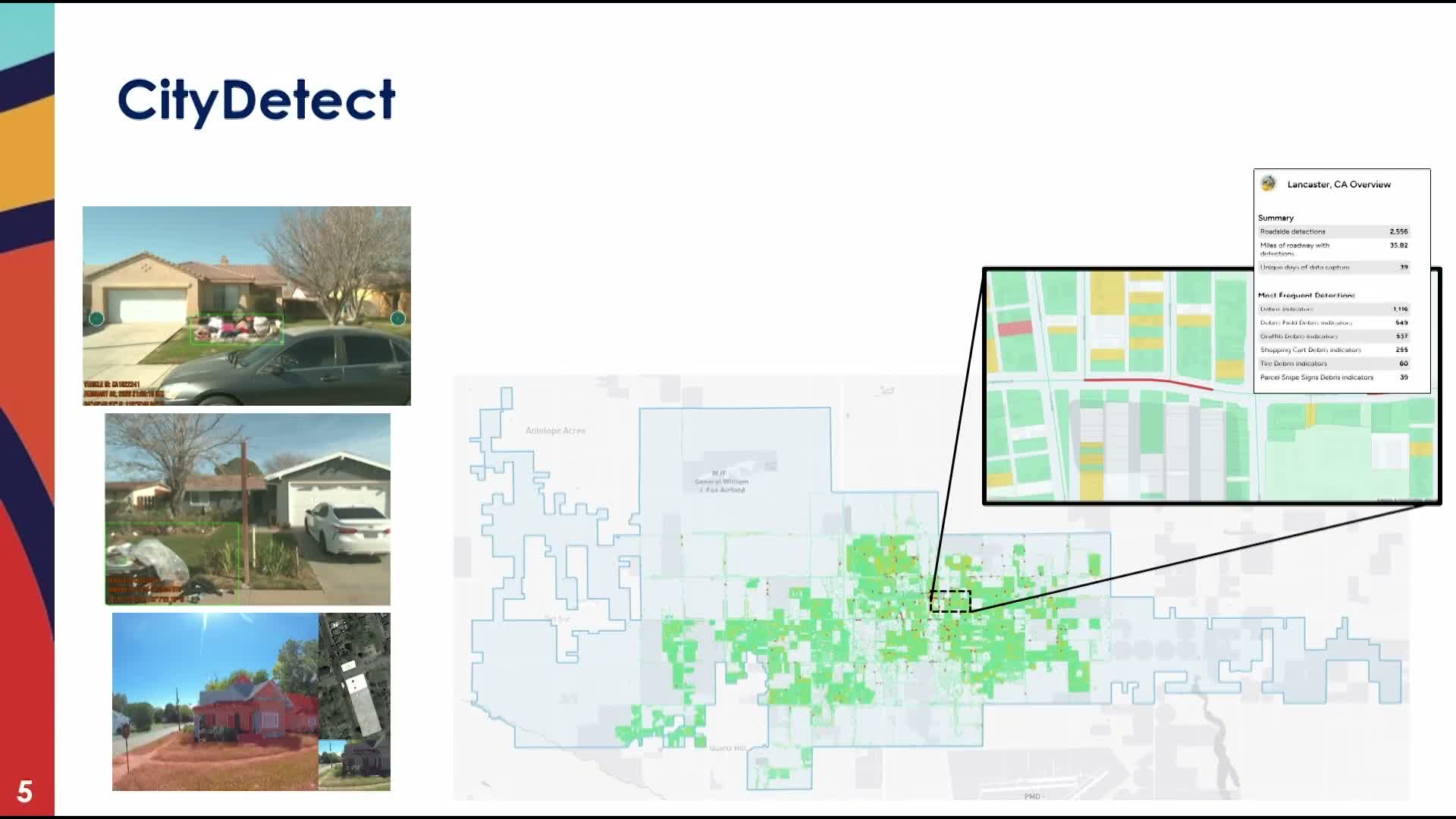
Justin Hilliman, community preservation manager, and Emmanuel Contreras, a code enforcement officer, described steps to modernize operations. Contreras said staff are building a dedicated code‑enforcement module within Acela to centralize permits and cases, and have equipped four city vehicles with City Detect imaging (Carnegie Robotics cameras) that capture high‑quality photos while vehicles are in motion. The vendor’s AI flags potential violations and generates heat maps to help target inspections.
Commissioners asked how the registration requirement applies. Jones said registration applies to commercial properties that are vacant; non‑vacant owners need only complete an online form and letter of agency. The $250 registration charge applies to vacant properties, she said. Jones told commissioners that the city is still compiling counts after letters recently went out, but estimated roughly 1,400 commercial properties in Lancaster and said staff expect to have more complete vacancy data within months.
Chair Mercy and commissioners requested regular updates and a standing report on problem properties. Staff committed to providing periodic reports and to emailing the presentation to the commission.
Next steps: staff will continue data collection on vacancies, implement the Acela module and City Detect workflows, administer YardSmart grants in pilot neighborhoods and report back to the commission on metrics and enforcement outcomes.
Nicole Jones, senior analyst for the Community Development Department, said the city amended its vacant property ordinance (9.55), which the City Council approved on Dec. 9, to require registration of vacant commercial properties, trigger inspections, and assign each property to one of four categories from “stable” to “failed.” The update adds maintenance standards and enforcement tools including administrative citations, liens for unpaid charges and performance deposits for chronic violators, Jones said.
The ordinance requires property owners to notify city staff within 30 days of vacancy; registration prompts an inspection that places the property into a category that determines monitoring and enforcement. Jones said the initiative aims to protect neighborhoods, encourage activation of empty storefronts and recover enforcement costs from persistent non‑compliance.
As part of a prevention emphasis, Jones introduced YardSmart Lancaster, a voluntary water‑conservation and beautification grant for inner‑core neighborhoods (Avenues I–L and 20th Street East to 30th Street West). Eligible homeowners may receive up to $15,000 to remove turf and install drought‑tolerant landscaping, irrigation upgrades or native plants. Jones said pilot work and sponsorships have funded the program and staff estimate assisting eight to 10 homes by July 1.
Justin Hilliman, community preservation manager, and Emmanuel Contreras, a code enforcement officer, described steps to modernize operations. Contreras said staff are building a dedicated code‑enforcement module within Acela to centralize permits and cases, and have equipped four city vehicles with City Detect imaging (Carnegie Robotics cameras) that capture high‑quality photos while vehicles are in motion. The vendor’s AI flags potential violations and generates heat maps to help target inspections.
Commissioners asked how the registration requirement applies. Jones said registration applies to commercial properties that are vacant; non‑vacant owners need only complete an online form and letter of agency. The $250 registration charge applies to vacant properties, she said. Jones told commissioners that the city is still compiling counts after letters recently went out, but estimated roughly 1,400 commercial properties in Lancaster and said staff expect to have more complete vacancy data within months.
Chair Mercy and commissioners requested regular updates and a standing report on problem properties. Staff committed to providing periodic reports and to emailing the presentation to the commission.
Next steps: staff will continue data collection on vacancies, implement the Acela module and City Detect workflows, administer YardSmart grants in pilot neighborhoods and report back to the commission on metrics and enforcement outcomes.
View the Full Meeting & All Its Details
This article offers just a summary. Unlock complete video, transcripts, and insights as a Founder Member.
✓
Watch full, unedited meeting videos
✓
Search every word spoken in unlimited transcripts
✓
AI summaries & real-time alerts (all government levels)
✓
Permanent access to expanding government content
30-day money-back guarantee
