Committee hears lengthy debate on comprehensive K–12 language and literacy bill; vote deferred
February 14, 2026 | Education Committee, Senate, Committees, Legislative, Wyoming
This article was created by AI summarizing key points discussed. AI makes mistakes, so for full details and context, please refer to the video of the full meeting. Please report any errors so we can fix them. Report an error »
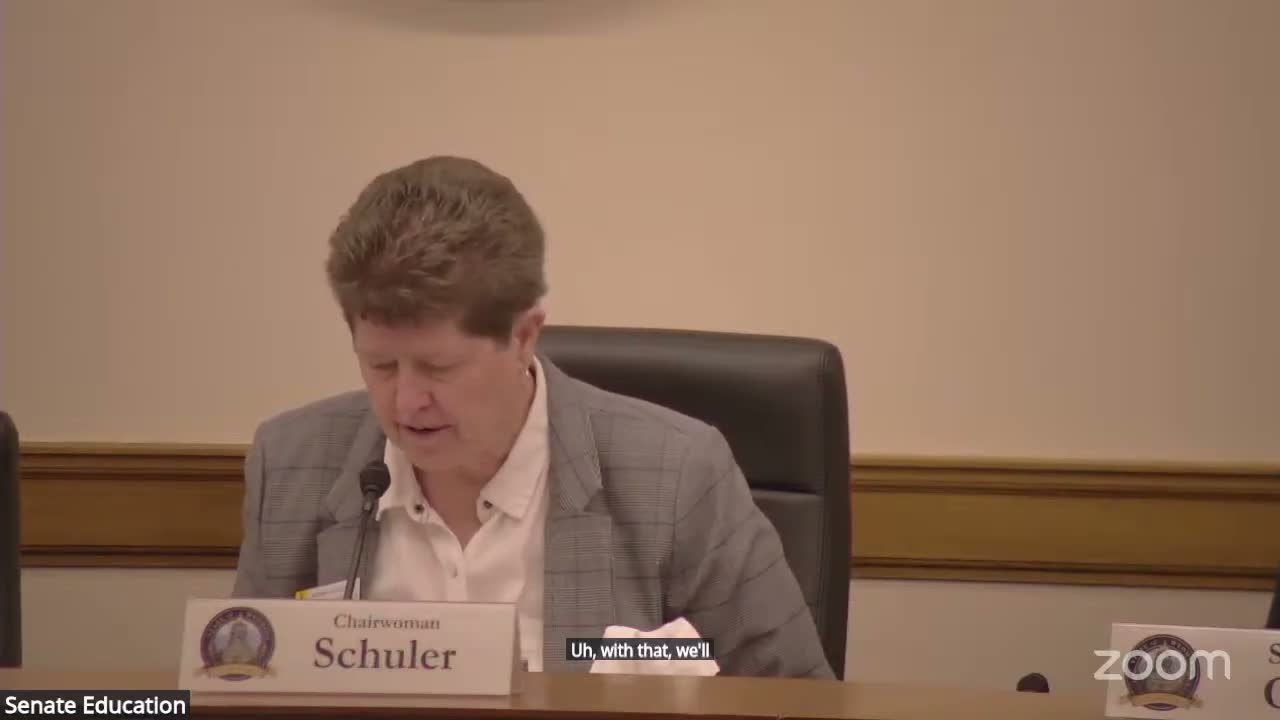
The Senate Education Committee on Feb. 13 held extended testimony on Senate File 59, a far‑reaching rewrite of Wyoming’s language and literacy statutes that would establish a statewide K–12 language and literacy program with screening, diagnostic assessment, individualized reading plans and professional development standards.
Senator Rothfuss, who led a subcommittee on the bill, walked committee members through the draft statute in detail. Core provisions include universal screeners (three times a year for K–3 and annually for grades 4–12 with conditions), an annual dyslexia screener for K–2, diagnostics for students identified as at risk, a multi‑tiered system of supports (MTSS), and a requirement that an individualized reading plan (IRP) be developed within 30 calendar days for students identified with reading difficulties. The bill would also direct the state superintendent to approve screeners and diagnostics by rule and require the Professional Teaching Standards Board (PTSB) to set literacy competency requirements for licensure (with an effective date for initial licensure changes of July 1, 2027).
Sponsor remarks emphasized alignment with the science of reading and a system that supports students from kindergarten through grade 12. The sponsor said the bill does not ban specific approaches outright but prohibits using a "three‑cueing" system as the only basis for teaching word recognition or decoding.
WDE officials and literacy staff described the draft as a cooperative, implementation‑focused rewrite of existing law. Claudia Ladd (state literacy lead) told senators the bill’s standards and subsequent rulemaking are intended to protect continuity across changes in elected leadership.
Practitioners and advocates offered both strong support and implementation cautions. Representative Jarvis (curriculum director and former reading specialist) and several district curriculum and intervention specialists praised the bill’s goals but urged clearer operational definitions for exit criteria, concerns about the burden of full IRP paperwork for students who are marginally at risk, and potential costs of high‑quality instructional materials. Brendan O’Connor of the PTSB said the board has created new endorsements (dyslexia specialist and structured literacy) and is revising tests to implement competency requirements, but cautioned about pass‑rates, temporary licensing provisions and the need for rulemaking to flesh out details.
Multiple public commenters—including dyslexia specialists, advocates and a presenter with district‑level data—urged rapid passage and emphasized the scale of students not proficient on NAEP and ACT benchmarks. Commenters also pushed for careful rulemaking on diagnostics and parental notifications and called for protections to ensure interventions do not remove students from core instruction.
The committee ran out of time before taking action. Chairwoman Schueller carried Senate File 59 to Monday for further consideration and then adjourned the committee.
Senator Rothfuss, who led a subcommittee on the bill, walked committee members through the draft statute in detail. Core provisions include universal screeners (three times a year for K–3 and annually for grades 4–12 with conditions), an annual dyslexia screener for K–2, diagnostics for students identified as at risk, a multi‑tiered system of supports (MTSS), and a requirement that an individualized reading plan (IRP) be developed within 30 calendar days for students identified with reading difficulties. The bill would also direct the state superintendent to approve screeners and diagnostics by rule and require the Professional Teaching Standards Board (PTSB) to set literacy competency requirements for licensure (with an effective date for initial licensure changes of July 1, 2027).
Sponsor remarks emphasized alignment with the science of reading and a system that supports students from kindergarten through grade 12. The sponsor said the bill does not ban specific approaches outright but prohibits using a "three‑cueing" system as the only basis for teaching word recognition or decoding.
WDE officials and literacy staff described the draft as a cooperative, implementation‑focused rewrite of existing law. Claudia Ladd (state literacy lead) told senators the bill’s standards and subsequent rulemaking are intended to protect continuity across changes in elected leadership.
Practitioners and advocates offered both strong support and implementation cautions. Representative Jarvis (curriculum director and former reading specialist) and several district curriculum and intervention specialists praised the bill’s goals but urged clearer operational definitions for exit criteria, concerns about the burden of full IRP paperwork for students who are marginally at risk, and potential costs of high‑quality instructional materials. Brendan O’Connor of the PTSB said the board has created new endorsements (dyslexia specialist and structured literacy) and is revising tests to implement competency requirements, but cautioned about pass‑rates, temporary licensing provisions and the need for rulemaking to flesh out details.
Multiple public commenters—including dyslexia specialists, advocates and a presenter with district‑level data—urged rapid passage and emphasized the scale of students not proficient on NAEP and ACT benchmarks. Commenters also pushed for careful rulemaking on diagnostics and parental notifications and called for protections to ensure interventions do not remove students from core instruction.
The committee ran out of time before taking action. Chairwoman Schueller carried Senate File 59 to Monday for further consideration and then adjourned the committee.
Don't Miss a Word: See the Full Meeting!
Go beyond summaries. Unlock every video, transcript, and key insight with a Founder Membership.
✓
Get instant access to full meeting videos
✓
Search and clip any phrase from complete transcripts
✓
Receive AI-powered summaries & custom alerts
✓
Enjoy lifetime, unrestricted access to government data
30-day money-back guarantee
