Marblehead committee affirms oversight role as district readies new improvement plan
February 14, 2026 | Marblehead Public Schools, School Boards, Massachusetts
This article was created by AI summarizing key points discussed. AI makes mistakes, so for full details and context, please refer to the video of the full meeting. Please report any errors so we can fix them. Report an error »
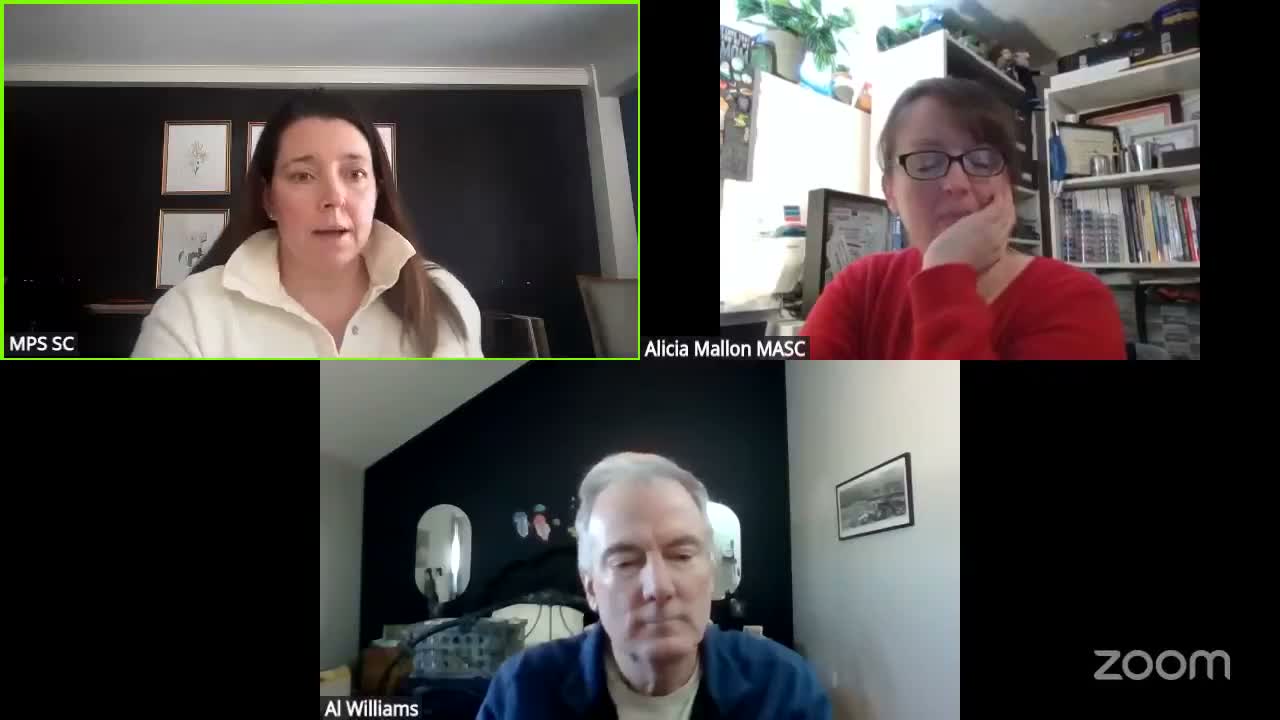
A presentation from Alicia, a field director with the Massachusetts Association of School Committees, clarified that while superintendents typically initiate strategic plans, the Marblehead School Committee has final authority to approve district goals and must set checkpoints to monitor implementation.
The committee heard that strategic planning often starts with the superintendent and leadership team and is then proposed to the committee for review and approval. "As the body that approves policy, that is in charge of the budget, that evaluates the superintendent, you have the end authority on setting the goals for the district," Alicia told the committee, urging clear, timed "SMART" goals and periodic check-ins rather than letting plans lapse.
Why it matters: Marblehead’s current "plan for success" expires in June, and Superintendent John Robodeau has been developing a new district improvement plan. Committee members raised concerns about the draft’s accessibility and timing of outreach: the district ran a staff-only Google Form in January to gather feedback, and members asked for a full-committee update on the synthesized staff feedback and the plan’s status in early March before expanded community outreach.
Committee members discussed several implementation details Alicia recommended: keeping strategic plans to roughly three years with built-in midpoint (formative) and summative checkpoints; specifying the data and evidence the committee will use to evaluate progress; and designing year‑three activities to transition smoothly into the next planning cycle. Alicia also said districts vary in whether the committee sees a draft before public input: "Whether or not you see it before the community sees it, that's entirely up to you," she said, adding that the committee retains final approval authority.
Members spent time on accessibility and engagement. Several said the draft district improvement plan is dense and suggested producing a shorter, graphic summary for different audiences. One committee member voiced concern that the committee should not be surprised by material changes after community outreach: "I would hate that we ask for some community involvement, and then the school committee... had something that the community didn't bring up," the member said. The committee agreed to research practices used by other districts for including educator voices and for whether to add nonvoting committee participants representing staff or other constituencies.
Next steps and assignments included asking Superintendent John Robodeau to update the full committee in early March on staff feedback he has collected, researching peer districts and consulting MASC examples on nonvoting members, and posting to the MASC listserv after February break to solicit examples. Members also discussed holding a staff forum—possibly in March—while noting open-meeting-law limits on how many subcommittee members may meet privately with staff.
The meeting ended after a procedural motion to adjourn was moved and seconded; the transcript records the roll-call and a stated adjournment time of 10:43. The recorded roll-call text in the transcript shows inconsistent vote counts (see provenance).
The committee heard that strategic planning often starts with the superintendent and leadership team and is then proposed to the committee for review and approval. "As the body that approves policy, that is in charge of the budget, that evaluates the superintendent, you have the end authority on setting the goals for the district," Alicia told the committee, urging clear, timed "SMART" goals and periodic check-ins rather than letting plans lapse.
Why it matters: Marblehead’s current "plan for success" expires in June, and Superintendent John Robodeau has been developing a new district improvement plan. Committee members raised concerns about the draft’s accessibility and timing of outreach: the district ran a staff-only Google Form in January to gather feedback, and members asked for a full-committee update on the synthesized staff feedback and the plan’s status in early March before expanded community outreach.
Committee members discussed several implementation details Alicia recommended: keeping strategic plans to roughly three years with built-in midpoint (formative) and summative checkpoints; specifying the data and evidence the committee will use to evaluate progress; and designing year‑three activities to transition smoothly into the next planning cycle. Alicia also said districts vary in whether the committee sees a draft before public input: "Whether or not you see it before the community sees it, that's entirely up to you," she said, adding that the committee retains final approval authority.
Members spent time on accessibility and engagement. Several said the draft district improvement plan is dense and suggested producing a shorter, graphic summary for different audiences. One committee member voiced concern that the committee should not be surprised by material changes after community outreach: "I would hate that we ask for some community involvement, and then the school committee... had something that the community didn't bring up," the member said. The committee agreed to research practices used by other districts for including educator voices and for whether to add nonvoting committee participants representing staff or other constituencies.
Next steps and assignments included asking Superintendent John Robodeau to update the full committee in early March on staff feedback he has collected, researching peer districts and consulting MASC examples on nonvoting members, and posting to the MASC listserv after February break to solicit examples. Members also discussed holding a staff forum—possibly in March—while noting open-meeting-law limits on how many subcommittee members may meet privately with staff.
The meeting ended after a procedural motion to adjourn was moved and seconded; the transcript records the roll-call and a stated adjournment time of 10:43. The recorded roll-call text in the transcript shows inconsistent vote counts (see provenance).
Don't Miss a Word: See the Full Meeting!
Go beyond summaries. Unlock every video, transcript, and key insight with a Founder Membership.
✓
Get instant access to full meeting videos
✓
Search and clip any phrase from complete transcripts
✓
Receive AI-powered summaries & custom alerts
✓
Enjoy lifetime, unrestricted access to government data
30-day money-back guarantee
