GEFA director outlines loan programs, PFAS and resilience funding, and home energy rebates
February 13, 2026 | Natural Resources & Environment, HOUSE OF REPRESENTATIVES, Committees, Legislative, Georgia
This article was created by AI summarizing key points discussed. AI makes mistakes, so for full details and context, please refer to the video of the full meeting. Please report any errors so we can fix them. Report an error »
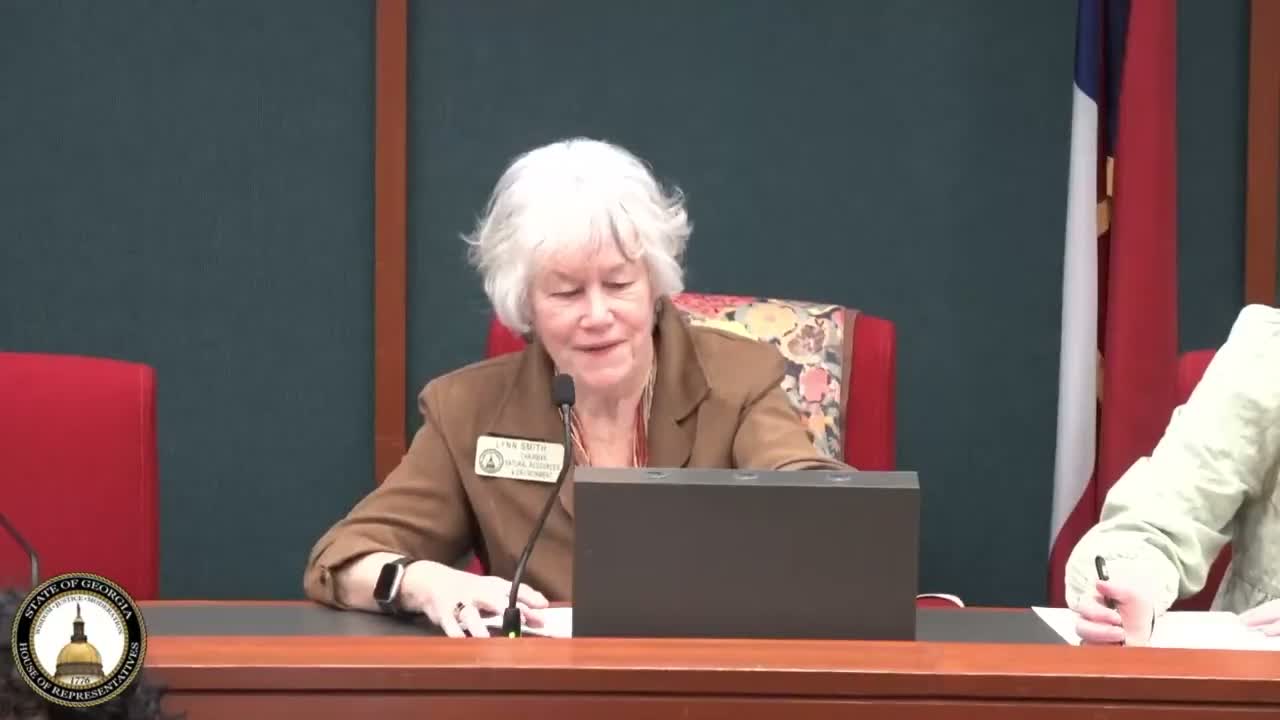
Trey Bennett, executive director of the Georgia Environmental Finance Authority (GEFA), briefed the Natural Resources & Environment committee on the agency’s financing role for water, energy and resilience projects and how communities can access funds.
Bennett said GEFA has provided more than $6 billion in low‑interest loans and financed more than 2,100 projects statewide. He highlighted several federal funding streams administered or matched by GEFA, including Clean Water and Drinking Water State Revolving Funds, lead service line replacement grants and an emerging contaminants/PFAS program. "To date, under the lead service line replacement program, GEFA has been awarded a $104,000,000 in federal funds," Bennett said, and he reported that the PFAS program award totaled approximately $117,000,000 with about $77,000,000 already committed.
Bennett described resilience funding proposals tied to the hurricane Helene program — including planned EPA applications for roughly $124.9 million for clean water, $359.5 million for drinking water and $8.9 million for decentralized wastewater — and said awards through that program include a baseline 30% principal forgiveness. He emphasized GEFA’s focus on small and disadvantaged communities, noting GEFA considers principal forgiveness and interest reductions on a case‑by‑case basis and offers creative, phased financing options for larger projects.
On energy programs, Bennett described GEFA’s role as the state energy office, coordination with Georgia Emergency Management and Homeland Security Agency during recent storms, and administration of weatherization and home efficiency rebate programs. He said GEFA has provided about $17.8 million in home energy rebates to more than 1,300 households and is administering additional IIJA funding for weatherization through 2029.
Committee members asked how local governments find and apply for funds; Bennett said GEFA issues calls for projects, posts information on its website and circulates an email list. Judy Adler, GEFA’s water division director, said GEFA coordinates closely with EPD when PFAS is detected and works to provide financing solutions. Several legislators pressed about the scale of need — Bennett said GEFA’s 2026 call for projects returned more than $2 billion in expressed need for water infrastructure.
Bennett and Adler said GEFA can work with metro jurisdictions including DeKalb and Atlanta, but noted some programs have practical loan limits (the Georgia Fund has typical loan award limits near $15,000,000) and recommended large jurisdictions consider programs such as WIFIA for very large capital projects. Bennett invited members to GEFA Day on Feb. 26 at the Capitol to learn more about the agency and its application processes.
Closing: the committee thanked GEFA and adjourned; members and staff were invited to follow up on funding questions and outreach.
Bennett said GEFA has provided more than $6 billion in low‑interest loans and financed more than 2,100 projects statewide. He highlighted several federal funding streams administered or matched by GEFA, including Clean Water and Drinking Water State Revolving Funds, lead service line replacement grants and an emerging contaminants/PFAS program. "To date, under the lead service line replacement program, GEFA has been awarded a $104,000,000 in federal funds," Bennett said, and he reported that the PFAS program award totaled approximately $117,000,000 with about $77,000,000 already committed.
Bennett described resilience funding proposals tied to the hurricane Helene program — including planned EPA applications for roughly $124.9 million for clean water, $359.5 million for drinking water and $8.9 million for decentralized wastewater — and said awards through that program include a baseline 30% principal forgiveness. He emphasized GEFA’s focus on small and disadvantaged communities, noting GEFA considers principal forgiveness and interest reductions on a case‑by‑case basis and offers creative, phased financing options for larger projects.
On energy programs, Bennett described GEFA’s role as the state energy office, coordination with Georgia Emergency Management and Homeland Security Agency during recent storms, and administration of weatherization and home efficiency rebate programs. He said GEFA has provided about $17.8 million in home energy rebates to more than 1,300 households and is administering additional IIJA funding for weatherization through 2029.
Committee members asked how local governments find and apply for funds; Bennett said GEFA issues calls for projects, posts information on its website and circulates an email list. Judy Adler, GEFA’s water division director, said GEFA coordinates closely with EPD when PFAS is detected and works to provide financing solutions. Several legislators pressed about the scale of need — Bennett said GEFA’s 2026 call for projects returned more than $2 billion in expressed need for water infrastructure.
Bennett and Adler said GEFA can work with metro jurisdictions including DeKalb and Atlanta, but noted some programs have practical loan limits (the Georgia Fund has typical loan award limits near $15,000,000) and recommended large jurisdictions consider programs such as WIFIA for very large capital projects. Bennett invited members to GEFA Day on Feb. 26 at the Capitol to learn more about the agency and its application processes.
Closing: the committee thanked GEFA and adjourned; members and staff were invited to follow up on funding questions and outreach.
View the Full Meeting & All Its Details
This article offers just a summary. Unlock complete video, transcripts, and insights as a Founder Member.
✓
Watch full, unedited meeting videos
✓
Search every word spoken in unlimited transcripts
✓
AI summaries & real-time alerts (all government levels)
✓
Permanent access to expanding government content
30-day money-back guarantee
