Plan Commission backs 260-unit Seasons at Crest Hill PUD, sends recommendation to City Council
February 13, 2026 | Crest Hill, Will County, Illinois
This article was created by AI summarizing key points discussed. AI makes mistakes, so for full details and context, please refer to the video of the full meeting. Please report any errors so we can fix them. Report an error »
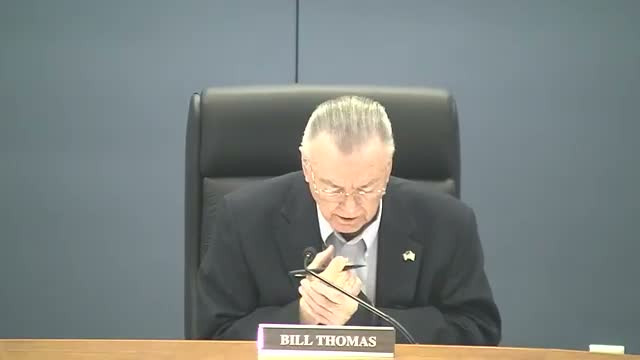
The Crest Hill Plan Commission voted unanimously Feb. 12 to recommend that the City Council approve a Planned Unit Development application from Fiduciary Real Estate Development for a 14‑building, 260‑unit market‑rate apartment community near the southeast corner of Renwick and Weber roads.
The developer, represented by Tony DeRosa, said the project — branded Seasons at Crest Hill — would occupy just under 16 acres and include a clubhouse, pool, a mix of private attached and detached garages, landscaped open space and pedestrian connections. DeRosa said the development would provide 120 one‑bedroom units, 122 two‑bedroom units and 20 three‑bedroom units, with rents he estimated would range from about $1,500 to $2,700 per month. He told the commission the project is market‑rate housing, not subsidized housing.
Staff and the developer asked the commission to approve a rezoning from B‑3 (business/service) to R‑3 (multifamily), preliminary and final plat of subdivision, a PUD special use and several waivers to the zoning code. Specific waivers requested include reducing minimum lot area per dwelling to about 2,650 square feet, allowing overall lot coverage near 70 percent, reducing standard front and rear yard setbacks, reducing the minimum one‑bedroom size to 700 square feet, permitting a parking ratio of 2.12 spaces per unit and narrower internal access aisles and walkways. The developer also requested reductions in masonry requirements on some facades.
City staff and the project’s traffic consultant said they reviewed required studies. Traffic engineer Louay Abuna of KLOA told the commission the intersections serving the site — including Weber/Renwick and Weber/Ryan — have adequate reserve capacity to absorb the project’s peak trips and that Will County reviewed and concurred with the study. Staff also said the fire district reviewed truck‑turn and circulation plans and raised no objections. City staff recommended approval contingent on seven conditions the developer agreed to.
Neighbors from the adjacent Remington Lakes community urged the commission to reject or scale back the project, citing traffic, street wear, cut‑through driving, privacy and impacts to a small homeowners association. Sandra Nuccio, who said her back yard faces the site, said: “All I can think is 500 people being able to walk through our whole area unless there’s some kind of fence or something to stop them.” Other speakers expressed concern about potential school and infrastructure impacts and said they preferred condos rather than rentals.
DeRosa responded that comparable projects in nearby suburbs show modest school impact — he cited a rule‑of‑thumb of 10–14 school‑age children per 100 units, which he said equates to roughly 27 school‑age children for this project — and described the developer’s tenant‑screening, on‑site management and maintenance practices. He also said the project would pay estimated impact fees of about $2.1 million for water and sewer connections and that staff projects roughly $875,000 in new annual property tax revenue once stabilized.
After public comment and staff discussion, the Plan Commission closed the hearing and voted unanimously to forward a recommendation of approval to City Council, subject to the seven conditions outlined in the Feb. 12 staff report. The City Council will consider the case at a Feb. 23 workshop and again at its March 2 meeting.
The Plan Commission’s action is a recommendation; final approval rests with the City Council.
The developer, represented by Tony DeRosa, said the project — branded Seasons at Crest Hill — would occupy just under 16 acres and include a clubhouse, pool, a mix of private attached and detached garages, landscaped open space and pedestrian connections. DeRosa said the development would provide 120 one‑bedroom units, 122 two‑bedroom units and 20 three‑bedroom units, with rents he estimated would range from about $1,500 to $2,700 per month. He told the commission the project is market‑rate housing, not subsidized housing.
Staff and the developer asked the commission to approve a rezoning from B‑3 (business/service) to R‑3 (multifamily), preliminary and final plat of subdivision, a PUD special use and several waivers to the zoning code. Specific waivers requested include reducing minimum lot area per dwelling to about 2,650 square feet, allowing overall lot coverage near 70 percent, reducing standard front and rear yard setbacks, reducing the minimum one‑bedroom size to 700 square feet, permitting a parking ratio of 2.12 spaces per unit and narrower internal access aisles and walkways. The developer also requested reductions in masonry requirements on some facades.
City staff and the project’s traffic consultant said they reviewed required studies. Traffic engineer Louay Abuna of KLOA told the commission the intersections serving the site — including Weber/Renwick and Weber/Ryan — have adequate reserve capacity to absorb the project’s peak trips and that Will County reviewed and concurred with the study. Staff also said the fire district reviewed truck‑turn and circulation plans and raised no objections. City staff recommended approval contingent on seven conditions the developer agreed to.
Neighbors from the adjacent Remington Lakes community urged the commission to reject or scale back the project, citing traffic, street wear, cut‑through driving, privacy and impacts to a small homeowners association. Sandra Nuccio, who said her back yard faces the site, said: “All I can think is 500 people being able to walk through our whole area unless there’s some kind of fence or something to stop them.” Other speakers expressed concern about potential school and infrastructure impacts and said they preferred condos rather than rentals.
DeRosa responded that comparable projects in nearby suburbs show modest school impact — he cited a rule‑of‑thumb of 10–14 school‑age children per 100 units, which he said equates to roughly 27 school‑age children for this project — and described the developer’s tenant‑screening, on‑site management and maintenance practices. He also said the project would pay estimated impact fees of about $2.1 million for water and sewer connections and that staff projects roughly $875,000 in new annual property tax revenue once stabilized.
After public comment and staff discussion, the Plan Commission closed the hearing and voted unanimously to forward a recommendation of approval to City Council, subject to the seven conditions outlined in the Feb. 12 staff report. The City Council will consider the case at a Feb. 23 workshop and again at its March 2 meeting.
The Plan Commission’s action is a recommendation; final approval rests with the City Council.
Don't Miss a Word: See the Full Meeting!
Go beyond summaries. Unlock every video, transcript, and key insight with a Founder Membership.
✓
Get instant access to full meeting videos
✓
Search and clip any phrase from complete transcripts
✓
Receive AI-powered summaries & custom alerts
✓
Enjoy lifetime, unrestricted access to government data
30-day money-back guarantee
