Palm Desert leans toward regulating high‑risk kratom products, not an outright ban
February 13, 2026 | Palm Desert, Riverside County, California
This article was created by AI summarizing key points discussed. AI makes mistakes, so for full details and context, please refer to the video of the full meeting. Please report any errors so we can fix them. Report an error »
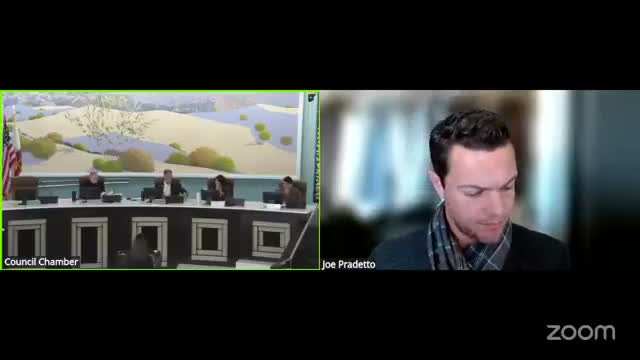
City staff described kratom’s modern retail forms and enforcement challenges at a Feb. 12 Palm Desert study session, and council members signaled support for a targeted regulatory approach rather than an outright retail ban.
Daniel Hurtado, public safety coordinator, summarized kratom (Mitragyna speciosa) as a botanical with traditional use in Southeast Asia and said contemporary products often include concentrated extracts or synthetic compounds with inconsistent labeling and higher potency. Hurtado highlighted 7‑hydroxymitragynine (7‑OH) as a concentrated alkaloid with stronger opioid‑like effects and raised concerns about flavored products, youth appeal and forms that resemble energy drinks or supplements. He cited national sales figures (staff presented an estimate of about $441,000,000 in U.S. kratom sales) and said the California Department of Public Health and state guidance indicate kratom and certain alkaloids are not FDA‑approved.
Sergeant Steven Nelson of the Palm Desert Sheriff’s Department described an October 2023 traffic stop in which an impaired 29‑year‑old driver initially tested negative on a standard panel; a comprehensive panel later detected kratom at 137 ng/mL, which Nelson said suggested a synthetic or concentrated extract. Nelson said local labs are increasingly sending samples out of region for detailed testing and that prosecutors have difficulty filing some cases when standard panels return no findings.
Hurtado presented two policy options for council consideration: Option 1, a complete ban on all kratom sales within Palm Desert; Option 2, a targeted regulated approach that prohibits synthetic and high‑potency products (including 7‑OH) while allowing natural leaf sales for adults 21 and over with child‑resistant packaging, manufacturer labeling and enforcement through the existing tobacco retailer licensing and inspection framework. Staff noted AB 1088 (pending state legislation referenced by staff) could add kratom and certain alkaloids to the Sherman Food, Drug and Cosmetic Law and that a local approach could be designed to align with any future state action.
Council debate divided: several members, including the mayor and mayor pro tem, said they prefer Option 2 to align with county rules and avoid criminalizing adults using traditional leaf products, while Council Member Quintanilla urged a full ban citing public safety and questions about product quality and potency. The council directed staff to prepare ordinance language consistent with the targeted regulatory approach and return to council on Feb. 26, 2026 for a public hearing and potential ordinance introduction.
Daniel Hurtado, public safety coordinator, summarized kratom (Mitragyna speciosa) as a botanical with traditional use in Southeast Asia and said contemporary products often include concentrated extracts or synthetic compounds with inconsistent labeling and higher potency. Hurtado highlighted 7‑hydroxymitragynine (7‑OH) as a concentrated alkaloid with stronger opioid‑like effects and raised concerns about flavored products, youth appeal and forms that resemble energy drinks or supplements. He cited national sales figures (staff presented an estimate of about $441,000,000 in U.S. kratom sales) and said the California Department of Public Health and state guidance indicate kratom and certain alkaloids are not FDA‑approved.
Sergeant Steven Nelson of the Palm Desert Sheriff’s Department described an October 2023 traffic stop in which an impaired 29‑year‑old driver initially tested negative on a standard panel; a comprehensive panel later detected kratom at 137 ng/mL, which Nelson said suggested a synthetic or concentrated extract. Nelson said local labs are increasingly sending samples out of region for detailed testing and that prosecutors have difficulty filing some cases when standard panels return no findings.
Hurtado presented two policy options for council consideration: Option 1, a complete ban on all kratom sales within Palm Desert; Option 2, a targeted regulated approach that prohibits synthetic and high‑potency products (including 7‑OH) while allowing natural leaf sales for adults 21 and over with child‑resistant packaging, manufacturer labeling and enforcement through the existing tobacco retailer licensing and inspection framework. Staff noted AB 1088 (pending state legislation referenced by staff) could add kratom and certain alkaloids to the Sherman Food, Drug and Cosmetic Law and that a local approach could be designed to align with any future state action.
Council debate divided: several members, including the mayor and mayor pro tem, said they prefer Option 2 to align with county rules and avoid criminalizing adults using traditional leaf products, while Council Member Quintanilla urged a full ban citing public safety and questions about product quality and potency. The council directed staff to prepare ordinance language consistent with the targeted regulatory approach and return to council on Feb. 26, 2026 for a public hearing and potential ordinance introduction.
Don't Miss a Word: See the Full Meeting!
Go beyond summaries. Unlock every video, transcript, and key insight with a Founder Membership.
✓
Get instant access to full meeting videos
✓
Search and clip any phrase from complete transcripts
✓
Receive AI-powered summaries & custom alerts
✓
Enjoy lifetime, unrestricted access to government data
30-day money-back guarantee
