Palm Desert council directs staff to continue studying indoor sports complex concept
February 13, 2026 | Palm Desert, Riverside County, California
This article was created by AI summarizing key points discussed. AI makes mistakes, so for full details and context, please refer to the video of the full meeting. Please report any errors so we can fix them. Report an error »
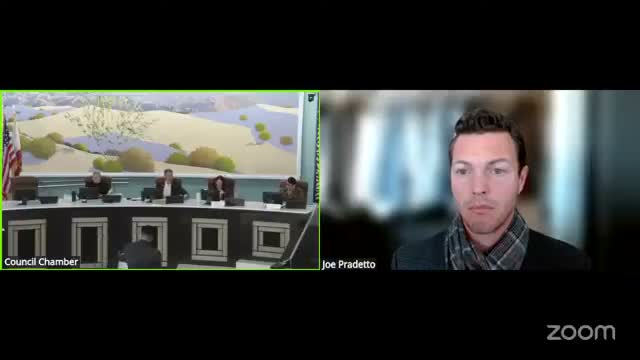
City staff presented a preliminary concept for an indoor sports complex at the Palm Desert study session on Feb. 12 and council members asked staff to continue detailed feasibility work.
Richard Cannone, assistant city manager, described typical indoor sports complexes as climate‑controlled, multi‑use facilities that host local leagues, regional tournaments, camps and conferences. Staff said a Greater Palm Springs feasibility review found demand potential and identified the university‑neighborhood specific plan area and nearby resort hotels as potential sites that could capture a 30‑minute to 5‑hour drive market.
Cannone and outside presenters discussed comparable projects (examples in Henderson, Nev., and Williamsburg, Va.), possible programming (adaptive sports, e‑sports, climbing walls, meeting space) and a wide range of capital and operating models. A representative from the hotel sector (Clark Albright, identified as director of sales and marketing with JW) supported the concept and said the hotel industry is interested in event demand that could fill summer occupancy troughs. Visit Greater Palm Springs staff suggested a potential tourism business improvement district (TBID) contribution at 1% could generate roughly $2,000,000 annually for the city; multi‑city TBID structures were discussed as an option to spread costs.
Council members asked about drive‑market population, comparable project analyses, private operation vs. public ownership, partnerships with Cal State San Bernardino or College of the Desert for programming and operational risk. Most council members expressed support for continuing analysis, emphasized protecting taxpayers (preferring private operators or managed public‑private lease arrangements), and requested more detailed market, financing and site studies.
Council did not take formal action but directed staff to return with deeper feasibility and partnership analyses if council wishes to proceed.
Richard Cannone, assistant city manager, described typical indoor sports complexes as climate‑controlled, multi‑use facilities that host local leagues, regional tournaments, camps and conferences. Staff said a Greater Palm Springs feasibility review found demand potential and identified the university‑neighborhood specific plan area and nearby resort hotels as potential sites that could capture a 30‑minute to 5‑hour drive market.
Cannone and outside presenters discussed comparable projects (examples in Henderson, Nev., and Williamsburg, Va.), possible programming (adaptive sports, e‑sports, climbing walls, meeting space) and a wide range of capital and operating models. A representative from the hotel sector (Clark Albright, identified as director of sales and marketing with JW) supported the concept and said the hotel industry is interested in event demand that could fill summer occupancy troughs. Visit Greater Palm Springs staff suggested a potential tourism business improvement district (TBID) contribution at 1% could generate roughly $2,000,000 annually for the city; multi‑city TBID structures were discussed as an option to spread costs.
Council members asked about drive‑market population, comparable project analyses, private operation vs. public ownership, partnerships with Cal State San Bernardino or College of the Desert for programming and operational risk. Most council members expressed support for continuing analysis, emphasized protecting taxpayers (preferring private operators or managed public‑private lease arrangements), and requested more detailed market, financing and site studies.
Council did not take formal action but directed staff to return with deeper feasibility and partnership analyses if council wishes to proceed.
Don't Miss a Word: See the Full Meeting!
Go beyond summaries. Unlock every video, transcript, and key insight with a Founder Membership.
✓
Get instant access to full meeting videos
✓
Search and clip any phrase from complete transcripts
✓
Receive AI-powered summaries & custom alerts
✓
Enjoy lifetime, unrestricted access to government data
30-day money-back guarantee
