Lebanon consultants unveil draft fairgrounds master plan emphasizing camping, covered equine arena and expanded parking
February 13, 2026 | Lebanon City council, Lebanon City, Warren County, Ohio
This article was created by AI summarizing key points discussed. AI makes mistakes, so for full details and context, please refer to the video of the full meeting. Please report any errors so we can fix them. Report an error »
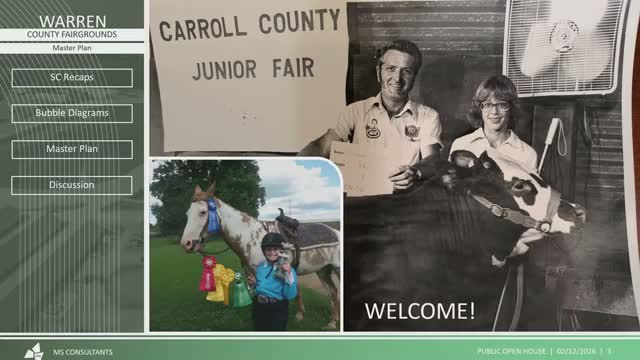
Consultants working with the Lebanon City council presented a draft master plan for the city’s fairgrounds on the evening of the workshop, showing two alternative site layouts and asking residents to review detailed boards and submit written or digital comments.
City Manager Scott Branca opened the meeting and framed the effort as a long-range planning exercise intended to preserve fairweek and 4‑H activities while making the site usable year‑round. “I'm Scott Branca. I'm the city manager,” he said, noting the plan is meant to guide future councils, fair‑board members and 4‑H leaders rather than determine ownership or lease terms.
The consultant team, led by Katie Phillips of MS Consultants, described a five‑month process that included three stakeholder committee meetings, a building‑systems assessment and an analysis of strengths, weaknesses, opportunities and threats. “I plan fairgrounds, neighborhoods,” Phillips said as she outlined the team’s role in translating stakeholder input into a phased vision.
Why it matters: The plan seeks to balance preservation of the historic fairgrounds and harness horsemen facilities with new revenue‑generating uses and improved site operations. Consultants said stakeholders repeatedly urged retention of core fair uses and better circulation, restrooms and shade to make the site more usable during events.
Key elements presented
- Two alternative layouts: The favored alternative would relocate the campground to the northwest corner of the property and build an indoor equine arena where the current campground sits, making the arena more integrated with fair activity. The second alternative would keep the campground in place and add a covered arena on the existing equine footprint.
- Campground and amenities: Consultants said the current layout has roughly 60 campsites and recommended a revised layout that could accommodate up to about 130 campsites, plus expanded trailer spaces, a new shower house and a horse‑washing area to improve convenience during events.
- Parking strategy: The team identified a potential total of about 1,880 new on‑site parking spaces in the draft plan and suggested off‑site partnerships to manage peak demand, including Colonial Park West (presented capacity up to 650 spaces with shuttling) and a school‑district bus‑garage area (nearly 680 spaces).
- Mixed‑use frontage and visibility: Multiple stakeholder groups supported mixed‑use development along Bridal/Broadway to extend the downtown storefront, with possible lodging and retail fronting a pocket park that would also preserve views into the fairgrounds.
- Heritage and equine uses: Consultants said participants consistently requested that harness horsemen facilities remain in place and that the property include a covered equine arena to enable year‑round horse events.
Public process and next steps
Presenters emphasized that the session was not a forum for deciding ownership, leases or detailed organizational arrangements. Instead, attendees were invited to review the full set of boards in small breakout groups, record feedback on paper or via QR code forms, and return comments that will be part of the record for refining the draft plan. Organizers said another meeting will be scheduled to review input; this evening’s session closed with instructions to move to breakout stations for detailed review.
Quotes
“I'm Scott Branca. I'm the city manager,” Scott Branca said in opening remarks about the purpose of the planning effort. Katie Phillips summarized the team’s role: “I plan fairgrounds, neighborhoods.”
What the presentation did not decide
No formal votes, motions or decisions about property ownership, lease terms or binding commitments were taken during the meeting. Consultants repeatedly stated those topics were out of scope for the workshop and that the plan is intended to guide future policy decisions.
The city will use recorded written and digital comments collected tonight to revise the draft master plan and schedule follow‑up meetings where citizen input and technical refinements will be discussed.
City Manager Scott Branca opened the meeting and framed the effort as a long-range planning exercise intended to preserve fairweek and 4‑H activities while making the site usable year‑round. “I'm Scott Branca. I'm the city manager,” he said, noting the plan is meant to guide future councils, fair‑board members and 4‑H leaders rather than determine ownership or lease terms.
The consultant team, led by Katie Phillips of MS Consultants, described a five‑month process that included three stakeholder committee meetings, a building‑systems assessment and an analysis of strengths, weaknesses, opportunities and threats. “I plan fairgrounds, neighborhoods,” Phillips said as she outlined the team’s role in translating stakeholder input into a phased vision.
Why it matters: The plan seeks to balance preservation of the historic fairgrounds and harness horsemen facilities with new revenue‑generating uses and improved site operations. Consultants said stakeholders repeatedly urged retention of core fair uses and better circulation, restrooms and shade to make the site more usable during events.
Key elements presented
- Two alternative layouts: The favored alternative would relocate the campground to the northwest corner of the property and build an indoor equine arena where the current campground sits, making the arena more integrated with fair activity. The second alternative would keep the campground in place and add a covered arena on the existing equine footprint.
- Campground and amenities: Consultants said the current layout has roughly 60 campsites and recommended a revised layout that could accommodate up to about 130 campsites, plus expanded trailer spaces, a new shower house and a horse‑washing area to improve convenience during events.
- Parking strategy: The team identified a potential total of about 1,880 new on‑site parking spaces in the draft plan and suggested off‑site partnerships to manage peak demand, including Colonial Park West (presented capacity up to 650 spaces with shuttling) and a school‑district bus‑garage area (nearly 680 spaces).
- Mixed‑use frontage and visibility: Multiple stakeholder groups supported mixed‑use development along Bridal/Broadway to extend the downtown storefront, with possible lodging and retail fronting a pocket park that would also preserve views into the fairgrounds.
- Heritage and equine uses: Consultants said participants consistently requested that harness horsemen facilities remain in place and that the property include a covered equine arena to enable year‑round horse events.
Public process and next steps
Presenters emphasized that the session was not a forum for deciding ownership, leases or detailed organizational arrangements. Instead, attendees were invited to review the full set of boards in small breakout groups, record feedback on paper or via QR code forms, and return comments that will be part of the record for refining the draft plan. Organizers said another meeting will be scheduled to review input; this evening’s session closed with instructions to move to breakout stations for detailed review.
Quotes
“I'm Scott Branca. I'm the city manager,” Scott Branca said in opening remarks about the purpose of the planning effort. Katie Phillips summarized the team’s role: “I plan fairgrounds, neighborhoods.”
What the presentation did not decide
No formal votes, motions or decisions about property ownership, lease terms or binding commitments were taken during the meeting. Consultants repeatedly stated those topics were out of scope for the workshop and that the plan is intended to guide future policy decisions.
The city will use recorded written and digital comments collected tonight to revise the draft master plan and schedule follow‑up meetings where citizen input and technical refinements will be discussed.
View the Full Meeting & All Its Details
This article offers just a summary. Unlock complete video, transcripts, and insights as a Founder Member.
✓
Watch full, unedited meeting videos
✓
Search every word spoken in unlimited transcripts
✓
AI summaries & real-time alerts (all government levels)
✓
Permanent access to expanding government content
30-day money-back guarantee
