Rep. Logan unveils PROSPER act (H.794) to raise over $400M via income surcharges, a wealth-proceeds tax and property reclassification
February 13, 2026 | Ways & Means, HOUSE OF REPRESENTATIVES, Committees, Legislative , Vermont
This article was created by AI summarizing key points discussed. AI makes mistakes, so for full details and context, please refer to the video of the full meeting. Please report any errors so we can fix them. Report an error »
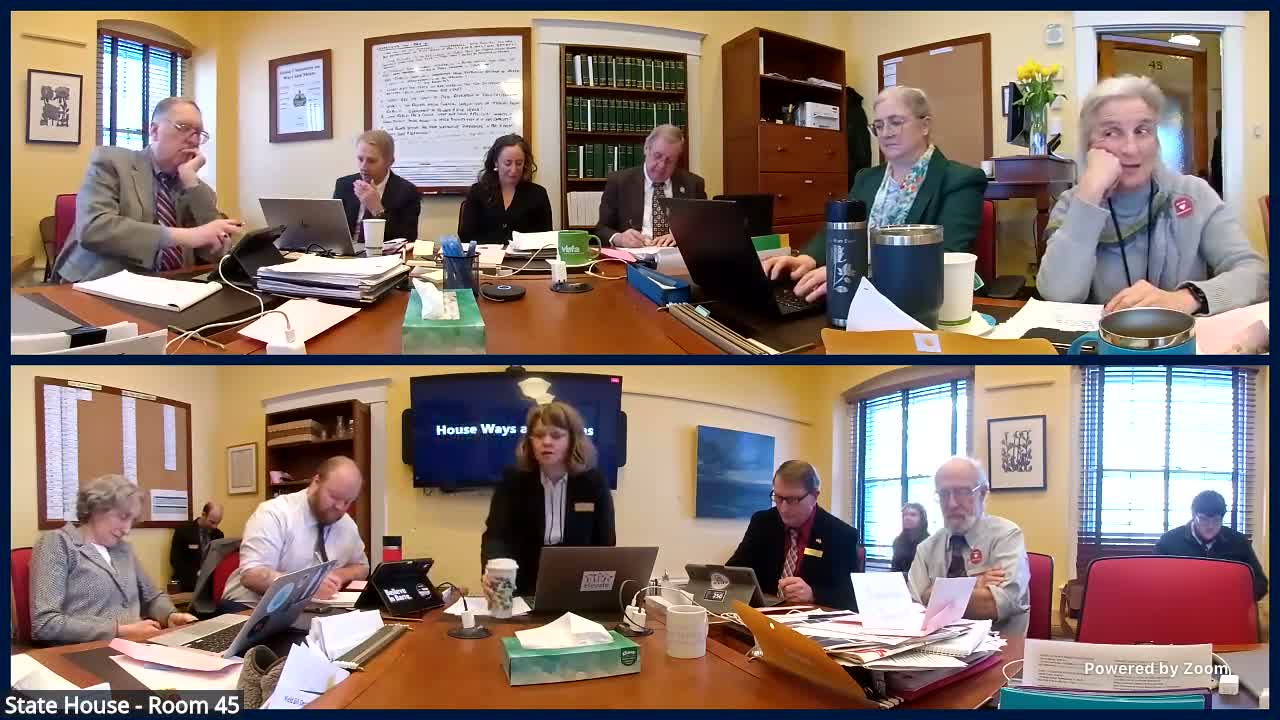
Representative Logan presented H.794, the "Preserving Revenue for State Programs and Economic Resiliency (PROSPER) Act," to the Ways & Means Committee as a multipronged revenue package designed to fund school construction and relieve affordability pressures.
Logan outlined three components: a personal income-tax surcharge (retroactive to Jan. 1, 2026), a wealth-proceeds tax modeled on the federal net investment income form to begin Jan. 1, 2027, and new property-tax classifications and charges on high-value seasonal homes to begin Jan. 1, 2028. She cited Public Assets Institute estimates that the income surcharges could raise about $344 million annually and that a 4 percent wealth-proceeds surcharge would raise about $75 million, putting total estimated additional annual revenue above $400 million.
"With $400,000,000 in annual state revenue, based on estimates from universal primary care advocates, we could implement universal primary care almost immediately in Vermont and have funds left over to look at how we might implement a full, single payer health care system in the state over the next several years," Representative Logan said, linking the revenue package to potential changes in health-care funding and school construction financing.
Logan described the wealth-proceeds tax as taxing the proceeds of wealth (capital gains, interest, dividends) rather than taxing wealth itself, and said using the existing federal form would simplify administration. She also proposed allocating new property-tax revenue to capitalize the School Construction Aid Special Fund (Act 73), suggesting a charge on seasonal homes with values of $1,000,000 or more as one option to fund the capital account.
Committee members noted the complexity of the proposal and suggested the package might be divided into separate bills for detailed review. No vote was taken; the bill was introduced for committee consideration and further modeling and testimony.
Logan outlined three components: a personal income-tax surcharge (retroactive to Jan. 1, 2026), a wealth-proceeds tax modeled on the federal net investment income form to begin Jan. 1, 2027, and new property-tax classifications and charges on high-value seasonal homes to begin Jan. 1, 2028. She cited Public Assets Institute estimates that the income surcharges could raise about $344 million annually and that a 4 percent wealth-proceeds surcharge would raise about $75 million, putting total estimated additional annual revenue above $400 million.
"With $400,000,000 in annual state revenue, based on estimates from universal primary care advocates, we could implement universal primary care almost immediately in Vermont and have funds left over to look at how we might implement a full, single payer health care system in the state over the next several years," Representative Logan said, linking the revenue package to potential changes in health-care funding and school construction financing.
Logan described the wealth-proceeds tax as taxing the proceeds of wealth (capital gains, interest, dividends) rather than taxing wealth itself, and said using the existing federal form would simplify administration. She also proposed allocating new property-tax revenue to capitalize the School Construction Aid Special Fund (Act 73), suggesting a charge on seasonal homes with values of $1,000,000 or more as one option to fund the capital account.
Committee members noted the complexity of the proposal and suggested the package might be divided into separate bills for detailed review. No vote was taken; the bill was introduced for committee consideration and further modeling and testimony.
Don't Miss a Word: See the Full Meeting!
Go beyond summaries. Unlock every video, transcript, and key insight with a Founder Membership.
✓
Get instant access to full meeting videos
✓
Search and clip any phrase from complete transcripts
✓
Receive AI-powered summaries & custom alerts
✓
Enjoy lifetime, unrestricted access to government data
30-day money-back guarantee
