Bill would shift Vermont school Medicaid program to Agency of Human Services, boost school reimbursements to 55%
February 13, 2026 | Health Care, HOUSE OF REPRESENTATIVES, Committees, Legislative , Vermont
This article was created by AI summarizing key points discussed. AI makes mistakes, so for full details and context, please refer to the video of the full meeting. Please report any errors so we can fix them. Report an error »
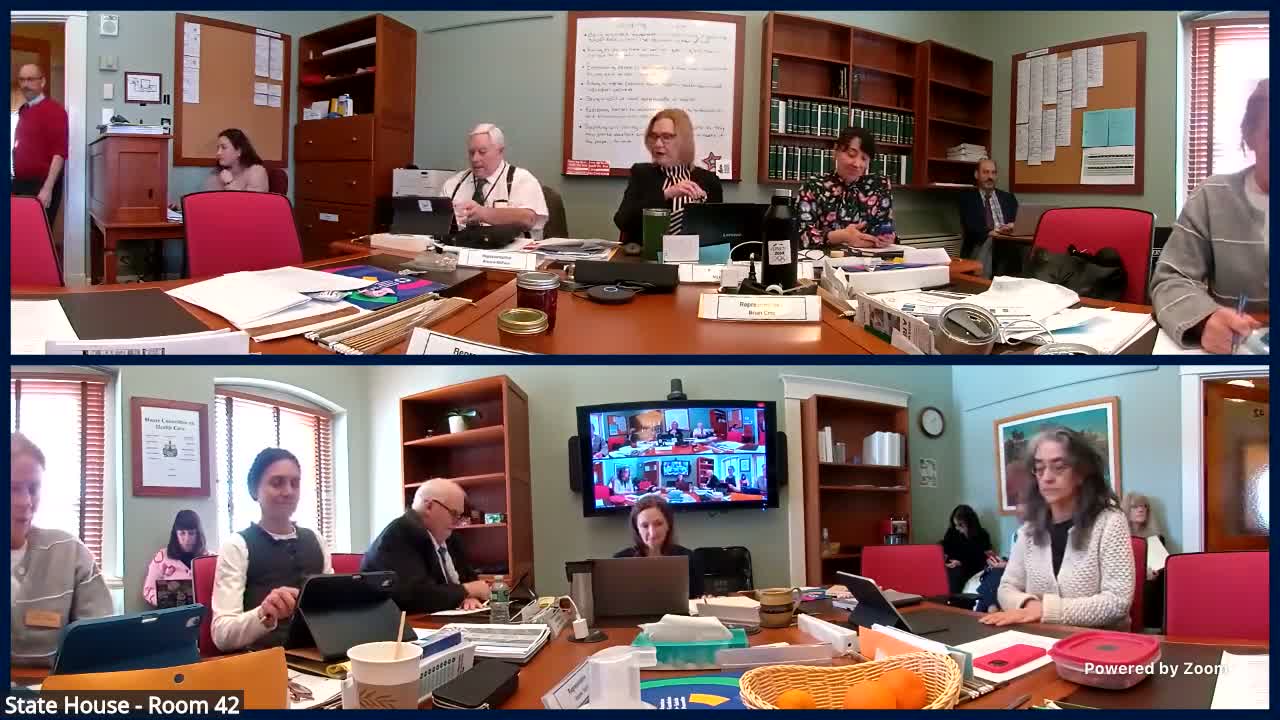
Montpelier — Lawmakers reviewed H.558, a bill to move sole administrative responsibility for Vermont’s Medicaid school-based services from a split arrangement to the Agency of Human Services (AHS), create a special reimbursement fund and change how federal Medicaid dollars are split.
At a Legislative Council session, Jen Carby of the Office of Legislative Council summarized the bill’s main features: the state would add a Medicaid School-Based Services Program in Title 33, direct the Department of Vermont Health Access to place federal reimbursements into a new School-Based Medicaid Reimbursement Fund, and give AHS rulemaking authority over program compliance while keeping the Agency of Education (AOE) responsible for coordinating program use with statewide education policy. “The state maximize[s] its receipt of federal reimbursement for medically related services provided to students who are eligible under Title XIX of the Social Security Act,” Carby read from the draft language.
Why it matters: supporters say the change simplifies administration, strengthens federal compliance and returns more money to districts. Under the bill, supervisory unions would receive 55% of federal reimbursements generated by medically related services; up to 25% would be available to cover state administrative costs (shared between AOE and AHS); and 20% would remain allocated to the Education Fund, plus any unspent administrative amounts transferred at fiscal year close. Carby noted the agencies must enter a memorandum of understanding to govern allocations and that any spending from the fund requires legislative appropriation.
Agency officials described policy and operational changes that would accompany the statutory shift. Ashley Berliner, director of Medicaid policy for AHS, said the proposal also requires use of a Random Moment Time Study (RMTS) as the payment methodology and the implementation of an electronic health record (EHR) for clinical-level data. “Medicaid school-based services are services provided to Medicaid kids in the school setting,” Berliner said, explaining the services are treated differently by federal rules and documentation requirements. She added, “We have a goal of migrating this program by 10/01/2026.”
Berliner and other presenters described RMTS as a statistical sampling tool used to allocate billable time. “RMTS is a random moment in time study … it allows us to create a statistically significant percentage allocation of the amount of time that certain eligible school-based providers are spending providing Medicaid-eligible services,” she said, summarizing how the quarterly prompt-and-report process generates the percentage of time that can be billed to Medicaid.
AOE officials said the department will retain rulemaking authority over how schools may use reinvestment dollars paid by AHS and will focus on aligning reinvestment with districts’ continuous improvement plans. Jill Briggs Campbell, deputy secretary of education and chief of operations, described AOE’s role as maintaining operational continuity and supporting districts through the transition. Katie Smith, the agency’s education Medicaid director, said the EHR rollout will be phased during the 2026–27 school year, beginning with volunteer districts so the agencies can iterate.
Committee members pressed agencies on operational details and timing, including how RMTS will work alongside the EHR and how the new systems will affect school-level providers. Berliner said the RMTS and EHR are separate systems and not integrated; the state plans to provide technical-assistance and business-assistance vendors to support user registration, data submission and change management. She also clarified that the bill excludes services provided through Success Beyond 6 — those are administered by the Department of Mental Health and would be considered in a later phase if at all.
No formal vote was taken. The committee agreed to seek further clarification from agencies and to invite provider perspectives before deciding whether to move the bill forward. Committee members also said staff may coordinate language and follow-up materials for next week’s meeting.
Note on sources: quotes and program details are drawn from the Legislative Council meeting discussion of H.558; statutory references in the bill text cited Title XIX of the Social Security Act and revisions to 16 V.S.A. §2959a (Education Medicaid Receipts).
At a Legislative Council session, Jen Carby of the Office of Legislative Council summarized the bill’s main features: the state would add a Medicaid School-Based Services Program in Title 33, direct the Department of Vermont Health Access to place federal reimbursements into a new School-Based Medicaid Reimbursement Fund, and give AHS rulemaking authority over program compliance while keeping the Agency of Education (AOE) responsible for coordinating program use with statewide education policy. “The state maximize[s] its receipt of federal reimbursement for medically related services provided to students who are eligible under Title XIX of the Social Security Act,” Carby read from the draft language.
Why it matters: supporters say the change simplifies administration, strengthens federal compliance and returns more money to districts. Under the bill, supervisory unions would receive 55% of federal reimbursements generated by medically related services; up to 25% would be available to cover state administrative costs (shared between AOE and AHS); and 20% would remain allocated to the Education Fund, plus any unspent administrative amounts transferred at fiscal year close. Carby noted the agencies must enter a memorandum of understanding to govern allocations and that any spending from the fund requires legislative appropriation.
Agency officials described policy and operational changes that would accompany the statutory shift. Ashley Berliner, director of Medicaid policy for AHS, said the proposal also requires use of a Random Moment Time Study (RMTS) as the payment methodology and the implementation of an electronic health record (EHR) for clinical-level data. “Medicaid school-based services are services provided to Medicaid kids in the school setting,” Berliner said, explaining the services are treated differently by federal rules and documentation requirements. She added, “We have a goal of migrating this program by 10/01/2026.”
Berliner and other presenters described RMTS as a statistical sampling tool used to allocate billable time. “RMTS is a random moment in time study … it allows us to create a statistically significant percentage allocation of the amount of time that certain eligible school-based providers are spending providing Medicaid-eligible services,” she said, summarizing how the quarterly prompt-and-report process generates the percentage of time that can be billed to Medicaid.
AOE officials said the department will retain rulemaking authority over how schools may use reinvestment dollars paid by AHS and will focus on aligning reinvestment with districts’ continuous improvement plans. Jill Briggs Campbell, deputy secretary of education and chief of operations, described AOE’s role as maintaining operational continuity and supporting districts through the transition. Katie Smith, the agency’s education Medicaid director, said the EHR rollout will be phased during the 2026–27 school year, beginning with volunteer districts so the agencies can iterate.
Committee members pressed agencies on operational details and timing, including how RMTS will work alongside the EHR and how the new systems will affect school-level providers. Berliner said the RMTS and EHR are separate systems and not integrated; the state plans to provide technical-assistance and business-assistance vendors to support user registration, data submission and change management. She also clarified that the bill excludes services provided through Success Beyond 6 — those are administered by the Department of Mental Health and would be considered in a later phase if at all.
No formal vote was taken. The committee agreed to seek further clarification from agencies and to invite provider perspectives before deciding whether to move the bill forward. Committee members also said staff may coordinate language and follow-up materials for next week’s meeting.
Note on sources: quotes and program details are drawn from the Legislative Council meeting discussion of H.558; statutory references in the bill text cited Title XIX of the Social Security Act and revisions to 16 V.S.A. §2959a (Education Medicaid Receipts).
View the Full Meeting & All Its Details
This article offers just a summary. Unlock complete video, transcripts, and insights as a Founder Member.
✓
Watch full, unedited meeting videos
✓
Search every word spoken in unlimited transcripts
✓
AI summaries & real-time alerts (all government levels)
✓
Permanent access to expanding government content
30-day money-back guarantee
