Appeals panel hears challenge to clinical language and expert weight in impounded offender-registry decision
February 13, 2026 | Judicial - Appeals Court Oral Arguments, Judicial, Massachusetts
This article was created by AI summarizing key points discussed. AI makes mistakes, so for full details and context, please refer to the video of the full meeting. Please report any errors so we can fix them. Report an error »
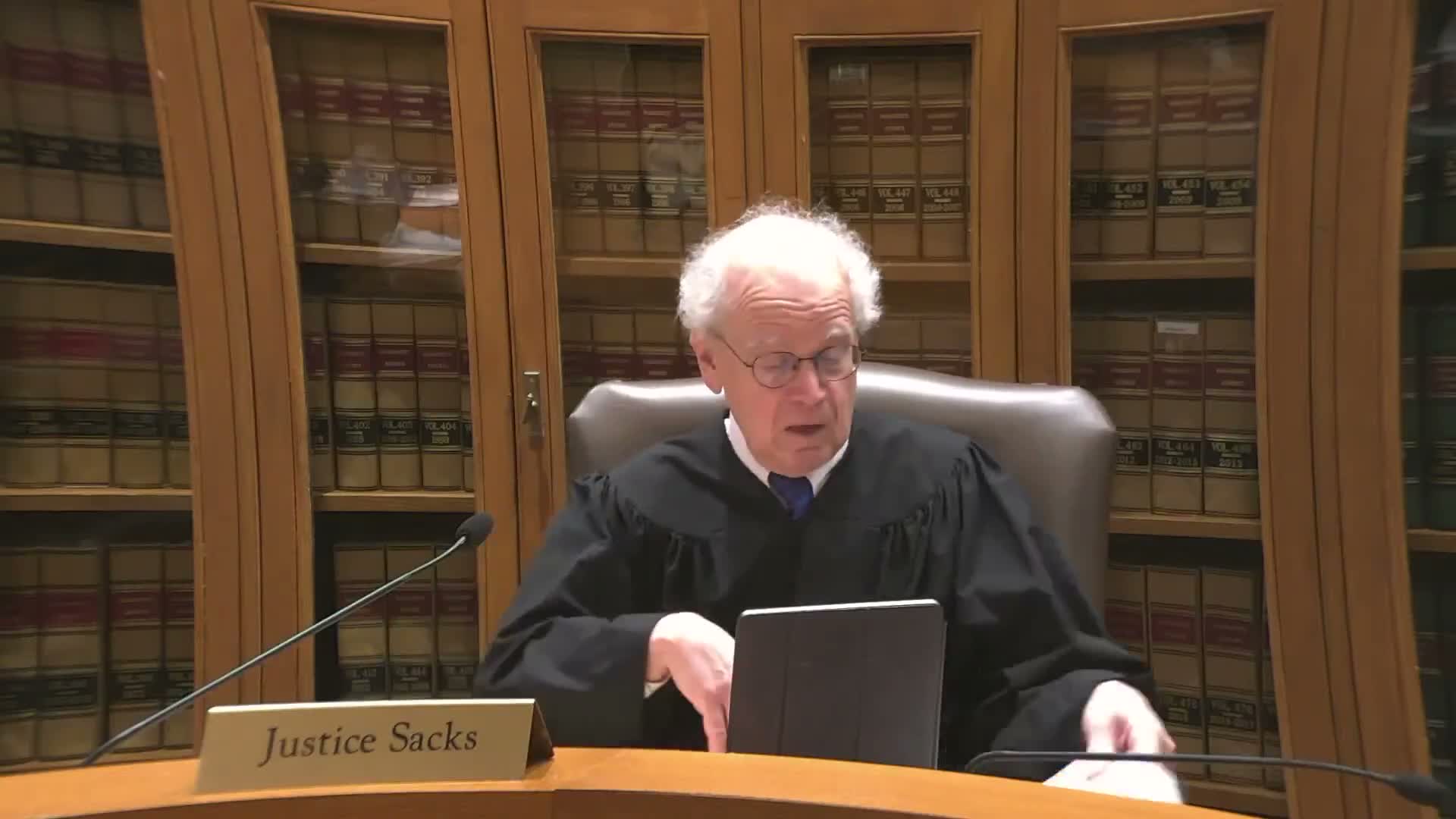
A three-judge appeals panel on Friday heard arguments in an impounded appeal of an Offender Registry Board classification, where counsel for the registrant argued the hearing examiner relied on inflammatory clinical language and improperly discounted expert evidence.
Mister Campbell, representing the registrant identified in court as John Doe, told the panel the examiner’s use of phrasing describing a "deviant ... interest in non-consenting females" imported a clinical judgment that should have been made only by a qualified psychologist. "This is language that clinicians use," Campbell said, adding that the board "did not argue" such deviancy below and that an expert testified there was no paraphilic deviancy.
The petitioner also pressed that the examiner ignored or minimized expert analysis of "offense-free time" — a regulatory factor bearing on recidivism — and substituted an unexplained method for weighing risk factors. Campbell argued that, under controlling authority, the court should remand when a factfinder discounts expert testimony without adequate explanation and on potentially arbitrary grounds.
Christopher Bover, arguing for the Offender Registry Board, countered that the board’s regulations employ a spectrum of conduct and that the term often appears in multiple regulatory factors. "Deviance occurs on a spectrum," Bover said, noting that some regulatory factors address mental abnormalities while others address nonconsensual criminal behavior. He urged the court to view the examiner’s writings in context and to affirm the decision.
Justices on the panel questioned whether the word added anything material to the 25-page decision and whether removing the two instances of the word would change the outcome. The court also probed the factual basis for the examiner’s departure from an expert who relied on the static-99R and research treating time-in-community in particular ways.
The panel did not announce a decision; attorneys thanked the court and the argument concluded. The next case on the calendar began following the panel’s exchange.
Mister Campbell, representing the registrant identified in court as John Doe, told the panel the examiner’s use of phrasing describing a "deviant ... interest in non-consenting females" imported a clinical judgment that should have been made only by a qualified psychologist. "This is language that clinicians use," Campbell said, adding that the board "did not argue" such deviancy below and that an expert testified there was no paraphilic deviancy.
The petitioner also pressed that the examiner ignored or minimized expert analysis of "offense-free time" — a regulatory factor bearing on recidivism — and substituted an unexplained method for weighing risk factors. Campbell argued that, under controlling authority, the court should remand when a factfinder discounts expert testimony without adequate explanation and on potentially arbitrary grounds.
Christopher Bover, arguing for the Offender Registry Board, countered that the board’s regulations employ a spectrum of conduct and that the term often appears in multiple regulatory factors. "Deviance occurs on a spectrum," Bover said, noting that some regulatory factors address mental abnormalities while others address nonconsensual criminal behavior. He urged the court to view the examiner’s writings in context and to affirm the decision.
Justices on the panel questioned whether the word added anything material to the 25-page decision and whether removing the two instances of the word would change the outcome. The court also probed the factual basis for the examiner’s departure from an expert who relied on the static-99R and research treating time-in-community in particular ways.
The panel did not announce a decision; attorneys thanked the court and the argument concluded. The next case on the calendar began following the panel’s exchange.
Don't Miss a Word: See the Full Meeting!
Go beyond summaries. Unlock every video, transcript, and key insight with a Founder Membership.
✓
Get instant access to full meeting videos
✓
Search and clip any phrase from complete transcripts
✓
Receive AI-powered summaries & custom alerts
✓
Enjoy lifetime, unrestricted access to government data
30-day money-back guarantee
