Appeals Court hears argument over whether Holliston bylaw’s 'including warehouse facilities' allows standalone warehouses
February 13, 2026 | Judicial - Appeals Court Oral Arguments, Judicial, Massachusetts
This article was created by AI summarizing key points discussed. AI makes mistakes, so for full details and context, please refer to the video of the full meeting. Please report any errors so we can fix them. Report an error »
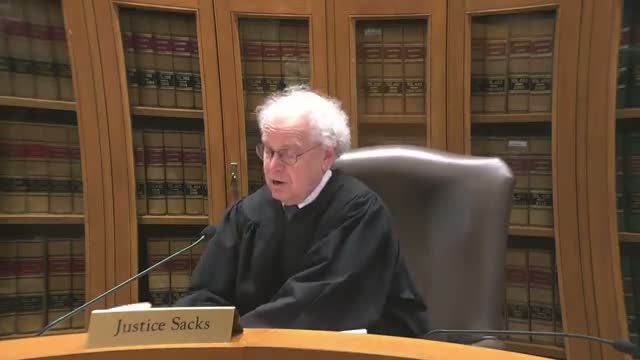
An Appeals Court panel heard oral arguments in case 25P915, CRG v. Members of the Holliston Planning Board, over how to read a seven-word phrase in Holliston’s zoning use table: “wholesale office or showroom, including warehouse facilities.” The parties disputed whether that phrase permits standalone warehouses or instead authorizes warehouses only as accessory or accompanying facilities, and whether the court should defer to the planning board’s interpretation.
The dispute centers on statutory and doctrinal questions under Chapter 40A of the zoning law and on how to construe the town’s local bylaw. Jason Tallerman, counsel for the Town of Holliston, told the panel that even if the seven words are imprecise, established deference doctrines apply when a reasonable local interpretation exists and that the appeals court should respect the planning board’s reading when two reasonable interpretations compete. “The standard still applies and that standard is different,” Tallerman said, and argued that the punctuation and the words “including” and “facilities” support treating warehouse facilities as part of the permitted list rather than as a standalone primary use.
Tallerman described the local process and procedural history: the planning board unanimously approved CRG’s site plan in March 2020, and the applicant later applied for — and was denied — a special permit in July 2021. He said the applicant pursued the non‑discretionary site plan first, and that the board’s later denial of a special permit did not reflect a longstanding, inconsistent pattern that would preclude deference. Tallerman illustrated competing readings of “including” with an analogy: “It’s a box of cereal and includes something pretty cool inside,” urging the court to accept that the phrase allows an accompanying warehouse facility rather than demanding a standalone warehouse use.
Donald Pinto, counsel for the opposing party, countered that the deference doctrine arises in administrative appeals where a local board has committed to a written interpretation in the administrative process. Pinto said the planning board here did not articulate a clear local interpretive position in its proceedings; instead, the record shows the building inspector flagged a potential need for a special permit and the board later denied that permit without adopting an interpretive stance on the bylaw. “There isn’t is no local interpretation,” Pinto told the panel, urging the court to review the bylaw de novo and to uphold the land court’s conclusion that the planning board’s litigation interpretation was unreasonable.
The justices pressed both sides on textual and structural arguments. The bench focused repeatedly on (1) the import of the comma and the term “including,” (2) the effect of the town’s separate mixed office-and-warehouse provision (section 3D11) that limits warehouse facilities to no more than 20% of gross floor area and 15,000 square feet in certain contexts, and (3) whether the bylaw’s definition of “warehouse” (a building primarily used for storage) requires a primary, standalone use or permits accessory warehouse facilities. Counsel disagreed about whether those internal cross‑references and the plural term “facilities” change the operative meaning in section 3G1.
Tallerman warned that treating the bylaw differently could undermine local procedures and invite premature litigation; Pinto emphasized rules of construction and the land court’s effort to read the bylaw as a harmonious whole. The panel did not take testimony or issue a decision at the hearing; Presiding Justice Peter Sachs closed by calling it “a very interesting case about 7 words.” The court adjourned and will issue a written decision at a later date.
The arguments posed two connected questions for the appeals court: whether deference to a local board’s reasonable zoning interpretation applies in the particular procedural posture of this case, and how to construe the phrase “including warehouse facilities” within Holliston’s use table and related bylaw provisions. A written opinion will resolve which textual reading controls and whether deference is proper under the circumstances.
The dispute centers on statutory and doctrinal questions under Chapter 40A of the zoning law and on how to construe the town’s local bylaw. Jason Tallerman, counsel for the Town of Holliston, told the panel that even if the seven words are imprecise, established deference doctrines apply when a reasonable local interpretation exists and that the appeals court should respect the planning board’s reading when two reasonable interpretations compete. “The standard still applies and that standard is different,” Tallerman said, and argued that the punctuation and the words “including” and “facilities” support treating warehouse facilities as part of the permitted list rather than as a standalone primary use.
Tallerman described the local process and procedural history: the planning board unanimously approved CRG’s site plan in March 2020, and the applicant later applied for — and was denied — a special permit in July 2021. He said the applicant pursued the non‑discretionary site plan first, and that the board’s later denial of a special permit did not reflect a longstanding, inconsistent pattern that would preclude deference. Tallerman illustrated competing readings of “including” with an analogy: “It’s a box of cereal and includes something pretty cool inside,” urging the court to accept that the phrase allows an accompanying warehouse facility rather than demanding a standalone warehouse use.
Donald Pinto, counsel for the opposing party, countered that the deference doctrine arises in administrative appeals where a local board has committed to a written interpretation in the administrative process. Pinto said the planning board here did not articulate a clear local interpretive position in its proceedings; instead, the record shows the building inspector flagged a potential need for a special permit and the board later denied that permit without adopting an interpretive stance on the bylaw. “There isn’t is no local interpretation,” Pinto told the panel, urging the court to review the bylaw de novo and to uphold the land court’s conclusion that the planning board’s litigation interpretation was unreasonable.
The justices pressed both sides on textual and structural arguments. The bench focused repeatedly on (1) the import of the comma and the term “including,” (2) the effect of the town’s separate mixed office-and-warehouse provision (section 3D11) that limits warehouse facilities to no more than 20% of gross floor area and 15,000 square feet in certain contexts, and (3) whether the bylaw’s definition of “warehouse” (a building primarily used for storage) requires a primary, standalone use or permits accessory warehouse facilities. Counsel disagreed about whether those internal cross‑references and the plural term “facilities” change the operative meaning in section 3G1.
Tallerman warned that treating the bylaw differently could undermine local procedures and invite premature litigation; Pinto emphasized rules of construction and the land court’s effort to read the bylaw as a harmonious whole. The panel did not take testimony or issue a decision at the hearing; Presiding Justice Peter Sachs closed by calling it “a very interesting case about 7 words.” The court adjourned and will issue a written decision at a later date.
The arguments posed two connected questions for the appeals court: whether deference to a local board’s reasonable zoning interpretation applies in the particular procedural posture of this case, and how to construe the phrase “including warehouse facilities” within Holliston’s use table and related bylaw provisions. A written opinion will resolve which textual reading controls and whether deference is proper under the circumstances.
View the Full Meeting & All Its Details
This article offers just a summary. Unlock complete video, transcripts, and insights as a Founder Member.
✓
Watch full, unedited meeting videos
✓
Search every word spoken in unlimited transcripts
✓
AI summaries & real-time alerts (all government levels)
✓
Permanent access to expanding government content
30-day money-back guarantee
