Planning commission continues line-by-line rewrite of county land‑use code; ADUs and definitions draw scrutiny
February 13, 2026 | 2024 San Juan County Commission, San Juan County Commission, San Juan County Commission and Boards, San Juan County, Utah
This article was created by AI summarizing key points discussed. AI makes mistakes, so for full details and context, please refer to the video of the full meeting. Please report any errors so we can fix them. Report an error »
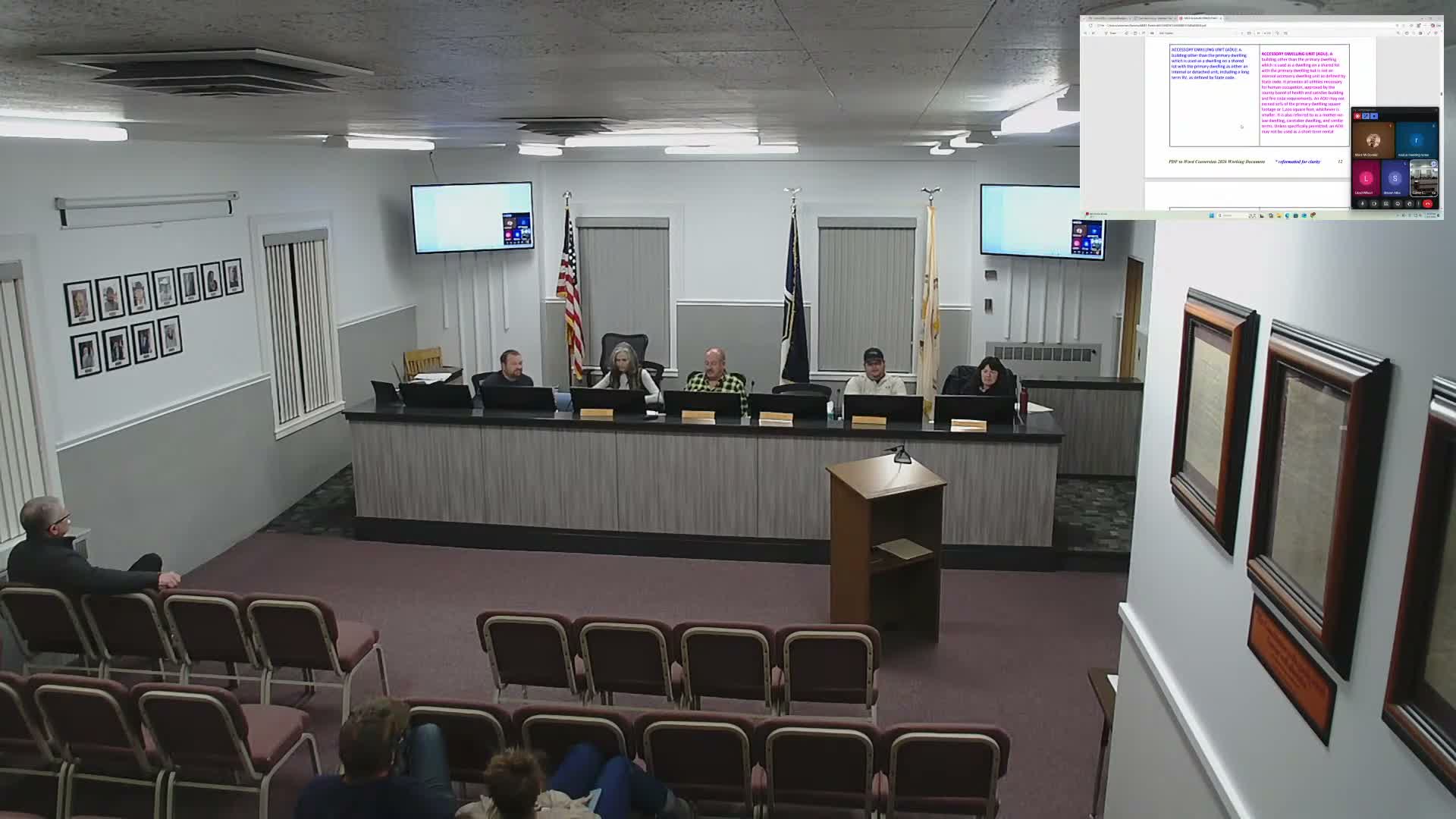
San Juan County Planning Commissioners on Feb. 12 continued a detailed, line‑by‑line review of a proposed rewrite of the county land‑use code, focusing on accessory dwelling units (ADUs), numerous definitions, and process questions about conditional uses.
Corey Coleman, planning staff, said staff converted the current ordinance into editable formats and is consolidating the 2011 code, Spanish Valley supplement and more recent amendments into a single, proposed 2026 code. He described a two‑phase public review and said staff will return chapters incrementally — "we're gonna put tentatively approved" watermarks for readings and move chunks to the County Commission, potentially starting in June.
ADUs commanded extended debate. The packet includes a size limit that reads "50% of the primary dwelling or 1,200 square feet, whichever is smaller." Commissioners split on whether the 50% metric is workable for many local home sizes; one commissioner suggested simply using a universal 1,200‑square‑foot cap for clarity. Coleman said staff will research other counties and state legislative definitions and return with options for a second reading.
Commissioners also pressed staff on an ADU sentence that would prohibit ADUs from short‑term rental use "unless specifically permitted," raising questions about how that clause interacts with the use table and zone‑specific permissions. A commissioner noted state guidance that ADUs must meet building, health and fire codes and that owner‑occupancy is commonly required for short‑term rental eligibility.
Beyond ADUs, commissioners proposed dozens of edits to definitions (examples: arena, camping durations, lodging house, manufactured and modular home wording, home‑occupation limits, nuisance language). Staff said they will redline the suggested grammatical and substantive changes and circulate an updated draft. Coleman emphasized staff’s intent to keep some redundancies during the transition for clarity and remove them later once the use table and code are consistent.
Commissioners asked staff to identify weaknesses previously flagged by administrative‑law findings so that the new ordinance plugs holes that have led to exposure in appeals. Coleman said an ALJ has asked that findings be published to help the commission close gaps.
No legislative action was taken; the commission directed staff to continue proofreading, perform comparative research on ADU limits, and prepare a second‑reading packet that will include the commission’s strike‑and‑replace choices.
Corey Coleman, planning staff, said staff converted the current ordinance into editable formats and is consolidating the 2011 code, Spanish Valley supplement and more recent amendments into a single, proposed 2026 code. He described a two‑phase public review and said staff will return chapters incrementally — "we're gonna put tentatively approved" watermarks for readings and move chunks to the County Commission, potentially starting in June.
ADUs commanded extended debate. The packet includes a size limit that reads "50% of the primary dwelling or 1,200 square feet, whichever is smaller." Commissioners split on whether the 50% metric is workable for many local home sizes; one commissioner suggested simply using a universal 1,200‑square‑foot cap for clarity. Coleman said staff will research other counties and state legislative definitions and return with options for a second reading.
Commissioners also pressed staff on an ADU sentence that would prohibit ADUs from short‑term rental use "unless specifically permitted," raising questions about how that clause interacts with the use table and zone‑specific permissions. A commissioner noted state guidance that ADUs must meet building, health and fire codes and that owner‑occupancy is commonly required for short‑term rental eligibility.
Beyond ADUs, commissioners proposed dozens of edits to definitions (examples: arena, camping durations, lodging house, manufactured and modular home wording, home‑occupation limits, nuisance language). Staff said they will redline the suggested grammatical and substantive changes and circulate an updated draft. Coleman emphasized staff’s intent to keep some redundancies during the transition for clarity and remove them later once the use table and code are consistent.
Commissioners asked staff to identify weaknesses previously flagged by administrative‑law findings so that the new ordinance plugs holes that have led to exposure in appeals. Coleman said an ALJ has asked that findings be published to help the commission close gaps.
No legislative action was taken; the commission directed staff to continue proofreading, perform comparative research on ADU limits, and prepare a second‑reading packet that will include the commission’s strike‑and‑replace choices.
View the Full Meeting & All Its Details
This article offers just a summary. Unlock complete video, transcripts, and insights as a Founder Member.
✓
Watch full, unedited meeting videos
✓
Search every word spoken in unlimited transcripts
✓
AI summaries & real-time alerts (all government levels)
✓
Permanent access to expanding government content
30-day money-back guarantee
