UN humanitarian official warns Yemen crisis worsening, cites 73 UN staff detained
February 13, 2026 | United Nations, International
This article was created by AI summarizing key points discussed. AI makes mistakes, so for full details and context, please refer to the video of the full meeting. Please report any errors so we can fix them. Report an error »
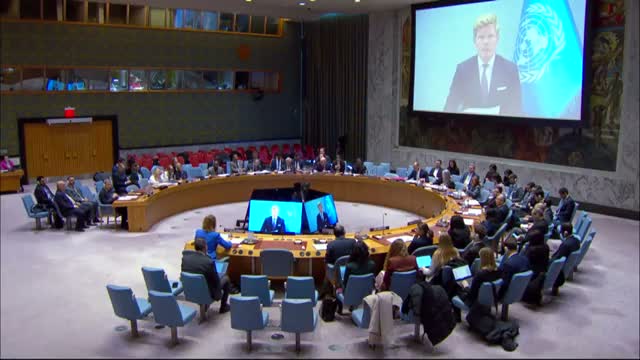
Lisa Dalton, a United Nations humanitarian official, told council members that 73 UN staff remain "arbitrarily detained" by Houthi de facto authorities and that detentions and access restrictions are severely disrupting relief operations.
Dalton said de facto authorities entered multiple UN offices in Sana'a on Jan. 29, "commandeering equipment and vehicles," and have continued to withhold clearances for UN humanitarian air service flights to Marib; flights into Sana'a resumed over the weekend after a month-long suspension caused by lack of clearances. "These detentions of humanitarian workers are having a profound impact on operations," she said.
Why it matters: Dalton gave updated humanitarian figures showing a widening crisis. She said 22,300,000 people — roughly half the population — will need humanitarian assistance this year, an increase of 2.8 million from last year. More than 18 million people face acute food insecurity, and about 5.5 million are experiencing IPC phase 4 emergency food-security conditions or worse.
On public health, Dalton reported outbreaks and low immunization coverage: "more than 18,600 measles cases and 188 deaths," and cited World Health Organization data saying Yemen registered the third-highest cholera caseload worldwide between March 2024 and November 2025, with about 350,000 suspected cholera or acute watery diarrhea cases and roughly 1,100 associated deaths. She said approximately 40% of health facilities are not functioning or are at risk of closing because of funding shortfalls and partners scaling back operations — a strain that "has a disproportionate impact on women and girls" by limiting maternal and reproductive health services.
Dalton also described severe malnutrition: "More than 2,200,000 children under the age of 5 are acutely malnourished, including about 570,000 suffering from severe acute malnutrition," she said, and added that roughly 1,300,000 pregnant and breastfeeding women are at serious risk of malnutrition in 2026.
Humanitarian response and funding: Dalton said partners delivered food aid to over 5,000,000 people, provided about 3,300,000 medical consultations and treated more than 330,000 children for severe acute malnutrition, actions carried out while the humanitarian appeal was funded at only 28.5%. "This was achieved with the humanitarian appeal funded at only 28.5%, forcing us to make impossible choices," she said, and expressed appreciation for continuing donors.
Next steps and requests: Dalton said a donors' meeting will convene next week in Jordan to refine how aid is delivered and to mobilize early and sustained contributions. She said partners active in areas held by the de facto authorities — including international and national NGOs and the International Committee of the Red Cross — will assume a greater share of operational workload. She urged the council to maintain sustained engagement and pressure to secure releases of detained staff and to increase funding: "We must prevent further deterioration. Millions of lives hang in the balance," Dalton said.
The council chair closed the briefing by thanking a speaker referenced in the transcript as "miss Downson." The transcript appears to refer to the speaker who delivered the briefing as Lisa Dalton; the record contains a likely name transcription discrepancy in the closing line.
Dalton said de facto authorities entered multiple UN offices in Sana'a on Jan. 29, "commandeering equipment and vehicles," and have continued to withhold clearances for UN humanitarian air service flights to Marib; flights into Sana'a resumed over the weekend after a month-long suspension caused by lack of clearances. "These detentions of humanitarian workers are having a profound impact on operations," she said.
Why it matters: Dalton gave updated humanitarian figures showing a widening crisis. She said 22,300,000 people — roughly half the population — will need humanitarian assistance this year, an increase of 2.8 million from last year. More than 18 million people face acute food insecurity, and about 5.5 million are experiencing IPC phase 4 emergency food-security conditions or worse.
On public health, Dalton reported outbreaks and low immunization coverage: "more than 18,600 measles cases and 188 deaths," and cited World Health Organization data saying Yemen registered the third-highest cholera caseload worldwide between March 2024 and November 2025, with about 350,000 suspected cholera or acute watery diarrhea cases and roughly 1,100 associated deaths. She said approximately 40% of health facilities are not functioning or are at risk of closing because of funding shortfalls and partners scaling back operations — a strain that "has a disproportionate impact on women and girls" by limiting maternal and reproductive health services.
Dalton also described severe malnutrition: "More than 2,200,000 children under the age of 5 are acutely malnourished, including about 570,000 suffering from severe acute malnutrition," she said, and added that roughly 1,300,000 pregnant and breastfeeding women are at serious risk of malnutrition in 2026.
Humanitarian response and funding: Dalton said partners delivered food aid to over 5,000,000 people, provided about 3,300,000 medical consultations and treated more than 330,000 children for severe acute malnutrition, actions carried out while the humanitarian appeal was funded at only 28.5%. "This was achieved with the humanitarian appeal funded at only 28.5%, forcing us to make impossible choices," she said, and expressed appreciation for continuing donors.
Next steps and requests: Dalton said a donors' meeting will convene next week in Jordan to refine how aid is delivered and to mobilize early and sustained contributions. She said partners active in areas held by the de facto authorities — including international and national NGOs and the International Committee of the Red Cross — will assume a greater share of operational workload. She urged the council to maintain sustained engagement and pressure to secure releases of detained staff and to increase funding: "We must prevent further deterioration. Millions of lives hang in the balance," Dalton said.
The council chair closed the briefing by thanking a speaker referenced in the transcript as "miss Downson." The transcript appears to refer to the speaker who delivered the briefing as Lisa Dalton; the record contains a likely name transcription discrepancy in the closing line.
Don't Miss a Word: See the Full Meeting!
Go beyond summaries. Unlock every video, transcript, and key insight with a Founder Membership.
✓
Get instant access to full meeting videos
✓
Search and clip any phrase from complete transcripts
✓
Receive AI-powered summaries & custom alerts
✓
Enjoy lifetime, unrestricted access to government data
30-day money-back guarantee
