Committee backs bill to add full‑time K–3 literacy position at Department of Education
February 13, 2026 | Appropriations Committee, Senate, Committees, Legislative, Wyoming
This article was created by AI summarizing key points discussed. AI makes mistakes, so for full details and context, please refer to the video of the full meeting. Please report any errors so we can fix them. Report an error »
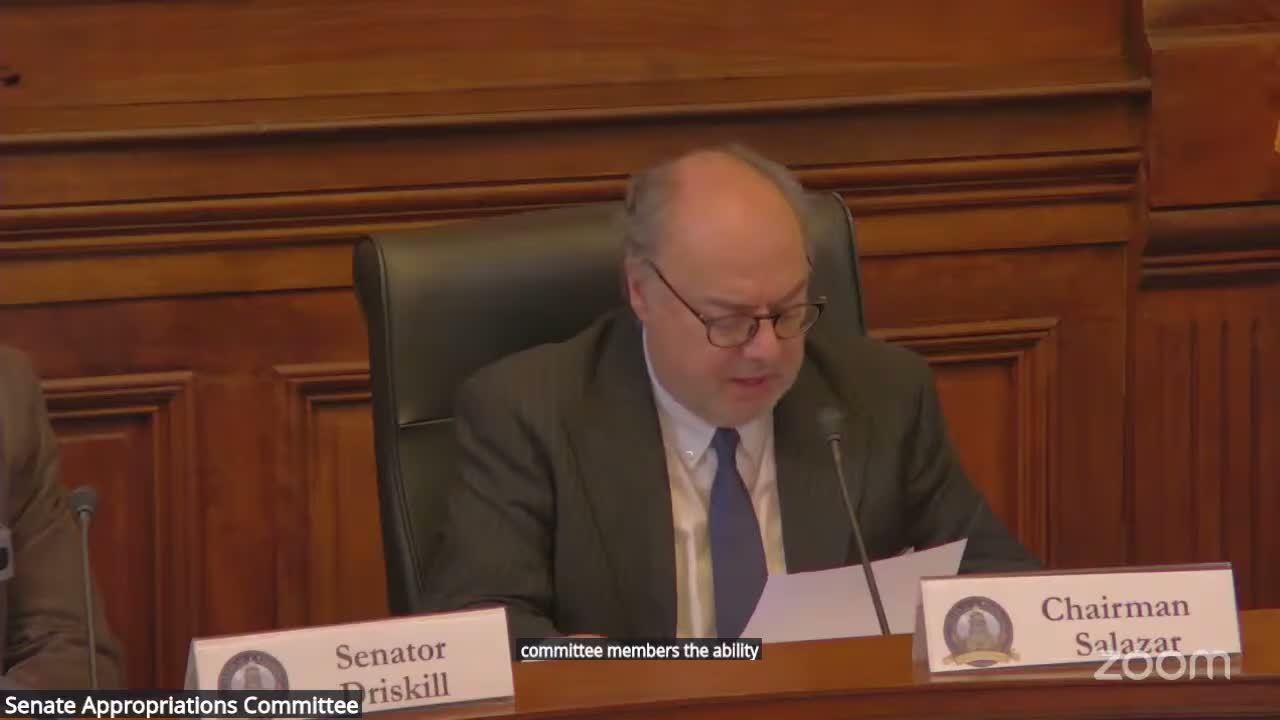
The Senate Appropriations Committee on Feb. 14 advanced Senate File 14, a bill to add a full‑time K–3 literacy position at the Department of Education and provide limited contractor funding to support implementation of the state's early‑reading statute (21 3 4 0 1).
Supporters, including Department staff Dickie Schoener and Nate Tejeski, told the committee the position would give the department a single, accountable point of contact to ensure districts use approved screeners, deliver evidence‑based interventions and report reading plans to the state. Schoener said the role mirrors an existing ‘‘900‑series’’ model used for school support, combining a full‑time employee with contracting authority for short‑term expert assistance.
Retired teacher Gay Wilson of Cheyenne said Wyoming is currently the only state without a dedicated literacy office and described how the lack of state capacity forces local educators to struggle for consistent support. She presented a handout from the Education Consumers Foundation that projected long‑term costs of poor third‑grade reading outcomes, citing an example lifetime cost to one district of more than $16,000,000 for a single graduating cohort.
Carrie Roden of the International Dyslexia Association’s Rocky Mountain branch urged the committee to prioritize teacher training, saying roughly 10–20% of students have dyslexia or similar decoding difficulties and that many teachers do not receive the training needed to teach decoding and phonics with fidelity.
Committee members, including Senator French and Chairman Salazar, expressed support. After public comment, Senator French moved to proceed; the motion was seconded and the committee took a roll‑call vote. Senators Driscoll, French, Larson and Chairman Salazar voted Aye; Senator Carew was excused. The clerk announced the bill ‘do pass’ by 4 ayes and 1 excused.
The bill’s proponents say the up‑front cost is modest compared with long‑term savings from earlier intervention, including reduced remediation and special‑education referrals. The committee did not amend the measure before reporting it out; the bill will continue through the legislative process.
Supporters, including Department staff Dickie Schoener and Nate Tejeski, told the committee the position would give the department a single, accountable point of contact to ensure districts use approved screeners, deliver evidence‑based interventions and report reading plans to the state. Schoener said the role mirrors an existing ‘‘900‑series’’ model used for school support, combining a full‑time employee with contracting authority for short‑term expert assistance.
Retired teacher Gay Wilson of Cheyenne said Wyoming is currently the only state without a dedicated literacy office and described how the lack of state capacity forces local educators to struggle for consistent support. She presented a handout from the Education Consumers Foundation that projected long‑term costs of poor third‑grade reading outcomes, citing an example lifetime cost to one district of more than $16,000,000 for a single graduating cohort.
Carrie Roden of the International Dyslexia Association’s Rocky Mountain branch urged the committee to prioritize teacher training, saying roughly 10–20% of students have dyslexia or similar decoding difficulties and that many teachers do not receive the training needed to teach decoding and phonics with fidelity.
Committee members, including Senator French and Chairman Salazar, expressed support. After public comment, Senator French moved to proceed; the motion was seconded and the committee took a roll‑call vote. Senators Driscoll, French, Larson and Chairman Salazar voted Aye; Senator Carew was excused. The clerk announced the bill ‘do pass’ by 4 ayes and 1 excused.
The bill’s proponents say the up‑front cost is modest compared with long‑term savings from earlier intervention, including reduced remediation and special‑education referrals. The committee did not amend the measure before reporting it out; the bill will continue through the legislative process.
View the Full Meeting & All Its Details
This article offers just a summary. Unlock complete video, transcripts, and insights as a Founder Member.
✓
Watch full, unedited meeting videos
✓
Search every word spoken in unlimited transcripts
✓
AI summaries & real-time alerts (all government levels)
✓
Permanent access to expanding government content
30-day money-back guarantee
