Evanston social-services committee approves 2026 funding recommendations to send to City Council
February 13, 2026 | Evanston, Cook County, Illinois
This article was created by AI summarizing key points discussed. AI makes mistakes, so for full details and context, please refer to the video of the full meeting. Please report any errors so we can fix them. Report an error »
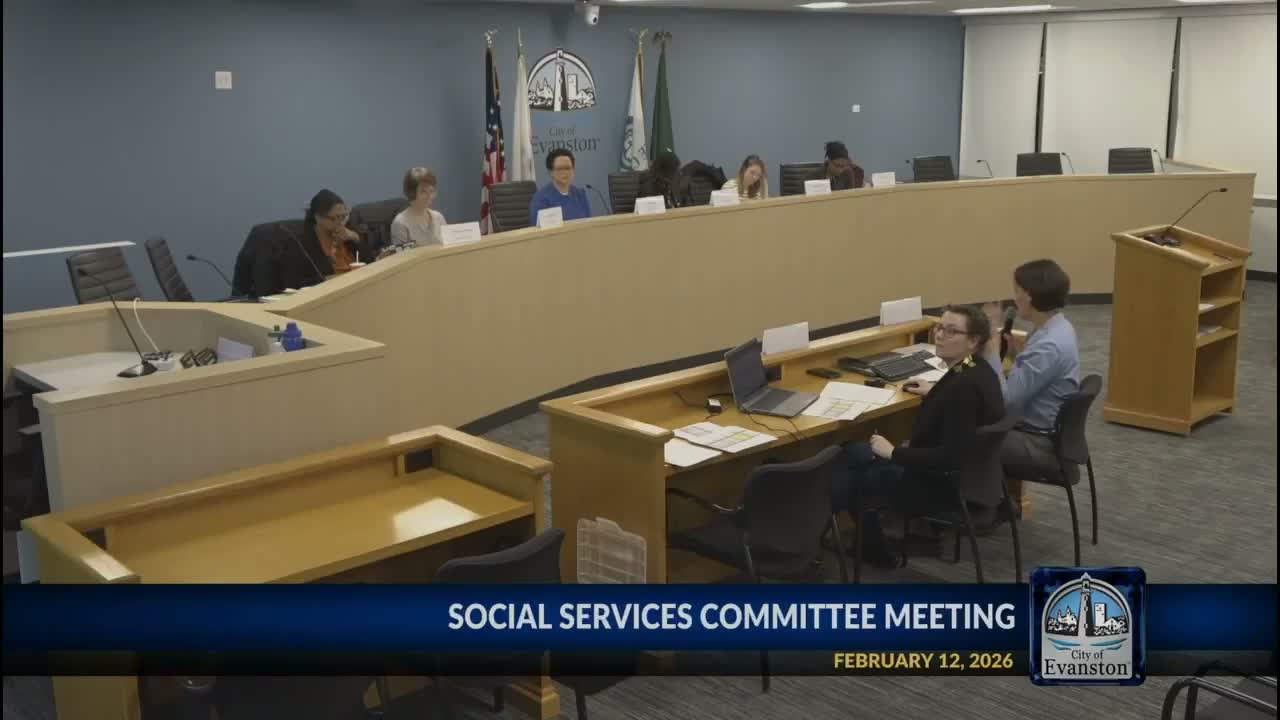
The Evanston Social Service Committee voted unanimously to approve a set of 2026 funding recommendations to forward to City Council after a round of adjustments and debate over allocations to local providers.
City staff opened the meeting by reviewing the committee's scoring methodology, which uses an averaged SSC score and preserves requested amounts for shelter and basic-needs programs. Staff said the model produced a small overage—roughly $61,320—to allow the committee to reallocate funds as needed. Committee members discussed restoring several high-performing agencies to their 2025 award levels and directing additional dollars to programs that serve a high share of Evanston residents.
During public comment, Alyssa Garcia, director of residential services at Lydia Home Evanston, described the program's residential care for 40 youth ages 7–18 and said mentorship and placement capacity are major barriers: "We currently house 40 kids and only 7 of them are currently matched with a mentor," she said, and asked the committee to consider funding to support recruitment for mentors and treatment foster parents. Lauren Warsaw, division director of clinical services at Impact Behavioral Health Partners, said Impact's full program cost is "just over $80,000," and that the agency requested $75,000 for 2026; she said the city funded $25,000 of a prior $50,000 request and warned that without additional funding wait lists and barriers for unhoused residents would grow. Alicia Gaddis, substance use disorder treatment program director at Peer Services, said the city's award amount supports almost two full-time clinicians and asked the committee to limit cuts if reductions were necessary.
Committee debate focused on several flagged cases staff had called out: Moran Center (case management and legal services), Peer Services (substance use treatment), Books & Breakfast (school-based services), YOU (youth services), and Lydia Home's mentoring proposal. Members weighed three main factors: (1) percent of Evanston residents served, (2) allocation as a share of a program's overall budget, and (3) administrative burden when awarding small grants. Multiple members proposed restoring Moran Center's case management award and increasing Infant Welfare Society's allocation after noting sharp reductions.
After live adjustments on the spreadsheet, a committee member moved to accept the final numbers as presented; the motion was seconded and staff read the recommended awards to forward to City Council. As read by staff, the package included (staff-read amounts): $55,575 to Connections (youth program); $73,500 to Moran Center (case management); $56,700 to Books & Breakfast; $77,085 to Child Care Network of Evanston; $150,000 to Connections for the Homeless (drop-in outreach and health services); $24,030 to Evanston Scholars; $103,500 to Family Focus; $63,320 to Family Promise; $90,000 to Infant Welfare Society (teen/baby and toddler nursery programs); $100,000 to Interfaith Action (emergency cold-weather shelter); $54,000 to Moran Center (legal services); $31,725 to North Shore Senior Center; $84,105 to Peer Services (substance-use treatment); $46,860 to YOU; and $39,600 to YWCA (domestic violence shelter program). Staff emphasized the readback was the staff recommendation to be forwarded to council.
The committee then voted by roll call. Vice Chair Amanda Angola, Council member Harris, Diane Goldring, Renee Phillips, Samantha Oldsbury and Sherry Lackey each recorded "Aye," and the motion passed. The committee approved the recommended allocation package to be presented to City Council for final adoption and any subsequent administrative steps.
Staff also announced that the city's Consolidated Annual Performance and Evaluation Report (CAPER) will be available for public comment beginning March 2 and that the federal budget provided flat funding for CDBG and HOME; staff said the committee will post the CAPER for HUD submission after council action.
The committee adjourned after brief final comments on volunteer recruitment and non-monetary supports for mentoring programs. Next steps: staff will transmit the committee's recommended allocations to City Council and publish the CAPER for public comment.
City staff opened the meeting by reviewing the committee's scoring methodology, which uses an averaged SSC score and preserves requested amounts for shelter and basic-needs programs. Staff said the model produced a small overage—roughly $61,320—to allow the committee to reallocate funds as needed. Committee members discussed restoring several high-performing agencies to their 2025 award levels and directing additional dollars to programs that serve a high share of Evanston residents.
During public comment, Alyssa Garcia, director of residential services at Lydia Home Evanston, described the program's residential care for 40 youth ages 7–18 and said mentorship and placement capacity are major barriers: "We currently house 40 kids and only 7 of them are currently matched with a mentor," she said, and asked the committee to consider funding to support recruitment for mentors and treatment foster parents. Lauren Warsaw, division director of clinical services at Impact Behavioral Health Partners, said Impact's full program cost is "just over $80,000," and that the agency requested $75,000 for 2026; she said the city funded $25,000 of a prior $50,000 request and warned that without additional funding wait lists and barriers for unhoused residents would grow. Alicia Gaddis, substance use disorder treatment program director at Peer Services, said the city's award amount supports almost two full-time clinicians and asked the committee to limit cuts if reductions were necessary.
Committee debate focused on several flagged cases staff had called out: Moran Center (case management and legal services), Peer Services (substance use treatment), Books & Breakfast (school-based services), YOU (youth services), and Lydia Home's mentoring proposal. Members weighed three main factors: (1) percent of Evanston residents served, (2) allocation as a share of a program's overall budget, and (3) administrative burden when awarding small grants. Multiple members proposed restoring Moran Center's case management award and increasing Infant Welfare Society's allocation after noting sharp reductions.
After live adjustments on the spreadsheet, a committee member moved to accept the final numbers as presented; the motion was seconded and staff read the recommended awards to forward to City Council. As read by staff, the package included (staff-read amounts): $55,575 to Connections (youth program); $73,500 to Moran Center (case management); $56,700 to Books & Breakfast; $77,085 to Child Care Network of Evanston; $150,000 to Connections for the Homeless (drop-in outreach and health services); $24,030 to Evanston Scholars; $103,500 to Family Focus; $63,320 to Family Promise; $90,000 to Infant Welfare Society (teen/baby and toddler nursery programs); $100,000 to Interfaith Action (emergency cold-weather shelter); $54,000 to Moran Center (legal services); $31,725 to North Shore Senior Center; $84,105 to Peer Services (substance-use treatment); $46,860 to YOU; and $39,600 to YWCA (domestic violence shelter program). Staff emphasized the readback was the staff recommendation to be forwarded to council.
The committee then voted by roll call. Vice Chair Amanda Angola, Council member Harris, Diane Goldring, Renee Phillips, Samantha Oldsbury and Sherry Lackey each recorded "Aye," and the motion passed. The committee approved the recommended allocation package to be presented to City Council for final adoption and any subsequent administrative steps.
Staff also announced that the city's Consolidated Annual Performance and Evaluation Report (CAPER) will be available for public comment beginning March 2 and that the federal budget provided flat funding for CDBG and HOME; staff said the committee will post the CAPER for HUD submission after council action.
The committee adjourned after brief final comments on volunteer recruitment and non-monetary supports for mentoring programs. Next steps: staff will transmit the committee's recommended allocations to City Council and publish the CAPER for public comment.
View the Full Meeting & All Its Details
This article offers just a summary. Unlock complete video, transcripts, and insights as a Founder Member.
✓
Watch full, unedited meeting videos
✓
Search every word spoken in unlimited transcripts
✓
AI summaries & real-time alerts (all government levels)
✓
Permanent access to expanding government content
30-day money-back guarantee
