Mount Jumbo elk‑spotters program grows; volunteers’ data helps time seasonal closures
February 13, 2026 | Missoula, Missoula County, Montana
This article was created by AI summarizing key points discussed. AI makes mistakes, so for full details and context, please refer to the video of the full meeting. Please report any errors so we can fix them. Report an error »
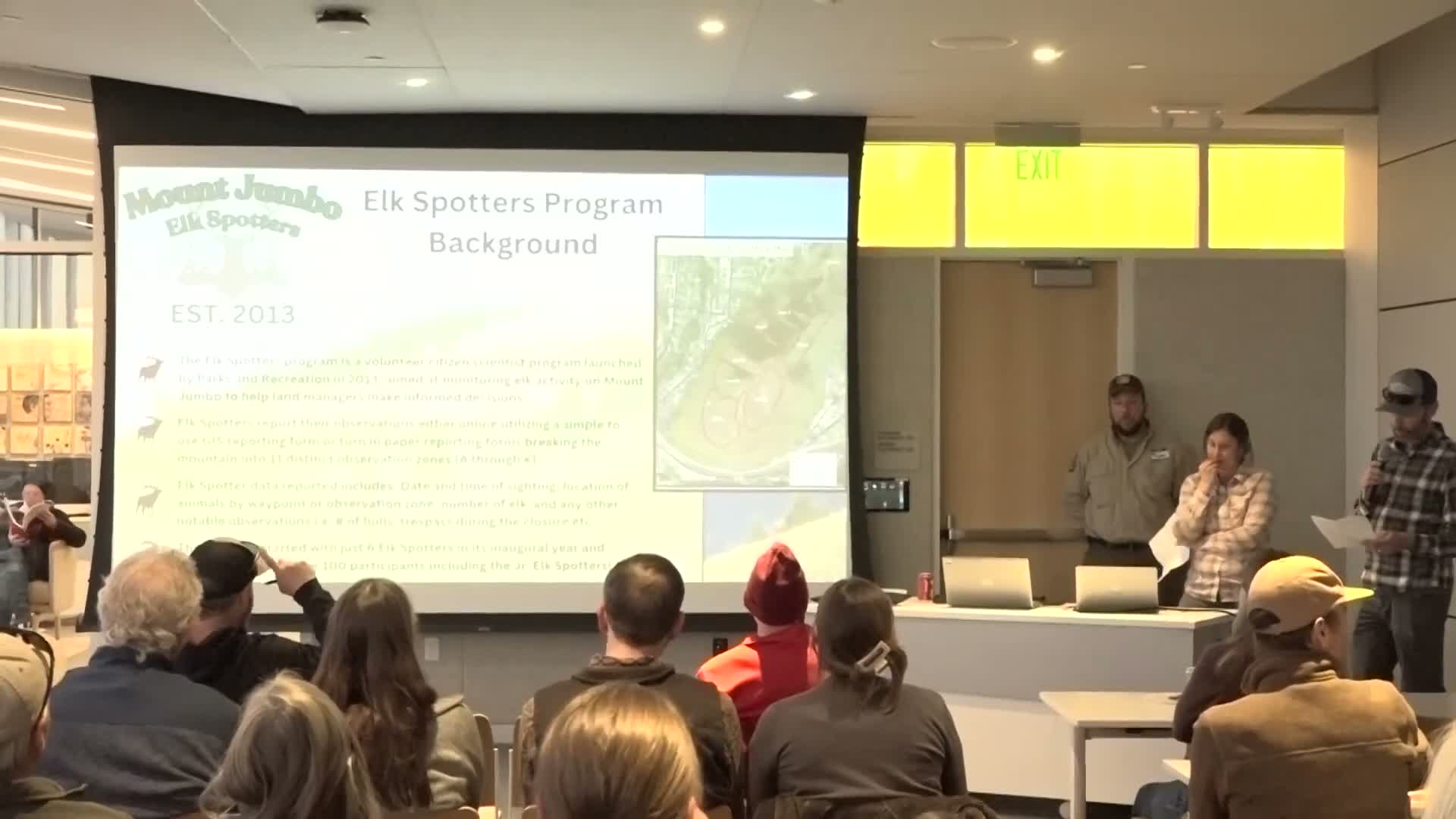
Mike Sharp, outreach and stewardship coordinator for the Conservation Lands Program, opened the Mount Jumbo Elk Spotters annual meeting by thanking volunteers and partners and encouraging new signups.
Volunteers record location (waypoint or one of 11 observation zones), date and time, elk counts and composition, and any trespass during the winter closure. Hillary, the program’s inventory and monitoring specialist, told the group the program has grown from six spotters in 2013 to more than 100 participants and reported a record high survey count of 134 elk this season ("give or take 5," she said), with a verified minimum of about 126–127. The first group this season was observed Sept. 29 — the earliest first observation since the program began.
Fish, Wildlife & Parks (FWP) Missoula area wildlife biologist Ryan Klemstra described how ground observations complement aerial surveys, especially when weather or aircraft availability limit flights. He said spotters’ data have been incorporated into the state’s elk management plan and are used by the city and FWP to adjust seasonal closures and targeted habitat treatments (for example prescribed burns, timber thinning or weed control).
City and FWP staff reviewed usual closure dates: Mount Jumbo closes Dec. 1; the South zone typically reopens on or after March 15 and the North zone on or after May 1. Both dates are conditional: reopening depends on two primary triggers monitored by biweekly green‑up surveys — vegetation growth (FWP cited roughly 3 inches of new growth on perennial bunchgrasses as a working threshold for elk forage) and continued elk presence or absence. If elk have already moved north before the scheduled reopening, staff said zones open as conditions allow.
Volunteers were reminded that reporting zero elk is valuable. Staff advised marking the observer’s location on the reporting map so managers can infer which zones were visible to the spotter rather than creating many waypoints for zero observations. Mike Sharp invited attendees who are not current spotters to register via a QR code and noted other volunteer opportunities on conservation lands.
The meeting closed with a question‑and‑answer period and an announcement of door prizes donated by the Rocky Mountain Elk Foundation.
Volunteers record location (waypoint or one of 11 observation zones), date and time, elk counts and composition, and any trespass during the winter closure. Hillary, the program’s inventory and monitoring specialist, told the group the program has grown from six spotters in 2013 to more than 100 participants and reported a record high survey count of 134 elk this season ("give or take 5," she said), with a verified minimum of about 126–127. The first group this season was observed Sept. 29 — the earliest first observation since the program began.
Fish, Wildlife & Parks (FWP) Missoula area wildlife biologist Ryan Klemstra described how ground observations complement aerial surveys, especially when weather or aircraft availability limit flights. He said spotters’ data have been incorporated into the state’s elk management plan and are used by the city and FWP to adjust seasonal closures and targeted habitat treatments (for example prescribed burns, timber thinning or weed control).
City and FWP staff reviewed usual closure dates: Mount Jumbo closes Dec. 1; the South zone typically reopens on or after March 15 and the North zone on or after May 1. Both dates are conditional: reopening depends on two primary triggers monitored by biweekly green‑up surveys — vegetation growth (FWP cited roughly 3 inches of new growth on perennial bunchgrasses as a working threshold for elk forage) and continued elk presence or absence. If elk have already moved north before the scheduled reopening, staff said zones open as conditions allow.
Volunteers were reminded that reporting zero elk is valuable. Staff advised marking the observer’s location on the reporting map so managers can infer which zones were visible to the spotter rather than creating many waypoints for zero observations. Mike Sharp invited attendees who are not current spotters to register via a QR code and noted other volunteer opportunities on conservation lands.
The meeting closed with a question‑and‑answer period and an announcement of door prizes donated by the Rocky Mountain Elk Foundation.
Don't Miss a Word: See the Full Meeting!
Go beyond summaries. Unlock every video, transcript, and key insight with a Founder Membership.
✓
Get instant access to full meeting videos
✓
Search and clip any phrase from complete transcripts
✓
Receive AI-powered summaries & custom alerts
✓
Enjoy lifetime, unrestricted access to government data
30-day money-back guarantee
