FWP, Elk Foundation brief volunteers on chronic wasting disease risks, testing and carcass disposal
February 13, 2026 | Missoula, Missoula County, Montana
This article was created by AI summarizing key points discussed. AI makes mistakes, so for full details and context, please refer to the video of the full meeting. Please report any errors so we can fix them. Report an error »
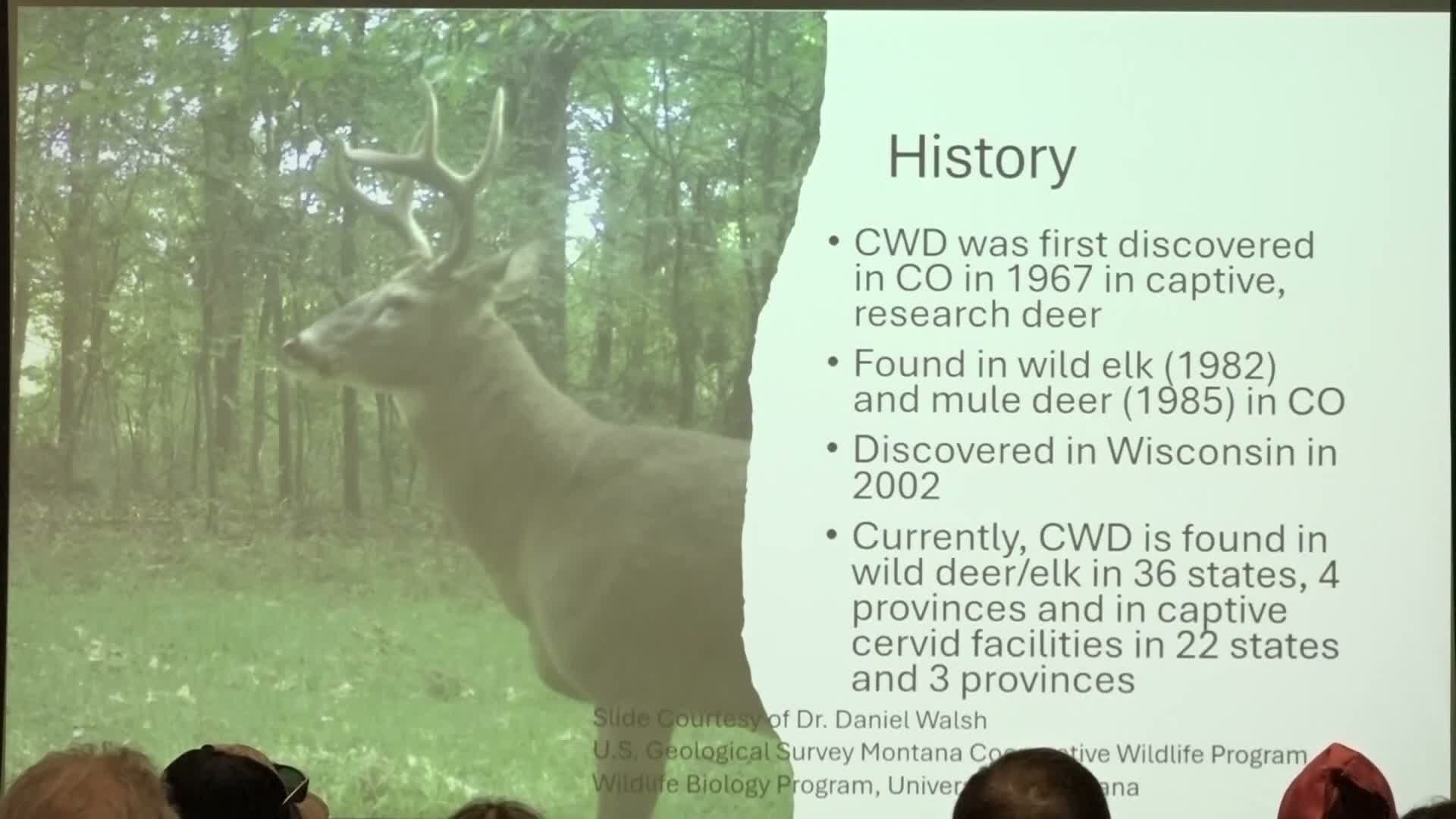
Fish, Wildlife & Parks Missoula area wildlife biologist Ryan Klemstra gave an extended briefing on chronic wasting disease (CWD), describing it as a transmissible spongiform encephalopathy caused by a misfolded protein (a prion). "It is 100 percent fatal to all ungulate species that it affects," he said, and noted the disease can spread both directly and indirectly (urine, feces, saliva, blood and contaminated carcass material) and can persist in soil for many years.
Klemstra said CWD has been detected in multiple states and provinces; within the FWP region he referenced one positive mule deer near the Deer Lodge area two years earlier and said that while Montana has CWD in parts of the state, Missoula County and neighboring Mineral and Ravalli counties did not have confirmed positives at the time of his remarks. He urged volunteers to report sick or injured ungulates to FWP to aid surveillance and said FWP will test hunter‑harvested animals for free; hunters can bring samples to FWP during season or mail them in. FWP typically returns test results in about a week and notifies hunters and processors of positive results.
On disposal, Klemstra recommended class‑2 landfill disposal for carcasses and described contracted carcass‑disposal sites (Republic Services) where hunters and the public may deposit carcass material. He described processor guidance: processors are notified of positive tests and are advised on sanitary cleaning; the presenter said processors commonly use a high‑concentration bleach solution that research indicates can inactivate prions on surfaces. He also described sample collection: pharyngeal lymph nodes (near the back of the throat) or brainstem/OBEX samples are used for testing and FWP provides how‑to videos and assistance.
Heather Abernathy, lead research scientist at the Rocky Mountain Elk Foundation, amplified the need for long‑term datasets and behavioral monitoring to detect gradual change and rare events. She emphasized that citizen science sampling and careful reporting help researchers and managers better understand patterns such as earlier arrivals on winter range or changes in group composition that may affect disease dynamics.
Both presenters cautioned that human risk from CWD is considered low but not zero; they recommended that people avoid handling or consuming animals known to be CWD positive and follow testing and disposal guidance. Volunteers were directed to report active trespass to 911 and to use the Mount Jumbo tip line for after‑the‑fact reports to aid enforcement and evidence collection.
Klemstra said CWD has been detected in multiple states and provinces; within the FWP region he referenced one positive mule deer near the Deer Lodge area two years earlier and said that while Montana has CWD in parts of the state, Missoula County and neighboring Mineral and Ravalli counties did not have confirmed positives at the time of his remarks. He urged volunteers to report sick or injured ungulates to FWP to aid surveillance and said FWP will test hunter‑harvested animals for free; hunters can bring samples to FWP during season or mail them in. FWP typically returns test results in about a week and notifies hunters and processors of positive results.
On disposal, Klemstra recommended class‑2 landfill disposal for carcasses and described contracted carcass‑disposal sites (Republic Services) where hunters and the public may deposit carcass material. He described processor guidance: processors are notified of positive tests and are advised on sanitary cleaning; the presenter said processors commonly use a high‑concentration bleach solution that research indicates can inactivate prions on surfaces. He also described sample collection: pharyngeal lymph nodes (near the back of the throat) or brainstem/OBEX samples are used for testing and FWP provides how‑to videos and assistance.
Heather Abernathy, lead research scientist at the Rocky Mountain Elk Foundation, amplified the need for long‑term datasets and behavioral monitoring to detect gradual change and rare events. She emphasized that citizen science sampling and careful reporting help researchers and managers better understand patterns such as earlier arrivals on winter range or changes in group composition that may affect disease dynamics.
Both presenters cautioned that human risk from CWD is considered low but not zero; they recommended that people avoid handling or consuming animals known to be CWD positive and follow testing and disposal guidance. Volunteers were directed to report active trespass to 911 and to use the Mount Jumbo tip line for after‑the‑fact reports to aid enforcement and evidence collection.
View the Full Meeting & All Its Details
This article offers just a summary. Unlock complete video, transcripts, and insights as a Founder Member.
✓
Watch full, unedited meeting videos
✓
Search every word spoken in unlimited transcripts
✓
AI summaries & real-time alerts (all government levels)
✓
Permanent access to expanding government content
30-day money-back guarantee
