Senate committee advances study of water classification, anti‑degradation rules after wide stakeholder support
February 13, 2026 | Natural Resources & Energy, SENATE, Committees, Legislative , Vermont
This article was created by AI summarizing key points discussed. AI makes mistakes, so for full details and context, please refer to the video of the full meeting. Please report any errors so we can fix them. Report an error »
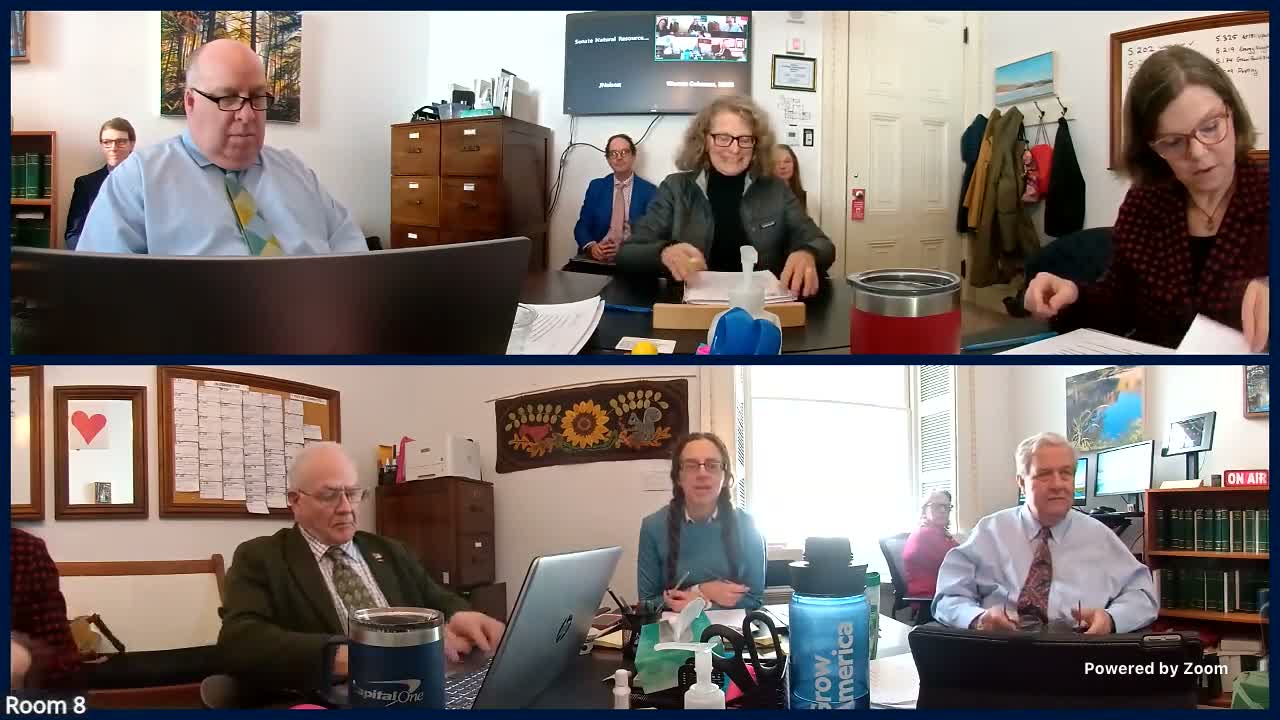
The Senate Natural Resources & Energy committee on Feb. 13 took up S.223, a bill to create a study committee to review how Vermont classifies surface waters and how the state implements anti‑degradation protections.
Neil Kent, deputy commissioner at the Department of Environmental Conservation, said the department supports a stakeholder study that would evaluate the classification sliding scale for different waterbodies and examine whether the approach for lakes and ponds requires refinement. "We'd like to... bring a really tight proposal back to you all," Kent said, describing the goal as creating regulatory certainty while protecting water resources.
Stephanie Sargent, program manager for monitoring in DEC’s Water Quality Division, urged the committee to tighten the bill’s language so the study group would explicitly evaluate whether statutory or regulatory barriers prevent necessary reclassification and whether those frameworks provide regulatory certainty for lakes and ponds. She said reclassification takes place through rulemaking, and the study should identify whether statutory or administrative changes are needed to implement anti‑degradation as intended.
Speakers from advocacy, engineering and conservation organizations strongly supported the study group. Gus Swase, president of the Federation of Lakes and Ponds, said the Agency of Natural Resources identified 13 lakes in 2021 as eligible for reclassification to A1 waters — a designation that would require earlier state intervention and stronger anti‑degradation scrutiny — but that petitions for reclassification have stalled because A1 watershed rules can unintentionally block beneficial projects. He described an example in which seven shoreline property owners replaced failing individual septic systems with a single community system located farther from the shoreline; that larger system would not have been permitted under the A1 watershed limits despite improving water quality.
Jeff Nelson, a principal at engineering firm VHB, told the committee technical solutions exist — for wastewater, stormwater and other infrastructure — that can allow development while maintaining high water quality, and he supported the study group as the right forum to develop workable policy recommendations. Warren Coleman, a partner at MMR and former agency general counsel, said the process is complex and would benefit from a focused group to educate legislators and coordinate rulemaking with statutory changes. Mason Overstreet of the Conservation Law Foundation described the long history of stalled efforts on anti‑degradation and reclassification and said S.223 offers a pragmatic path forward.
Committee members asked whether the study timeline is realistic; witnesses said a focused, expert group could meet the proposed schedule if priorities are narrowed and suggested moving a report deadline earlier (committee members discussed Dec. 15 as preferable to a December 30 due date). Members also discussed whether the study’s language should emphasize ecological integrity, regulatory certainty, or both; DEC and stakeholders agreed to exchange tightened language for the committee to review at a follow‑up meeting.
No formal vote was recorded during the Feb. 13 hearing. The committee scheduled further discussion of S.223 and related sections of water policy during joint sessions with the Economic Development committee later in the week.
Neil Kent, deputy commissioner at the Department of Environmental Conservation, said the department supports a stakeholder study that would evaluate the classification sliding scale for different waterbodies and examine whether the approach for lakes and ponds requires refinement. "We'd like to... bring a really tight proposal back to you all," Kent said, describing the goal as creating regulatory certainty while protecting water resources.
Stephanie Sargent, program manager for monitoring in DEC’s Water Quality Division, urged the committee to tighten the bill’s language so the study group would explicitly evaluate whether statutory or regulatory barriers prevent necessary reclassification and whether those frameworks provide regulatory certainty for lakes and ponds. She said reclassification takes place through rulemaking, and the study should identify whether statutory or administrative changes are needed to implement anti‑degradation as intended.
Speakers from advocacy, engineering and conservation organizations strongly supported the study group. Gus Swase, president of the Federation of Lakes and Ponds, said the Agency of Natural Resources identified 13 lakes in 2021 as eligible for reclassification to A1 waters — a designation that would require earlier state intervention and stronger anti‑degradation scrutiny — but that petitions for reclassification have stalled because A1 watershed rules can unintentionally block beneficial projects. He described an example in which seven shoreline property owners replaced failing individual septic systems with a single community system located farther from the shoreline; that larger system would not have been permitted under the A1 watershed limits despite improving water quality.
Jeff Nelson, a principal at engineering firm VHB, told the committee technical solutions exist — for wastewater, stormwater and other infrastructure — that can allow development while maintaining high water quality, and he supported the study group as the right forum to develop workable policy recommendations. Warren Coleman, a partner at MMR and former agency general counsel, said the process is complex and would benefit from a focused group to educate legislators and coordinate rulemaking with statutory changes. Mason Overstreet of the Conservation Law Foundation described the long history of stalled efforts on anti‑degradation and reclassification and said S.223 offers a pragmatic path forward.
Committee members asked whether the study timeline is realistic; witnesses said a focused, expert group could meet the proposed schedule if priorities are narrowed and suggested moving a report deadline earlier (committee members discussed Dec. 15 as preferable to a December 30 due date). Members also discussed whether the study’s language should emphasize ecological integrity, regulatory certainty, or both; DEC and stakeholders agreed to exchange tightened language for the committee to review at a follow‑up meeting.
No formal vote was recorded during the Feb. 13 hearing. The committee scheduled further discussion of S.223 and related sections of water policy during joint sessions with the Economic Development committee later in the week.
Don't Miss a Word: See the Full Meeting!
Go beyond summaries. Unlock every video, transcript, and key insight with a Founder Membership.
✓
Get instant access to full meeting videos
✓
Search and clip any phrase from complete transcripts
✓
Receive AI-powered summaries & custom alerts
✓
Enjoy lifetime, unrestricted access to government data
30-day money-back guarantee
