Sandpoint council workshop flags $30M water needs, $130M wastewater replacement and legal limits on growth outside city limits
February 13, 2026 | Sandpoint, Bonner County, Idaho
This article was created by AI summarizing key points discussed. AI makes mistakes, so for full details and context, please refer to the video of the full meeting. Please report any errors so we can fix them. Report an error »
City planners and public‑works staff used the Feb. 11 strategic‑planning kickoff to highlight large utility capital needs, interjurisdictional obligations and policy tradeoffs tied to growth and service outside city limits.
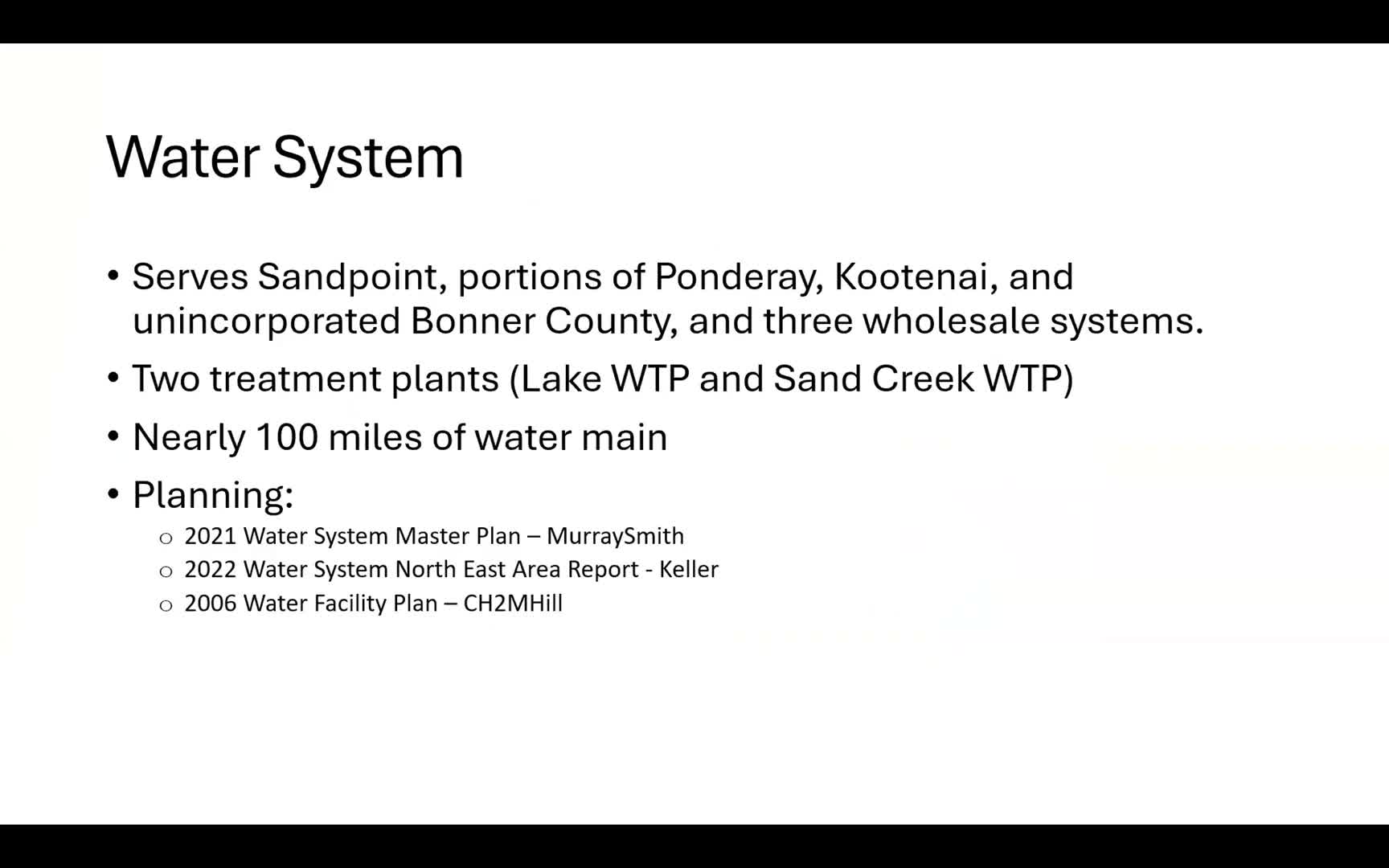
Public works (Speaker 4) said Sandpoint’s water system includes two treatment plants, about 100 miles of pipeline and estimated improvements totaling roughly $30 million — about $20 million to address aging infrastructure, $7 million for fire‑flow fixes outside city limits and $3 million tied to growth. "We have $30,000,000 of improvements in our water system needed," Speaker 4 said.
On wastewater, staff described a replacement facility estimated at $130 million and collection‑system work (lift stations and mains) totaling about $46 million. The city has engaged Keller & Associates on a preliminary engineering report and has begun conversations with the Idaho Department of Environmental Quality to explore possible permit‑related cost savings.
Councilors and staff also discussed the policy consequences of serving customers outside Sandpoint’s municipal boundaries. Staff said the historical logic for extending water was to spread treatment costs over a larger customer base and improve grant competitiveness, but warned that missing intergovernmental agreements and changes to Idaho annexation and area‑of‑impact statutes complicate long‑range planning and raise questions about who pays for future bond obligations and infrastructure replacement.
"If we were just to say we're not serving water outside, we'd be forced to raise rates to cover the ongoing cost," Speaker 9 said, noting the tradeoff between a larger rate base and long‑term replacement liabilities that may sit outside the city limits.
Staff requested council direction on how high a priority to place resolving intergovernmental agreements, annexation policy and regionwide service options so staff can estimate costs and legal risk as part of strategic planning.
Next steps: staff will prepare options that lay out tradeoffs (continue current service, require IGA, or pursue wholesale/ regionalization models), associated cost estimates and legal analysis for council review.
Public works (Speaker 4) said Sandpoint’s water system includes two treatment plants, about 100 miles of pipeline and estimated improvements totaling roughly $30 million — about $20 million to address aging infrastructure, $7 million for fire‑flow fixes outside city limits and $3 million tied to growth. "We have $30,000,000 of improvements in our water system needed," Speaker 4 said.
On wastewater, staff described a replacement facility estimated at $130 million and collection‑system work (lift stations and mains) totaling about $46 million. The city has engaged Keller & Associates on a preliminary engineering report and has begun conversations with the Idaho Department of Environmental Quality to explore possible permit‑related cost savings.
Councilors and staff also discussed the policy consequences of serving customers outside Sandpoint’s municipal boundaries. Staff said the historical logic for extending water was to spread treatment costs over a larger customer base and improve grant competitiveness, but warned that missing intergovernmental agreements and changes to Idaho annexation and area‑of‑impact statutes complicate long‑range planning and raise questions about who pays for future bond obligations and infrastructure replacement.
"If we were just to say we're not serving water outside, we'd be forced to raise rates to cover the ongoing cost," Speaker 9 said, noting the tradeoff between a larger rate base and long‑term replacement liabilities that may sit outside the city limits.
Staff requested council direction on how high a priority to place resolving intergovernmental agreements, annexation policy and regionwide service options so staff can estimate costs and legal risk as part of strategic planning.
Next steps: staff will prepare options that lay out tradeoffs (continue current service, require IGA, or pursue wholesale/ regionalization models), associated cost estimates and legal analysis for council review.
Don't Miss a Word: See the Full Meeting!
Go beyond summaries. Unlock every video, transcript, and key insight with a Founder Membership.
✓
Get instant access to full meeting videos
✓
Search and clip any phrase from complete transcripts
✓
Receive AI-powered summaries & custom alerts
✓
Enjoy lifetime, unrestricted access to government data
30-day money-back guarantee
