Committee advances HB 370 requiring monitoring for registry entries without addresses
February 13, 2026 | 2026 Utah Legislature, Utah Legislature, Utah Legislative Branch, Utah
This article was created by AI summarizing key points discussed. AI makes mistakes, so for full details and context, please refer to the video of the full meeting. Please report any errors so we can fix them. Report an error »
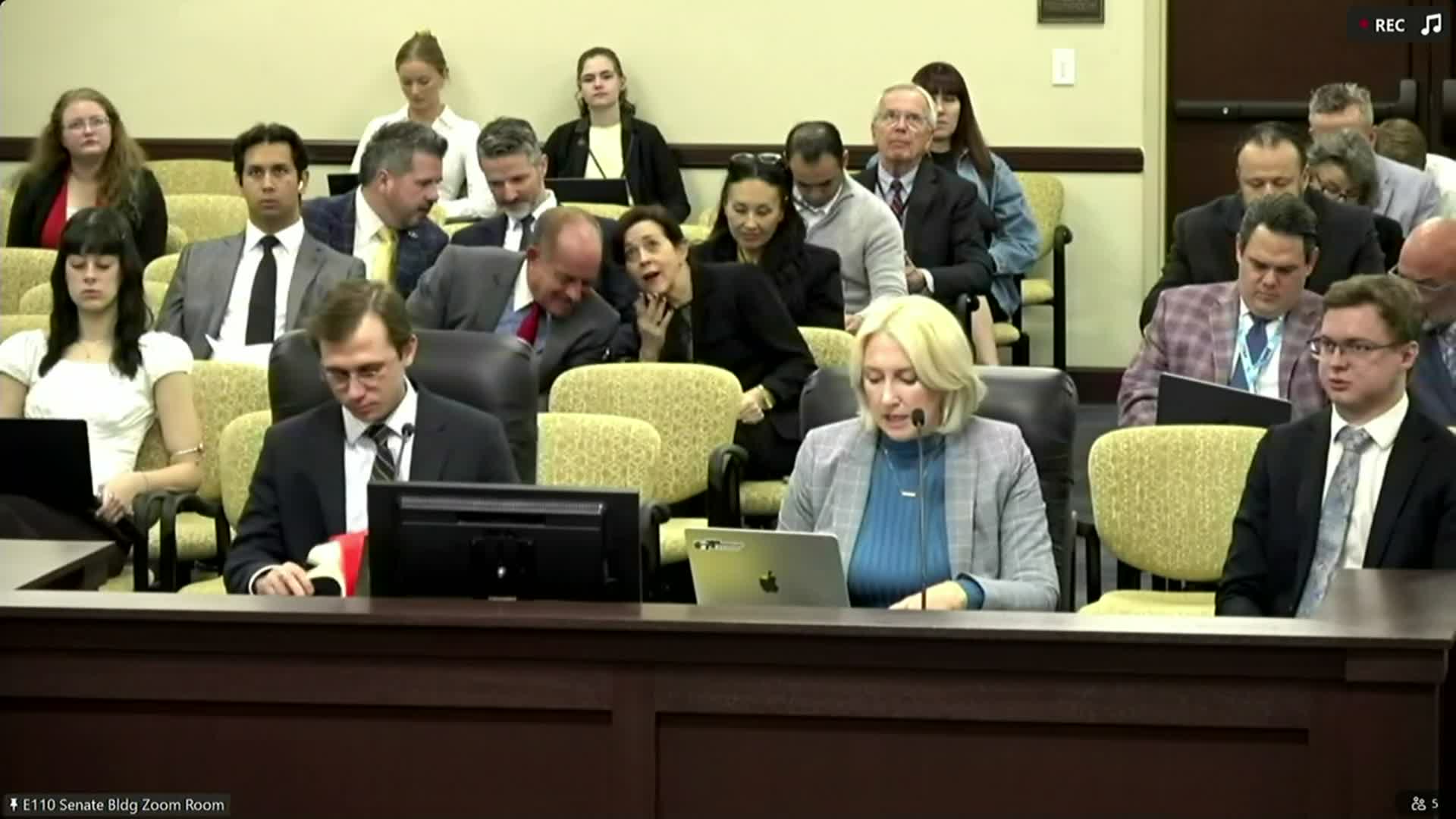
Representative Lisonbee introduced HB 370, which would require the Department of Public Safety to establish a location‑monitoring program (implemented using an ankle monitor) for registry participants who do not provide a residential address. The sponsor said about 291 registrants lacked an address on the public registry and estimated a quarter to a third of them may have an address but avoid reporting it. The bill directs law‑enforcement, corrections and courts to coordinate with DPS and allows monitoring to begin after registrants are notified that they cannot provide a required address.
Presenters and witnesses emphasized public‑safety benefits and cited studies indicating electronic monitoring can reduce arrests and returns to custody; Joshua Reynolds and Devin Kurtz described research from California, Tennessee and international meta‑analyses supporting monitoring effectiveness and limited psychological harms. The Utah Sheriffs Association and the Statewide Association of Prosecutors voiced support, saying the measure would help supervise a hard‑to‑track subgroup.
Opponents — including Utah for Rational Offense Laws — raised questions about the actual number of registrants without addresses (transcript mentions both 214 and 291 as counts), whether the bill should be retroactive, the affordability and access to housing for registrants who face landlord restrictions, and vendor costs (testimony cited private‑vendor installation and daily fees). Committee members asked whether the state or individuals would pay monitoring costs; the sponsor said the state would cover monitors for indigent registrants.
Representative Ocasio moved an amendment to strike several lines but withdrew after discussion; the committee adopted the first substitute and later voted to favorably recommend the substitute to the House floor. Sponsors and stakeholders signaled continued collaboration on implementation details, vendor costs and coordination with county sheriffs.
Presenters and witnesses emphasized public‑safety benefits and cited studies indicating electronic monitoring can reduce arrests and returns to custody; Joshua Reynolds and Devin Kurtz described research from California, Tennessee and international meta‑analyses supporting monitoring effectiveness and limited psychological harms. The Utah Sheriffs Association and the Statewide Association of Prosecutors voiced support, saying the measure would help supervise a hard‑to‑track subgroup.
Opponents — including Utah for Rational Offense Laws — raised questions about the actual number of registrants without addresses (transcript mentions both 214 and 291 as counts), whether the bill should be retroactive, the affordability and access to housing for registrants who face landlord restrictions, and vendor costs (testimony cited private‑vendor installation and daily fees). Committee members asked whether the state or individuals would pay monitoring costs; the sponsor said the state would cover monitors for indigent registrants.
Representative Ocasio moved an amendment to strike several lines but withdrew after discussion; the committee adopted the first substitute and later voted to favorably recommend the substitute to the House floor. Sponsors and stakeholders signaled continued collaboration on implementation details, vendor costs and coordination with county sheriffs.
Don't Miss a Word: See the Full Meeting!
Go beyond summaries. Unlock every video, transcript, and key insight with a Founder Membership.
✓
Get instant access to full meeting videos
✓
Search and clip any phrase from complete transcripts
✓
Receive AI-powered summaries & custom alerts
✓
Enjoy lifetime, unrestricted access to government data
30-day money-back guarantee
