Committee approves narrow carve‑out in POST rules to allow some applicants with old convictions to be certified
February 13, 2026 | 2026 Utah Legislature, Utah Legislature, Utah Legislative Branch, Utah
This article was created by AI summarizing key points discussed. AI makes mistakes, so for full details and context, please refer to the video of the full meeting. Please report any errors so we can fix them. Report an error »
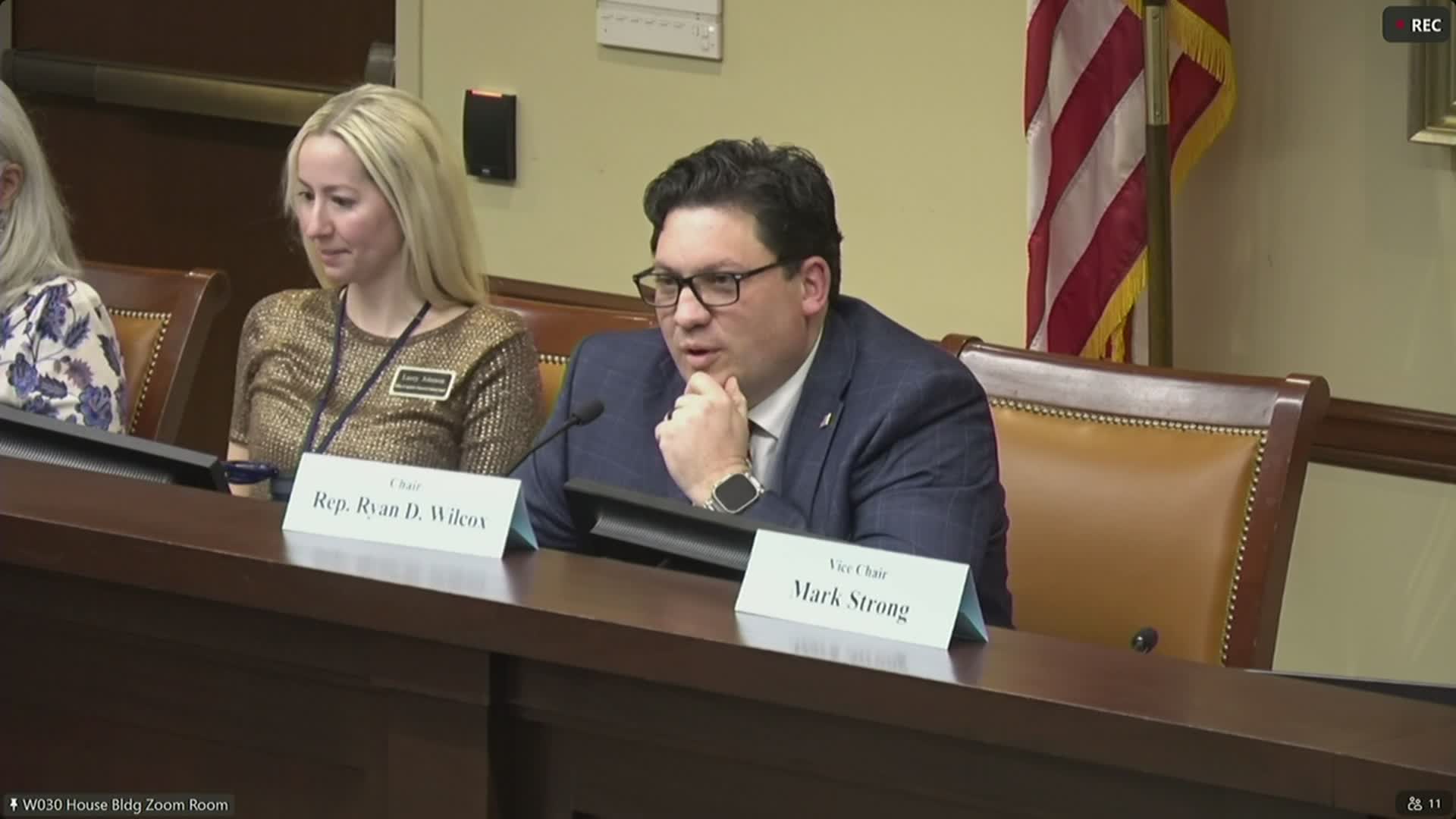
The House Law Enforcement and Criminal Justice Committee on Feb. 14 adopted a first substitute and recommended HB 455 favorably. Representative McPherson framed the substitute as a narrow, targeted pathway letting a small number of applicants ("maybe 3 to 5 people annually," per the sponsor) seek POST certification despite a distant conviction, while preserving agency discretion to hire.
The substitute requires at least 10 years to have passed since the conviction, no subsequent criminal convictions (excluding low‑level traffic), no violent or sexual convictions ever, ability to carry a firearm, and that the person not be a restricted person under applicable law. The sponsor said the change mirrors juvenile cooling‑off rationales and limits the number of eligible applicants.
Committee members asked about Brady implications. Brett Robinson of the Salt Lake County District Attorney's Office said prosecutors would treat information obtained under the bill like other officer‑related disclosures and perform case‑by‑case Brady materiality analysis: "...when we do become aware of information, we look at it, and we have to determine whether or not it could reasonably impact the legitimacy of a proceeding..." The law enforcement legislative committee, represented by Nate Mudder, testified in opposition, arguing the group voted to oppose the bill out of concern it incrementally weakens certification standards. Supporters, including constituents and community witnesses, urged second‑chance language and noted Utah's expungement and reentry efforts.
Representative Stoddard moved to adopt the first substitute; the committee adopted the substitute and then voted to favorably recommend HB 455 (substitute) by voice vote.
The substitute requires at least 10 years to have passed since the conviction, no subsequent criminal convictions (excluding low‑level traffic), no violent or sexual convictions ever, ability to carry a firearm, and that the person not be a restricted person under applicable law. The sponsor said the change mirrors juvenile cooling‑off rationales and limits the number of eligible applicants.
Committee members asked about Brady implications. Brett Robinson of the Salt Lake County District Attorney's Office said prosecutors would treat information obtained under the bill like other officer‑related disclosures and perform case‑by‑case Brady materiality analysis: "...when we do become aware of information, we look at it, and we have to determine whether or not it could reasonably impact the legitimacy of a proceeding..." The law enforcement legislative committee, represented by Nate Mudder, testified in opposition, arguing the group voted to oppose the bill out of concern it incrementally weakens certification standards. Supporters, including constituents and community witnesses, urged second‑chance language and noted Utah's expungement and reentry efforts.
Representative Stoddard moved to adopt the first substitute; the committee adopted the substitute and then voted to favorably recommend HB 455 (substitute) by voice vote.
Don't Miss a Word: See the Full Meeting!
Go beyond summaries. Unlock every video, transcript, and key insight with a Founder Membership.
✓
Get instant access to full meeting videos
✓
Search and clip any phrase from complete transcripts
✓
Receive AI-powered summaries & custom alerts
✓
Enjoy lifetime, unrestricted access to government data
30-day money-back guarantee
