Senate committee advances Child Care Expansion Act to retrofit state space for employee childcare; passes 4–1
February 13, 2026 | 2026 Utah Legislature, Utah Legislature, Utah Legislative Branch, Utah
This article was created by AI summarizing key points discussed. AI makes mistakes, so for full details and context, please refer to the video of the full meeting. Please report any errors so we can fix them. Report an error »
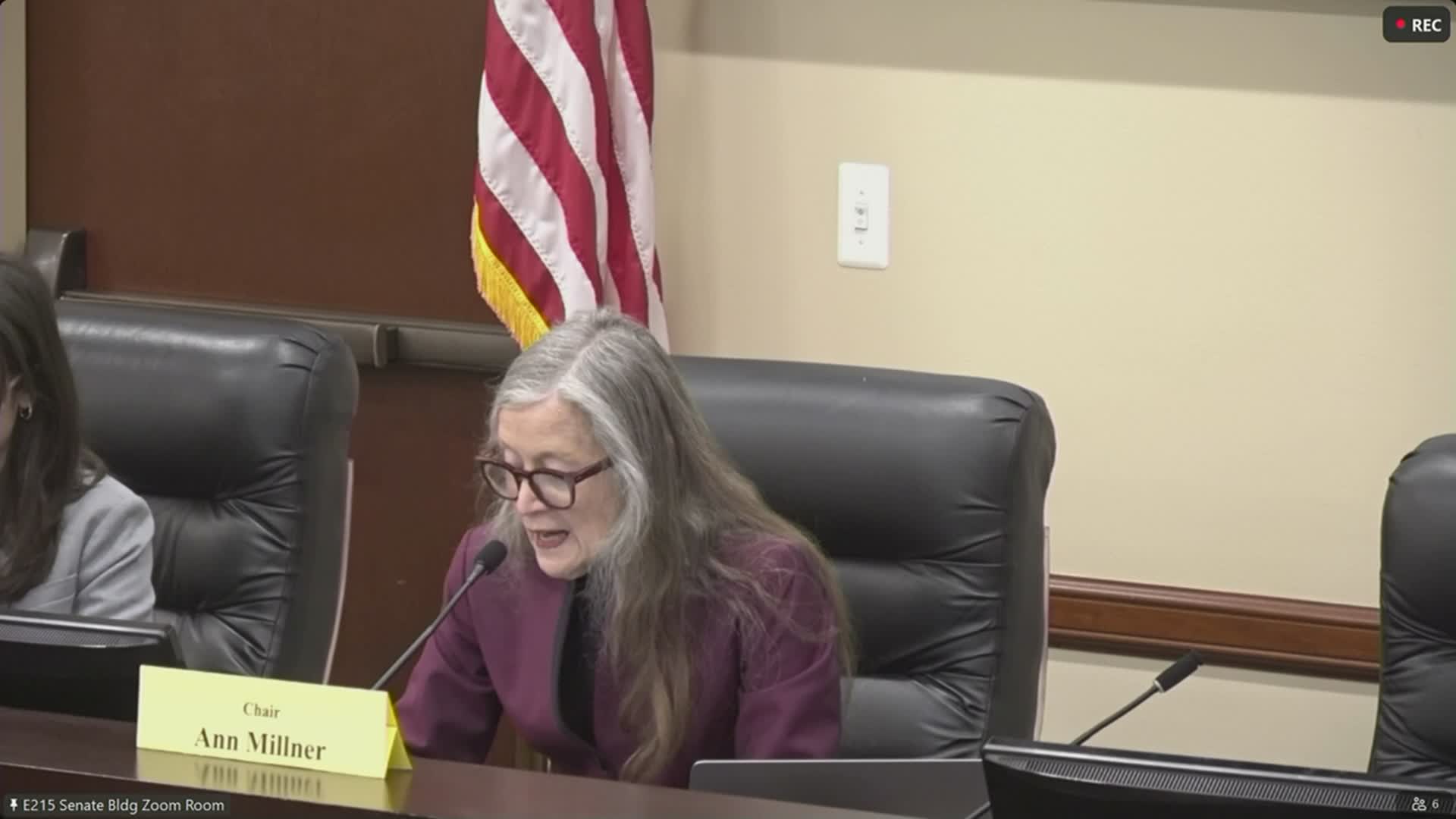
Senators on the Senate Economic Development and Workforce Services Standing Committee voted to advance Senate Bill 248, the Child Care Expansion Act, after adopting a technical amendment. The measure sets up a public-private partnership to retrofit vacant state-owned space and reserve half the childcare seats at the site for state employees.
Sponsor Senator Escamilla told the committee the bill grew from three years of work and is intended to reduce a barrier that forces state workers — and their employers — to compete for limited childcare options. The plan identifies a vacant portion of the Tax Commission warehouse at 1950 West as a likely retrofit target and envisions a private employer leasing the remodeled space, contracting with a licensed childcare provider, and reserving 50% of seats for state employees.
The Division of Facilities and Construction Management (DFCM) provided feasibility details and cost ranges. Andy Marr, DFCM division director, said a recent feasibility study examined several valley locations and found reuse of the tax-commission warehouse promising. DFCM estimated construction costs between roughly $2.5 million and $4.2 million depending on program size; the bill’s appropriation references approximately $3.8 million based on earlier feasibility work. DFCM said it would manage operations through an existing O&M structure and that a restricted fund would collect lease revenues to pay operations and maintenance.
Committee members pressed the sponsor and DFCM for clarity on who bears capital and operating costs. Escamilla and DFCM said the state would cover the capital retrofit investment as part of the public contribution to the partnership; the employer partner would operate the childcare, hire the provider, assume liability and manage pricing. State employees would pay an income-scaled fee for their child’s care, administered through the employer-run operation.
Some lawmakers expressed caution about budget pressure. Senator Stevenson said the concept merits a pilot but warned that the state budget is tight and funding may not be available to complete the project. After discussion and brief public comment, the committee approved the bill as amended by voice vote, with the chair announcing a final tally of 4–1 in favor.
The committee’s action forwards SB 248 to the full Senate with a favorable recommendation. The sponsor, DFCM and committee members said they will continue to refine fiscal and operational details as the bill moves to the next stage.
Sponsor Senator Escamilla told the committee the bill grew from three years of work and is intended to reduce a barrier that forces state workers — and their employers — to compete for limited childcare options. The plan identifies a vacant portion of the Tax Commission warehouse at 1950 West as a likely retrofit target and envisions a private employer leasing the remodeled space, contracting with a licensed childcare provider, and reserving 50% of seats for state employees.
The Division of Facilities and Construction Management (DFCM) provided feasibility details and cost ranges. Andy Marr, DFCM division director, said a recent feasibility study examined several valley locations and found reuse of the tax-commission warehouse promising. DFCM estimated construction costs between roughly $2.5 million and $4.2 million depending on program size; the bill’s appropriation references approximately $3.8 million based on earlier feasibility work. DFCM said it would manage operations through an existing O&M structure and that a restricted fund would collect lease revenues to pay operations and maintenance.
Committee members pressed the sponsor and DFCM for clarity on who bears capital and operating costs. Escamilla and DFCM said the state would cover the capital retrofit investment as part of the public contribution to the partnership; the employer partner would operate the childcare, hire the provider, assume liability and manage pricing. State employees would pay an income-scaled fee for their child’s care, administered through the employer-run operation.
Some lawmakers expressed caution about budget pressure. Senator Stevenson said the concept merits a pilot but warned that the state budget is tight and funding may not be available to complete the project. After discussion and brief public comment, the committee approved the bill as amended by voice vote, with the chair announcing a final tally of 4–1 in favor.
The committee’s action forwards SB 248 to the full Senate with a favorable recommendation. The sponsor, DFCM and committee members said they will continue to refine fiscal and operational details as the bill moves to the next stage.
Don't Miss a Word: See the Full Meeting!
Go beyond summaries. Unlock every video, transcript, and key insight with a Founder Membership.
✓
Get instant access to full meeting videos
✓
Search and clip any phrase from complete transcripts
✓
Receive AI-powered summaries & custom alerts
✓
Enjoy lifetime, unrestricted access to government data
30-day money-back guarantee
