Committee rejects bill to reduce tax-increment capture and duration for HTRZs
February 13, 2026 | 2026 Utah Legislature, Utah Legislature, Utah Legislative Branch, Utah
This article was created by AI summarizing key points discussed. AI makes mistakes, so for full details and context, please refer to the video of the full meeting. Please report any errors so we can fix them. Report an error »
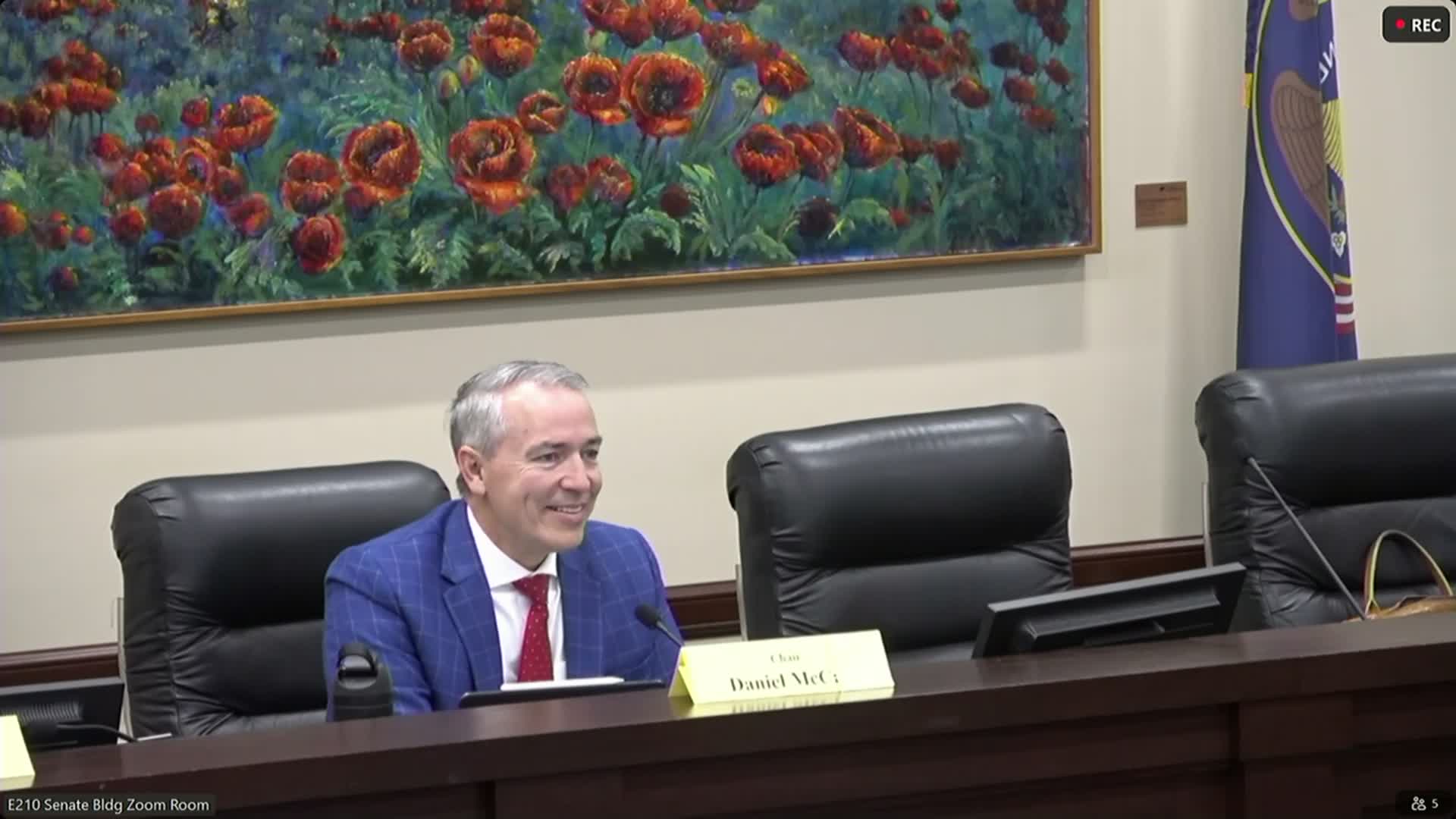
Senate Bill 243, which proposed reducing the share and length of tax-increment capture for certain housing and transit reinvestment zones (HTRZs), failed in committee on a 1-2 roll-call vote Feb. 13.
The sponsor said the bill would lower captured increments from 80% to 50% and shorten default capture periods (25 to 15 years; 45 to 30 years) for future projects, arguing the current terms shift substantial revenue away from school districts. "These tax increments go from the municipality and the person building and are taken away from our schools," the sponsor said, adding the proposal would protect future generations from excessive long-term commitments.
Committee members pushed back on market viability and unintended consequences. Senator Brammer asked whether the bill would apply only to future agreements and whether lenders and developers had been consulted; the sponsor said the bill becomes effective May 6, 2026, and would apply to agreements executed after that date but had not had lender discussions. "I'm going to be a no on it...if we're going to adjust this, it needs to be a measured approach that isn't only taking input from one side," Brammer said, citing a lack of market research and concern projects could be rendered unviable.
Public commenters included Michelle Jones, an educator who said recent TIF controversies had constrained school-district options, and Carson Eilers of the Utah League of Cities and Towns, who cautioned that the change could adversely affect some projects and noted other bills this session address transparency and sunsetting of HTRZs.
Senator Escamilla moved a favorable recommendation for SB 243 as amended, but the committee's roll-call vote recorded one aye and two noes and the bill failed in committee. The chair declared the bill defeated and adjourned the meeting.
The sponsor said the bill would lower captured increments from 80% to 50% and shorten default capture periods (25 to 15 years; 45 to 30 years) for future projects, arguing the current terms shift substantial revenue away from school districts. "These tax increments go from the municipality and the person building and are taken away from our schools," the sponsor said, adding the proposal would protect future generations from excessive long-term commitments.
Committee members pushed back on market viability and unintended consequences. Senator Brammer asked whether the bill would apply only to future agreements and whether lenders and developers had been consulted; the sponsor said the bill becomes effective May 6, 2026, and would apply to agreements executed after that date but had not had lender discussions. "I'm going to be a no on it...if we're going to adjust this, it needs to be a measured approach that isn't only taking input from one side," Brammer said, citing a lack of market research and concern projects could be rendered unviable.
Public commenters included Michelle Jones, an educator who said recent TIF controversies had constrained school-district options, and Carson Eilers of the Utah League of Cities and Towns, who cautioned that the change could adversely affect some projects and noted other bills this session address transparency and sunsetting of HTRZs.
Senator Escamilla moved a favorable recommendation for SB 243 as amended, but the committee's roll-call vote recorded one aye and two noes and the bill failed in committee. The chair declared the bill defeated and adjourned the meeting.
Don't Miss a Word: See the Full Meeting!
Go beyond summaries. Unlock every video, transcript, and key insight with a Founder Membership.
✓
Get instant access to full meeting videos
✓
Search and clip any phrase from complete transcripts
✓
Receive AI-powered summaries & custom alerts
✓
Enjoy lifetime, unrestricted access to government data
30-day money-back guarantee
