House committee advances technical fix to municipal vacancy tie-breaking
February 13, 2026 | 2026 Utah Legislature, Utah Legislature, Utah Legislative Branch, Utah
This article was created by AI summarizing key points discussed. AI makes mistakes, so for full details and context, please refer to the video of the full meeting. Please report any errors so we can fix them. Report an error »
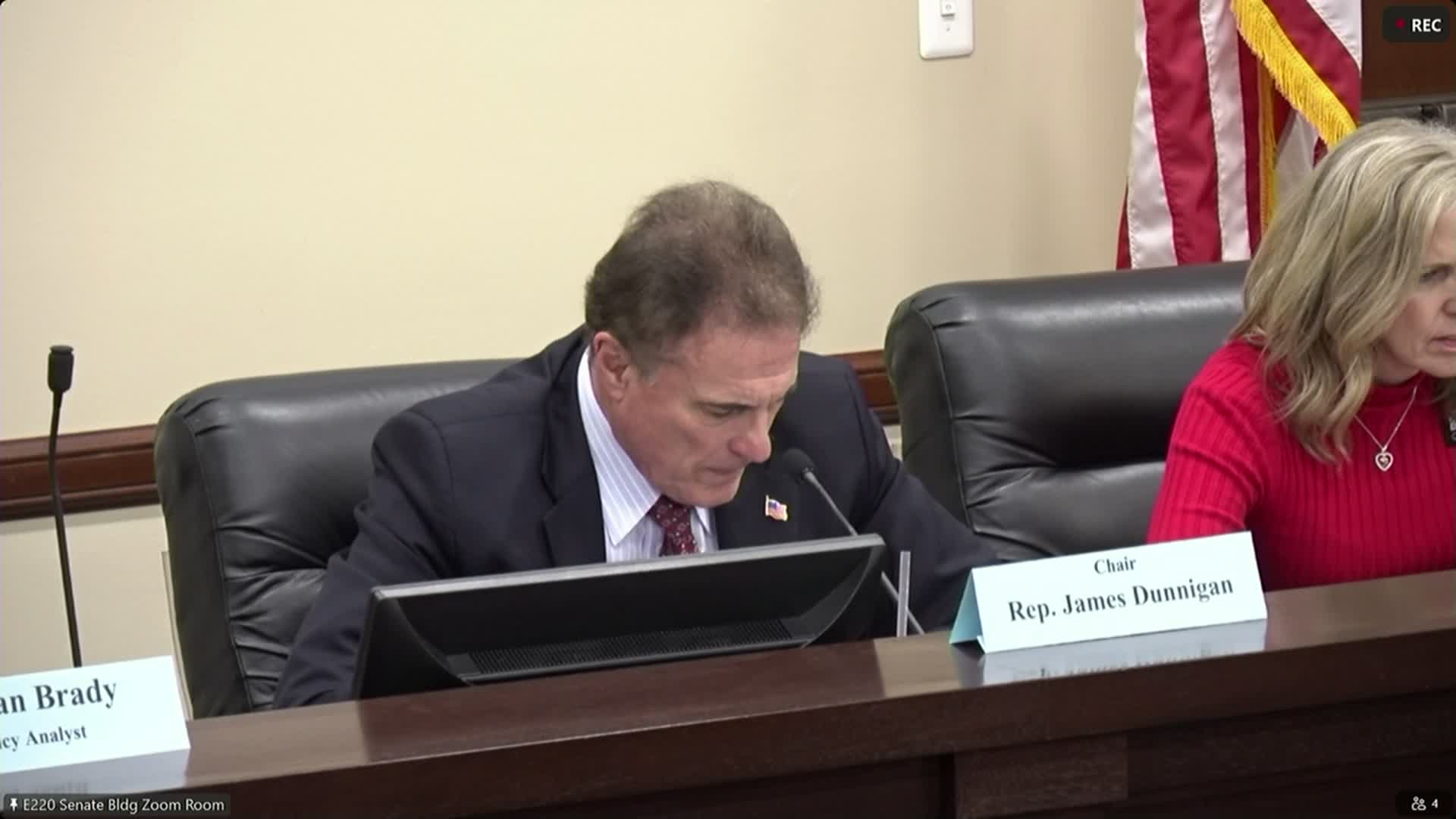
SALT LAKE CITY — The Utah House Political Subdivisions Committee on Feb. 14 unanimously adopted and recommended favorably a substitute to HB 420, a bill that standardizes how cities fill vacancies when multiple candidates tie.
Sponsor Representative Stoddard told the committee the measure is a technical fix to a drafting problem from last year that unintentionally ran afoul of Indian gaming law. “We fixed that problem. We now have a bill that does not run afoul of anything,” Stoddard said, adding the intent is practical: to replace the awkward sequence of multiple coin tosses in three-way (or larger) ties with a simple process to draw lots.
Justin Lee, deputy director of the Utah League of Cities and Towns, testified in support. Lee said cities wanted two clarifications added to the substitute: that in a six-member form of government the mayor should vote first to break a tie before any lot-drawing procedure, and that any votes to fill vacancies must take place in an open public meeting and be disclosed. “Our attorneys and our cities are comfortable with this and ask you to support the bill,” Lee said.
Committee members asked practical questions about edge cases, including what happens if a coin-toss winner withdraws or if a council member who moved out remains involved in appointing a replacement. Lee acknowledged there is no perfect fix for a last-minute withdrawal but said the substitute avoids the extreme outcomes that occur now and clarifies public-meeting and disclosure requirements.
The committee first adopted the substitute by voice vote and then unanimously voted to recommend the substitute favorably to the full House.
What happens next: The bill will move through the normal floor process after the committee report is filed.
Sponsor Representative Stoddard told the committee the measure is a technical fix to a drafting problem from last year that unintentionally ran afoul of Indian gaming law. “We fixed that problem. We now have a bill that does not run afoul of anything,” Stoddard said, adding the intent is practical: to replace the awkward sequence of multiple coin tosses in three-way (or larger) ties with a simple process to draw lots.
Justin Lee, deputy director of the Utah League of Cities and Towns, testified in support. Lee said cities wanted two clarifications added to the substitute: that in a six-member form of government the mayor should vote first to break a tie before any lot-drawing procedure, and that any votes to fill vacancies must take place in an open public meeting and be disclosed. “Our attorneys and our cities are comfortable with this and ask you to support the bill,” Lee said.
Committee members asked practical questions about edge cases, including what happens if a coin-toss winner withdraws or if a council member who moved out remains involved in appointing a replacement. Lee acknowledged there is no perfect fix for a last-minute withdrawal but said the substitute avoids the extreme outcomes that occur now and clarifies public-meeting and disclosure requirements.
The committee first adopted the substitute by voice vote and then unanimously voted to recommend the substitute favorably to the full House.
What happens next: The bill will move through the normal floor process after the committee report is filed.
View the Full Meeting & All Its Details
This article offers just a summary. Unlock complete video, transcripts, and insights as a Founder Member.
✓
Watch full, unedited meeting videos
✓
Search every word spoken in unlimited transcripts
✓
AI summaries & real-time alerts (all government levels)
✓
Permanent access to expanding government content
30-day money-back guarantee
