Northampton committee hears neighborhood‑electrification pitch, identifies Olive Street as demonstration candidate
February 13, 2026 | Northampton City, Hampshire County, Massachusetts
This article was created by AI summarizing key points discussed. AI makes mistakes, so for full details and context, please refer to the video of the full meeting. Please report any errors so we can fix them. Report an error »
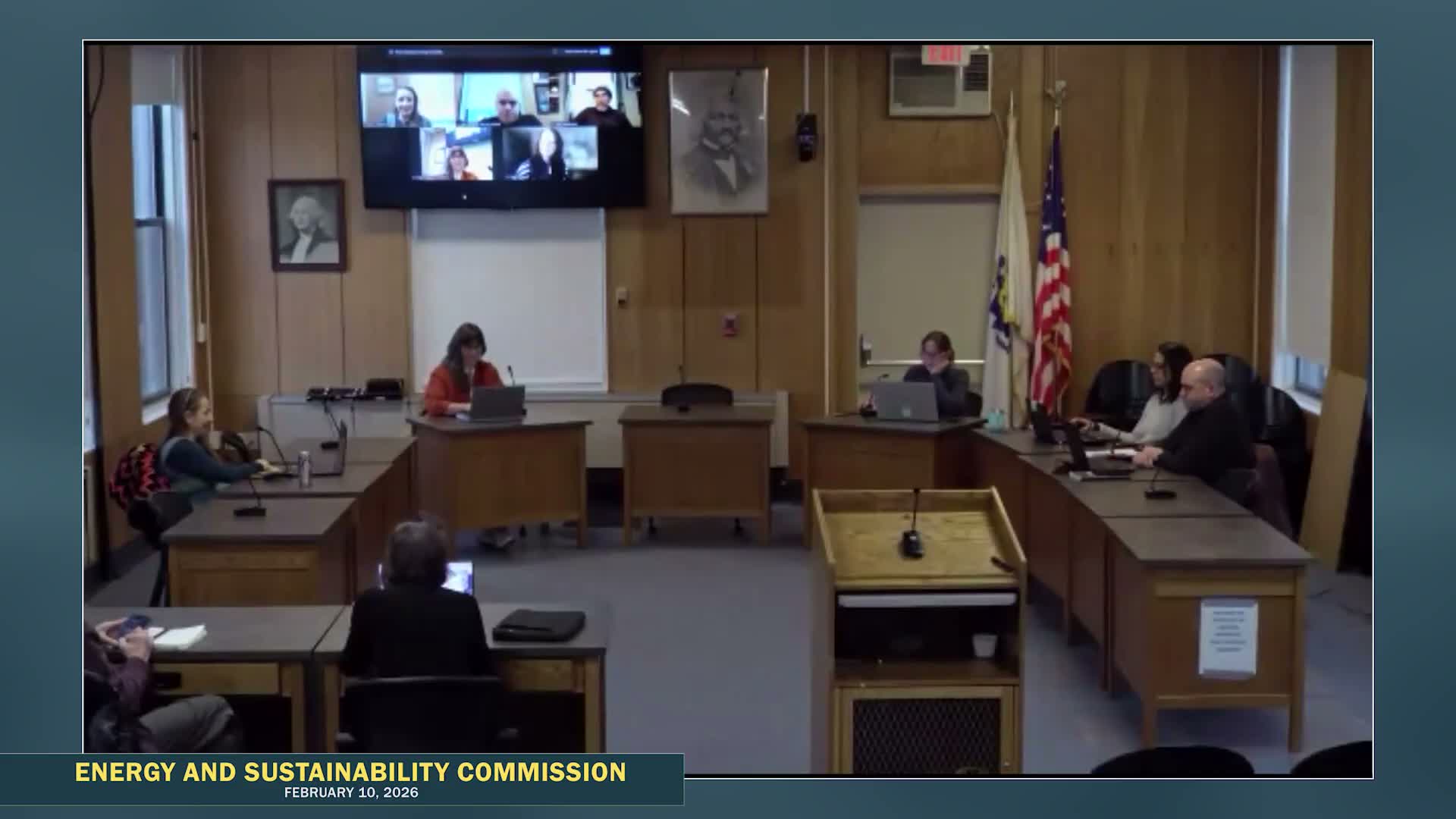
Denise Lalo, a volunteer with Mothers Out Front, told the Northampton Energy & Sustainability Committee on Feb. 10 that neighborhood‑level electrification could be a cheaper, safer alternative to planned gas‑pipeline replacements and urged the city to help pilot a demonstration on Olive Street.
Lalo said investor‑owned utilities are spending heavily on pipeline replacement under the Gas System Enhancement Program (referred to in the presentation as GCEP/GSEP), and that those investments risk becoming stranded assets as households switch to electric heating and cooking. “We need to eliminate the legal obligation to serve gas that gas utilities now have,” she said, arguing the current rules and incentives favor replacement over electrification.
Why it matters: Lalo said the local Eversource GSEP list shows Olive Street scheduled for replacement — 3,461 linear feet at an estimated $450 per foot, a total the presentation listed as about $1,557,450 — and the utility has marked Olive Street as a non‑pipeline alternative (NPA) “not viable.” Mothers Out Front and local volunteers propose pricing out the full cost of electrifying Olive Street so the city and state regulators can evaluate an NPA instead of pipeline replacement.
Mothers Out Front volunteer Sarah Parton urged the committee to back Olive Street as a demonstration project: “price out all the costs of electrifying Olive Street and use it as an example,” she said, adding that surveys and door‑to‑door outreach would be needed to show the utility and the Department of Public Utilities (DPU) that electrification is possible.
Committee members raised technical and equity questions. Chris Stratton noted methane leakage’s outsized climate impact and asked how neighborhood selection would work; members suggested prioritizing higher‑density or lower‑income areas and pairing electrification outreach with building‑envelope upgrades and MassSave incentives to avoid leaving vulnerable households with poor heating options. Lalo acknowledged retrofit limits in older, wet homes and urged combining electrification outreach with insulation and ventilation planning.
What was requested: Lalo asked the committee and the city for three near‑term supports: (1) access to assessor data or easier property data exports to locate homes with oil or old heating systems, (2) help conducting resident surveys (door‑to‑door on Olive Street was suggested), and (3) letters from NESC or the city to the DPU and state legislators advocating changes to how GSEP projects are evaluated (including re‑examination of the so‑called 100% agreement rule and utilities’ obligation to serve).
Next steps: The presenters asked the committee to consider Olive Street as an immediate candidate and to coordinate outreach; they said Newton’s earlier effort to electrify Garland Road failed at the regulatory level and that statewide advocacy will also be necessary. The committee did not take formal action on this presentation during the meeting but discussed including neighborhood electrification as a possible community program going forward.
Lalo said investor‑owned utilities are spending heavily on pipeline replacement under the Gas System Enhancement Program (referred to in the presentation as GCEP/GSEP), and that those investments risk becoming stranded assets as households switch to electric heating and cooking. “We need to eliminate the legal obligation to serve gas that gas utilities now have,” she said, arguing the current rules and incentives favor replacement over electrification.
Why it matters: Lalo said the local Eversource GSEP list shows Olive Street scheduled for replacement — 3,461 linear feet at an estimated $450 per foot, a total the presentation listed as about $1,557,450 — and the utility has marked Olive Street as a non‑pipeline alternative (NPA) “not viable.” Mothers Out Front and local volunteers propose pricing out the full cost of electrifying Olive Street so the city and state regulators can evaluate an NPA instead of pipeline replacement.
Mothers Out Front volunteer Sarah Parton urged the committee to back Olive Street as a demonstration project: “price out all the costs of electrifying Olive Street and use it as an example,” she said, adding that surveys and door‑to‑door outreach would be needed to show the utility and the Department of Public Utilities (DPU) that electrification is possible.
Committee members raised technical and equity questions. Chris Stratton noted methane leakage’s outsized climate impact and asked how neighborhood selection would work; members suggested prioritizing higher‑density or lower‑income areas and pairing electrification outreach with building‑envelope upgrades and MassSave incentives to avoid leaving vulnerable households with poor heating options. Lalo acknowledged retrofit limits in older, wet homes and urged combining electrification outreach with insulation and ventilation planning.
What was requested: Lalo asked the committee and the city for three near‑term supports: (1) access to assessor data or easier property data exports to locate homes with oil or old heating systems, (2) help conducting resident surveys (door‑to‑door on Olive Street was suggested), and (3) letters from NESC or the city to the DPU and state legislators advocating changes to how GSEP projects are evaluated (including re‑examination of the so‑called 100% agreement rule and utilities’ obligation to serve).
Next steps: The presenters asked the committee to consider Olive Street as an immediate candidate and to coordinate outreach; they said Newton’s earlier effort to electrify Garland Road failed at the regulatory level and that statewide advocacy will also be necessary. The committee did not take formal action on this presentation during the meeting but discussed including neighborhood electrification as a possible community program going forward.
View the Full Meeting & All Its Details
This article offers just a summary. Unlock complete video, transcripts, and insights as a Founder Member.
✓
Watch full, unedited meeting videos
✓
Search every word spoken in unlimited transcripts
✓
AI summaries & real-time alerts (all government levels)
✓
Permanent access to expanding government content
30-day money-back guarantee
