Former senior adviser: Eliminating Education Department would disrupt Pell Grants and loan servicing
February 13, 2026 | House Committee on Education and Workforce Democrats, Education and Workforce: House Committee, Standing Committees - House & Senate, Congressional Hearings Compilation, Legislative, Federal
This article was created by AI summarizing key points discussed. AI makes mistakes, so for full details and context, please refer to the video of the full meeting. Please report any errors so we can fix them. Report an error »
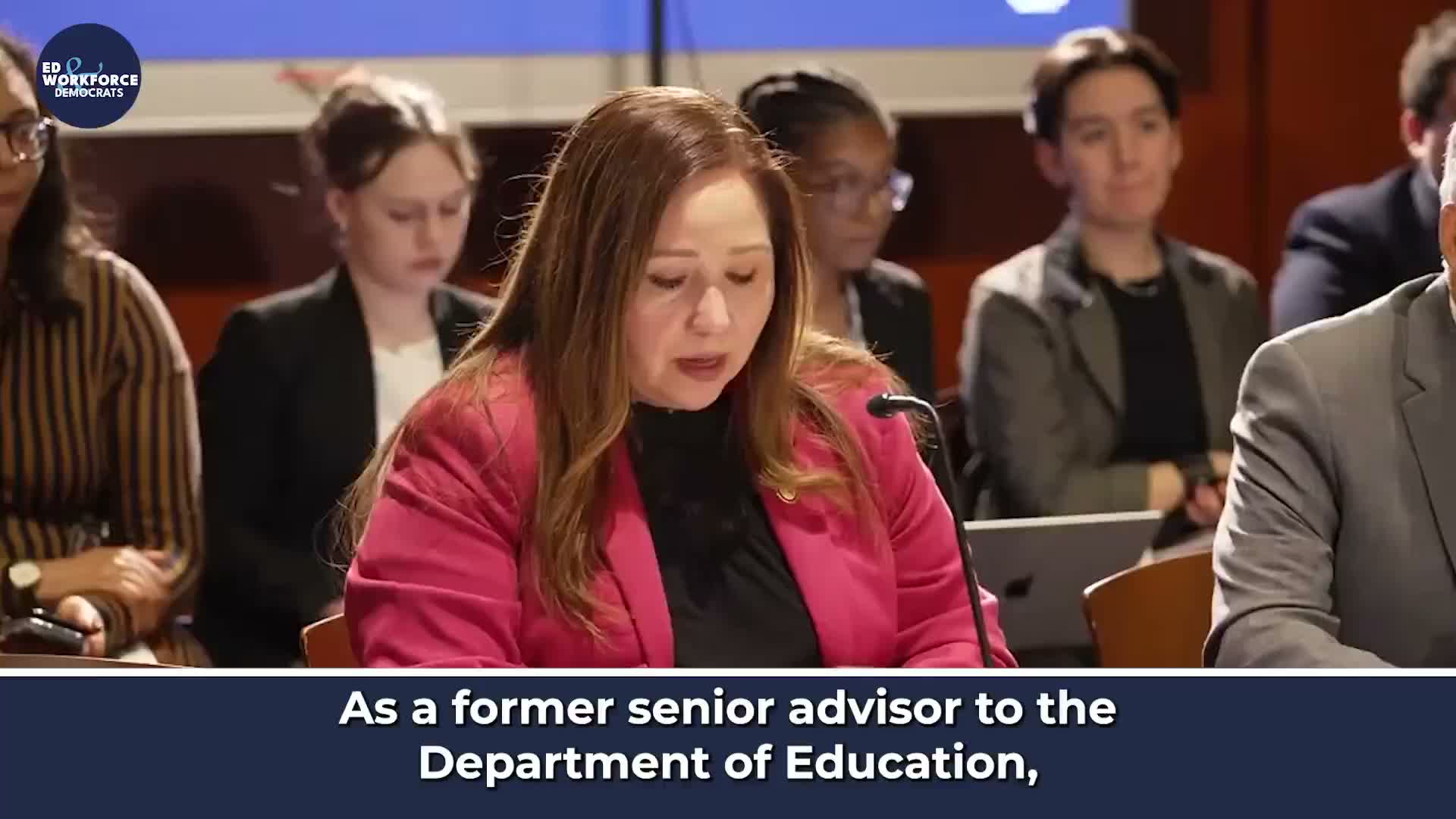
The witness described staff and program changes already occurring across agencies, saying, "We're already seeing this, as different agencies ... have been moved around as staff, critical staff, who manage these contracts with loan services, for instance, or who work in the ombudsman's office who help borrowers have been, part of these reductions in force." The testimony attributed those movements and reductions to gaps that would widen if the Department ceased to exist.
The witness said those staffing and administrative gaps would leave borrowers without protections and services: "So it means that critical protections and programs are not available for students." They warned that the impacts would be uneven, singling out low-income students and students of color: "For many low income students and students of color, that means they will either drop out of school and never go back or never make it to school to begin with." The adviser closed by noting that existing borrowers could face heightened financial harm, saying students with loans "may end up in delinquency or default, which is can have catastrophic consequences."
The exchange in the hearing was a question-and-answer sequence: a committee question asked what would happen to Pell Grant administration and the federal student loan portfolio if the Department no longer existed, and the witness provided the explanation above. No formal proposals or votes on abolishing the Department were recorded in this transcript excerpt; the record reflects the witness's assessment rather than a committee finding or action.
Next steps were not specified in the transcript excerpt provided.
Don't Miss a Word: See the Full Meeting!
Go beyond summaries. Unlock every video, transcript, and key insight with a Founder Membership.
30-day money-back guarantee
