Senate Judiciary weighs S.193 to create forensic facility for competency restoration and post-NGRI care
February 13, 2026 | Judiciary, SENATE, Committees, Legislative , Vermont
This article was created by AI summarizing key points discussed. AI makes mistakes, so for full details and context, please refer to the video of the full meeting. Please report any errors so we can fix them. Report an error »
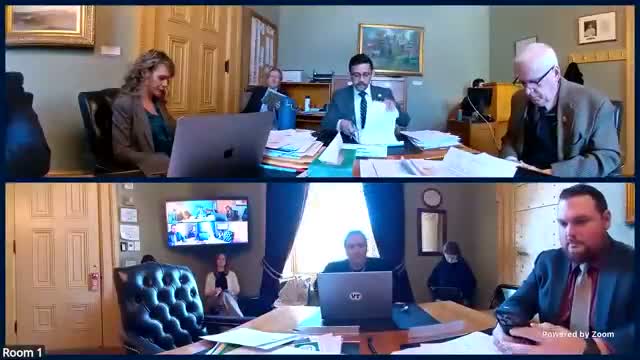
The Vermont Senate Judiciary Committee on Feb. 13 heard extended testimony on S.193, a proposal to establish a forensic facility to provide competency restoration and a structured track after not guilty by reason of insanity (NGRI) verdicts.
Dominica Padula, chief of the criminal division at the Vermont Attorney General's Office, told the committee Vermont lacks statutory mechanisms used in other states to restore competency and supervise people after an NGRI verdict. "We, unlike 49 other states, do not have a way to assist somebody to gain that access to due process the way that everyone else does," Padula said, urging the committee to view the measure as a starting point to address gaps in the criminal-mental‑health interface.
Padula said the bill envisions two functions: an early-stage competency restoration track to teach defendants about court processes and enable them to assist in their defense, and a separate, secured post‑verdict track for people found NGRI so they are treated and supervised rather than leaving "no place to put somebody" after an NGRI finding. She emphasized competency and NGRI are legal constructs and argued the proposed facility would marry education and treatment so defendants can meaningfully participate in proceedings.
Committee members pressed operational and constitutional questions. Several senators asked whether defendants would remain at the facility after competency is restored; Padula recommended that restored competency should end restoration placement and that courts should periodically revisit custody and conditions. Counsel and members flagged Jackson v. Indiana as a constitutional touchstone for prolonged civil detention and said the statute should be clear about what treatment and evaluations must occur to withstand legal scrutiny.
The committee's legislative counsel, Eric, recommended trimming duplicative language in the draft and changing permissive "may" language to mandatory "shall" in places that describe care and services, so the statute requires treatment and education rather than leaving delivery optional.
Lawmakers and counsel debated where the facility should be housed and who should operate it. Some members raised concerns about placing a forensic program inside a correctional setting, noting that the Department of Corrections (DOC) is primarily a custody provider rather than a mental‑health treatment operator. Counsel and members suggested the Department of Mental Health or an existing secure residential recovery facility might be better positioned to provide treatment services, though they also warned about Medicaid funding complications if parts of a hospital are reclassified as correctional.
Victims and survivors urged action. Kelly Carroll, mother of a murder victim and founder of Voices for Vermont Victims, said the state's lack of a forensic system has real consequences: "52 days later my Emily was dead," she said, urging the committee not to dismiss the bill as unnecessary. Leanne Billings, whose son's case endured multiple competency evaluations and delays, recommended routine early competency evaluations in life‑offense cases to avoid protracted uncertainty for victims and families.
The committee did not take a vote. Members requested additional witnesses and materials, including testimony from DOC, AHS/DMH, Legal Aid, BGS for facilities/contracting questions, and a victim‑notification report. Chair and counsel agreed to circulate a fresh draft reflecting suggested edits and to continue the matter next week.
Proponents described S.193 as a narrowly tailored response to a subset of serious cases; critics and some members urged careful drafting to protect constitutional rights, ensure treatment rather than punishment, and resolve funding and placement questions before final passage.
Dominica Padula, chief of the criminal division at the Vermont Attorney General's Office, told the committee Vermont lacks statutory mechanisms used in other states to restore competency and supervise people after an NGRI verdict. "We, unlike 49 other states, do not have a way to assist somebody to gain that access to due process the way that everyone else does," Padula said, urging the committee to view the measure as a starting point to address gaps in the criminal-mental‑health interface.
Padula said the bill envisions two functions: an early-stage competency restoration track to teach defendants about court processes and enable them to assist in their defense, and a separate, secured post‑verdict track for people found NGRI so they are treated and supervised rather than leaving "no place to put somebody" after an NGRI finding. She emphasized competency and NGRI are legal constructs and argued the proposed facility would marry education and treatment so defendants can meaningfully participate in proceedings.
Committee members pressed operational and constitutional questions. Several senators asked whether defendants would remain at the facility after competency is restored; Padula recommended that restored competency should end restoration placement and that courts should periodically revisit custody and conditions. Counsel and members flagged Jackson v. Indiana as a constitutional touchstone for prolonged civil detention and said the statute should be clear about what treatment and evaluations must occur to withstand legal scrutiny.
The committee's legislative counsel, Eric, recommended trimming duplicative language in the draft and changing permissive "may" language to mandatory "shall" in places that describe care and services, so the statute requires treatment and education rather than leaving delivery optional.
Lawmakers and counsel debated where the facility should be housed and who should operate it. Some members raised concerns about placing a forensic program inside a correctional setting, noting that the Department of Corrections (DOC) is primarily a custody provider rather than a mental‑health treatment operator. Counsel and members suggested the Department of Mental Health or an existing secure residential recovery facility might be better positioned to provide treatment services, though they also warned about Medicaid funding complications if parts of a hospital are reclassified as correctional.
Victims and survivors urged action. Kelly Carroll, mother of a murder victim and founder of Voices for Vermont Victims, said the state's lack of a forensic system has real consequences: "52 days later my Emily was dead," she said, urging the committee not to dismiss the bill as unnecessary. Leanne Billings, whose son's case endured multiple competency evaluations and delays, recommended routine early competency evaluations in life‑offense cases to avoid protracted uncertainty for victims and families.
The committee did not take a vote. Members requested additional witnesses and materials, including testimony from DOC, AHS/DMH, Legal Aid, BGS for facilities/contracting questions, and a victim‑notification report. Chair and counsel agreed to circulate a fresh draft reflecting suggested edits and to continue the matter next week.
Proponents described S.193 as a narrowly tailored response to a subset of serious cases; critics and some members urged careful drafting to protect constitutional rights, ensure treatment rather than punishment, and resolve funding and placement questions before final passage.
View the Full Meeting & All Its Details
This article offers just a summary. Unlock complete video, transcripts, and insights as a Founder Member.
✓
Watch full, unedited meeting videos
✓
Search every word spoken in unlimited transcripts
✓
AI summaries & real-time alerts (all government levels)
✓
Permanent access to expanding government content
30-day money-back guarantee
