EdWatch Vermont urges Act 73 changes to restore independent schools and let funding follow students
February 13, 2026 | Education, HOUSE OF REPRESENTATIVES, Committees, Legislative , Vermont
This article was created by AI summarizing key points discussed. AI makes mistakes, so for full details and context, please refer to the video of the full meeting. Please report any errors so we can fix them. Report an error »
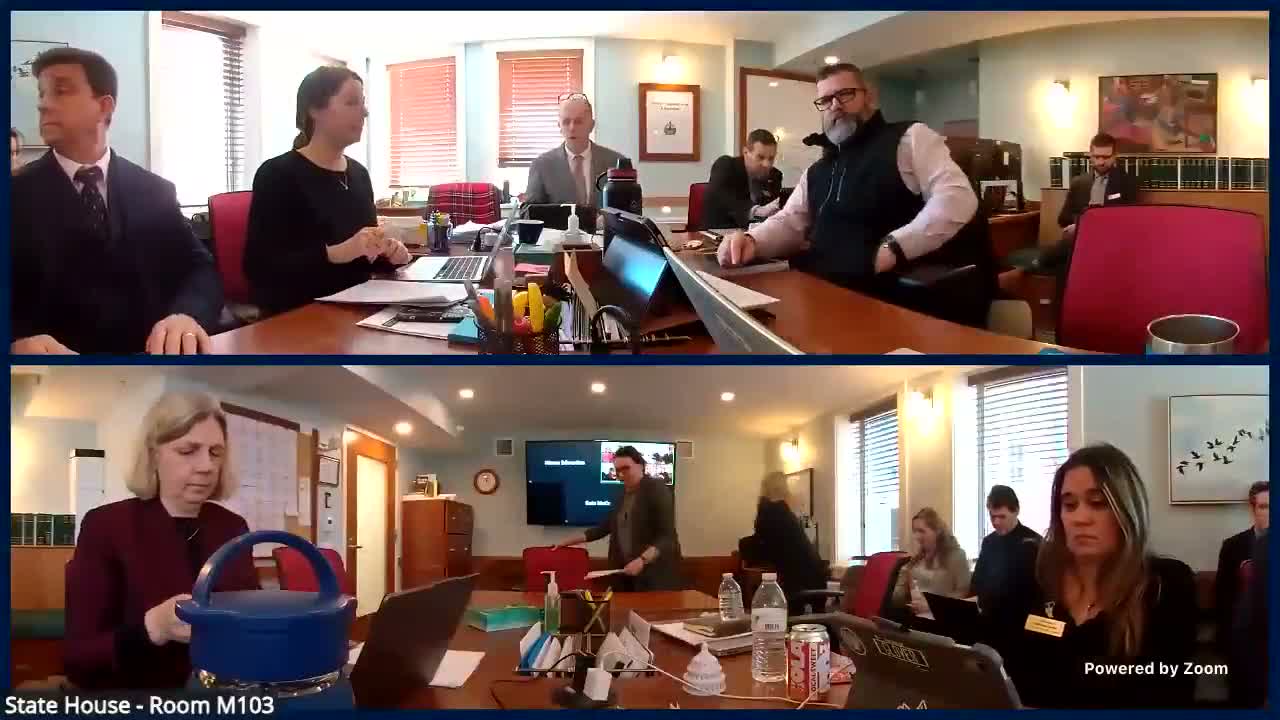
Retta Dunlap, co-director of EdWatch Vermont, told the House Education Committee on Feb. 13 that Vermont’s education system is failing too many students and urged lawmakers to revise Act 73 to restore independent-school eligibility and move to a student-centered funding model.
"Put the student at the center, let funding follow the child, and give parents power to choose," Dunlap said, framing a proposal in which the state sets a per-student amount while schools operate within that allocation. She argued that funding should be "simple and transparent" and that the State Board of Education should oversee structure and finance while the Agency of Education administers the program.
Dunlap cited statewide indicators she said show systemic problems: "Chronic absenteeism in Vermont is about 30 percent," she said, and described students who check in only for classes they need to graduate. Dunlap also compared Vermont’s performance unfavorably with Mississippi, saying Mississippi is "now outperforming Vermont in both math and reading" for comparable groups while spending roughly half what Vermont spends per pupil.
Allison Espathy, identified in testimony as a Danville resident and EdWatch co-director, described local consequences. She said nearly half of one eighth-grade class ("13 of 30") left their home school when they reached high school and that some families petitioned to close Danville’s high school so students could attend regional academies. Reading student survey responses into the record, Espathy quoted students saying they would "do much better at another school" and calling their setting "a small school and toxic environment." "Danville holds a special place in my heart, but I would do much better at another school," one student wrote, according to Espathy.
Witnesses urged the committee to reconsider regulatory eligibility criteria that, they say, prevent some independent and specialized schools (including academies) from receiving state tuitioning. They acknowledged practical constraints—schools have capacity limits and enrollment windows—and discussed possible mechanisms such as lotteries for oversubscribed schools, enrollment deadlines to help with budgeting, and regional solutions (including using career and technical centers as "anchor schools") to absorb displaced students. Espathy noted the Central Vermont CTE had to reject more than 200 students previously for lack of capacity and is pursuing grants to expand.
During a short question-and-answer period, committee members pressed for clarification about whether other states (a chair asked about Mississippi) have universal choice and how capacity would be managed if parents all selected the same academy. Witnesses reiterated that choice cannot be absolute and emphasized second-choice assignments, enrollment timing, and planning to address capacity.
A speaker during the discussion cautioned against framing the debate as a wholesale failure of public education, saying the committee's role is to strengthen public schools statewide while recognizing individual cases where students need alternatives. Committee business continued after the testimony; no motions or formal votes were recorded during the EdWatch presentation.
The committee did not take action on Act 73 during the session. The panel invited further testimony later in the meeting schedule.
"Put the student at the center, let funding follow the child, and give parents power to choose," Dunlap said, framing a proposal in which the state sets a per-student amount while schools operate within that allocation. She argued that funding should be "simple and transparent" and that the State Board of Education should oversee structure and finance while the Agency of Education administers the program.
Dunlap cited statewide indicators she said show systemic problems: "Chronic absenteeism in Vermont is about 30 percent," she said, and described students who check in only for classes they need to graduate. Dunlap also compared Vermont’s performance unfavorably with Mississippi, saying Mississippi is "now outperforming Vermont in both math and reading" for comparable groups while spending roughly half what Vermont spends per pupil.
Allison Espathy, identified in testimony as a Danville resident and EdWatch co-director, described local consequences. She said nearly half of one eighth-grade class ("13 of 30") left their home school when they reached high school and that some families petitioned to close Danville’s high school so students could attend regional academies. Reading student survey responses into the record, Espathy quoted students saying they would "do much better at another school" and calling their setting "a small school and toxic environment." "Danville holds a special place in my heart, but I would do much better at another school," one student wrote, according to Espathy.
Witnesses urged the committee to reconsider regulatory eligibility criteria that, they say, prevent some independent and specialized schools (including academies) from receiving state tuitioning. They acknowledged practical constraints—schools have capacity limits and enrollment windows—and discussed possible mechanisms such as lotteries for oversubscribed schools, enrollment deadlines to help with budgeting, and regional solutions (including using career and technical centers as "anchor schools") to absorb displaced students. Espathy noted the Central Vermont CTE had to reject more than 200 students previously for lack of capacity and is pursuing grants to expand.
During a short question-and-answer period, committee members pressed for clarification about whether other states (a chair asked about Mississippi) have universal choice and how capacity would be managed if parents all selected the same academy. Witnesses reiterated that choice cannot be absolute and emphasized second-choice assignments, enrollment timing, and planning to address capacity.
A speaker during the discussion cautioned against framing the debate as a wholesale failure of public education, saying the committee's role is to strengthen public schools statewide while recognizing individual cases where students need alternatives. Committee business continued after the testimony; no motions or formal votes were recorded during the EdWatch presentation.
The committee did not take action on Act 73 during the session. The panel invited further testimony later in the meeting schedule.
View the Full Meeting & All Its Details
This article offers just a summary. Unlock complete video, transcripts, and insights as a Founder Member.
✓
Watch full, unedited meeting videos
✓
Search every word spoken in unlimited transcripts
✓
AI summaries & real-time alerts (all government levels)
✓
Permanent access to expanding government content
30-day money-back guarantee
