House advances bill to require notice, monitoring as phone networks shift from copper to fiber
February 14, 2026 | HOUSE OF REPRESENTATIVES, Committees, Legislative , Vermont
This article was created by AI summarizing key points discussed. AI makes mistakes, so for full details and context, please refer to the video of the full meeting. Please report any errors so we can fix them. Report an error »
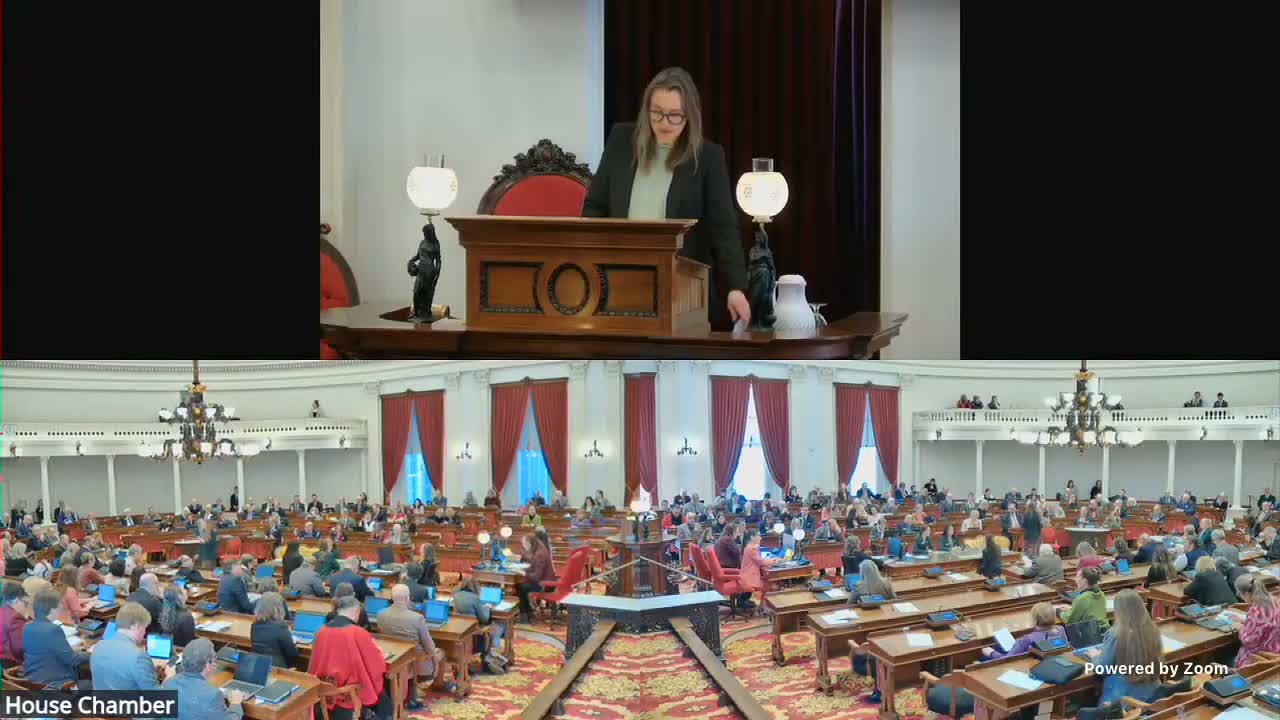
Representative Sebelia, the member from Dover, presented H 8 98 as a consumer-protection measure aimed at preventing loss of reliable phone service when carriers transition from copper landlines to fiber-based networks. "H 8 98 is about making sure Vermonters do not lose reliable phone service as telephone companies transition from copper landlines to fiber based networks," Sebelia said, summarizing that fiber-based voice service relies on customer-powered equipment and can fail during power outages without charged backup power.
The bill would add notice requirements and staged reports: carriers must provide written notice to affected customers, the Department of Public Service, and the Enhanced 9-1-1 Board at least 120, 60 and 30 days before a transition. It requires annual VoIP reporting beginning in November 2026 on customer uptake of backup-power options and on known incidents where 9-1-1 access was impaired due to lack of backup power. The measure directs the Department of Public Service to review outage reports quarterly, coordinate with the attorney general on consumer complaints, monitor vulnerable areas, and conduct consumer education and outreach.
During questioning, the Member from Coventry asked whether the change to fiber would alter legacy telephone companies' obligation to be the provider of last resort. "Right now it does not," Representative Sebelia replied, adding that federal rules are in flux and the bill creates monitoring so the state can respond to any future changes.
The House placed the bill for a third reading after a voice assent. Representative Sebelia noted the House Energy and Digital Infrastructure Committee voted the bill out as recorded in the committee report (reported in the transcript as "8 0 1") and listed parties who testified before the committee, including the Department of Public Service, the Public Utility Commission deputy general counsel, independent telephone companies, and stakeholders representing carriers and public safety.
The bill would not change technology choices or override federal law, the sponsor said; rather it aims to ensure transparency, coordination with public-safety agencies, and reporting so the state can identify risks before service failures become public-safety emergencies. If enacted, the bill takes effect upon passage and applies to telecommunications carriers beginning September 1, 2026. The next legislative step is the scheduled third reading.
Ending: The House ordered third reading for H 8 98; final passage, any amendments, and implementation steps will be recorded on subsequent legislative calendars.
The bill would add notice requirements and staged reports: carriers must provide written notice to affected customers, the Department of Public Service, and the Enhanced 9-1-1 Board at least 120, 60 and 30 days before a transition. It requires annual VoIP reporting beginning in November 2026 on customer uptake of backup-power options and on known incidents where 9-1-1 access was impaired due to lack of backup power. The measure directs the Department of Public Service to review outage reports quarterly, coordinate with the attorney general on consumer complaints, monitor vulnerable areas, and conduct consumer education and outreach.
During questioning, the Member from Coventry asked whether the change to fiber would alter legacy telephone companies' obligation to be the provider of last resort. "Right now it does not," Representative Sebelia replied, adding that federal rules are in flux and the bill creates monitoring so the state can respond to any future changes.
The House placed the bill for a third reading after a voice assent. Representative Sebelia noted the House Energy and Digital Infrastructure Committee voted the bill out as recorded in the committee report (reported in the transcript as "8 0 1") and listed parties who testified before the committee, including the Department of Public Service, the Public Utility Commission deputy general counsel, independent telephone companies, and stakeholders representing carriers and public safety.
The bill would not change technology choices or override federal law, the sponsor said; rather it aims to ensure transparency, coordination with public-safety agencies, and reporting so the state can identify risks before service failures become public-safety emergencies. If enacted, the bill takes effect upon passage and applies to telecommunications carriers beginning September 1, 2026. The next legislative step is the scheduled third reading.
Ending: The House ordered third reading for H 8 98; final passage, any amendments, and implementation steps will be recorded on subsequent legislative calendars.
View the Full Meeting & All Its Details
This article offers just a summary. Unlock complete video, transcripts, and insights as a Founder Member.
✓
Watch full, unedited meeting videos
✓
Search every word spoken in unlimited transcripts
✓
AI summaries & real-time alerts (all government levels)
✓
Permanent access to expanding government content
30-day money-back guarantee
