Senate panel advances discussion of S.142 to create two-step licensure pathway for internationally trained physicians
February 13, 2026 | Health & Welfare, SENATE, Committees, Legislative , Vermont
This article was created by AI summarizing key points discussed. AI makes mistakes, so for full details and context, please refer to the video of the full meeting. Please report any errors so we can fix them. Report an error »
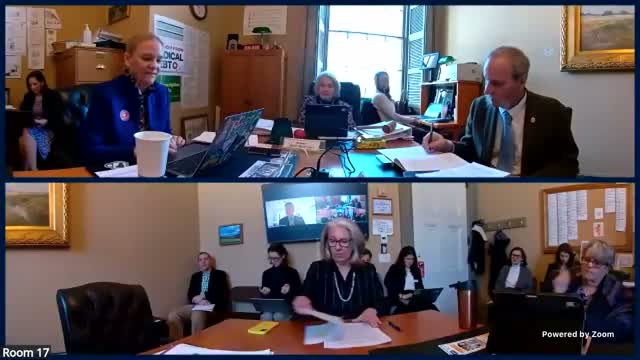
Montpelier — The Senate Health & Welfare Committee on Tuesday took up S.142, a bill sponsored by Sen. Wendy Harrison that would establish a two-step licensure pathway for internationally trained physicians and medical graduates to practice in Vermont.
Harrison, the bill's lead sponsor, told the committee the measure aims to increase primary-care capacity, especially in rural areas, by allowing qualified internationally trained physicians to receive a provisional, supervised license for two years and then a limited license for up to two additional years before applying for full, unrestricted licensure. The bill requires applicants to submit credential evaluations, show prior licensure in another country, and meet U.S. Medical Licensing Examination requirements (steps 1 and 2 for the provisional stage; step 3 for the limited license), Harrison said.
Why it matters: Witnesses said Vermont faces a growing shortage of primary-care providers and that a supervised, mentored pathway would add capacity while preserving patient-safety safeguards. Michael Zimmer of World Education Services told the committee Vermont is roughly 115 full-time equivalent primary-care providers below national benchmarks, with projections to widen to about 370 by 2030. Hospital leaders and federally qualified health centers (FQHCs) said the pathway could help recruit clinicians willing to work in rural communities.
What supporters said: Representatives from hospitals, FQHCs and advocacy groups testified in favor. Josh Dufresne of NorthStar Health, an FQHC serving southeastern Vermont, said a recent community health needs assessment found 67 percent of residents cited primary care as the most urgent need, and described how internationally trained clinicians currently work in underemployed roles at his centers. Devin Green of the Vermont Association of Hospitals and Health Systems and Jessa Barnard of the Vermont Medical Society both expressed support for the bill's framework and its supervisory safeguards.
Concerns and points of contention: Testimony highlighted two main implementation issues. First, a 3-of-5-years recency requirement in the draft language — which requires applicants to have performed physician duties for three of the previous five years — would disqualify many local ITPs, a Windham County NAACP representative said, reporting that only four of 16 interviewees met that standard. Witnesses proposed alternatives, including loosening the recency window (suggestions included one year in the past seven or a compromise of three of seven), but several stakeholders including the Vermont Medical Society said recent clinical practice helps demonstrate readiness and supported retaining the 3-of-5 standard.
Second, multiple witnesses and committee members urged clarity on who would carry the administrative burden. The bill gives rulemaking authority to the Board of Medical Practice, and some testified the board will need staff and funding to manage assessments, employer evaluations and the required reporting on program outcomes. The Vermont Medical Society and hospital representatives suggested exploring whether applicants, employers or another funding source should cover costs; the bill currently does not specify licensure fees tied to the pathway.
Quotes that capture the debate:
"Only 4 of the 16 that I interviewed meet the 3 out of the last 5 years stipulation," said a Windham County NAACP representative describing local ITP interviews, pressing the committee to consider whether the recency requirement would exclude many applicants.
"According to Vermont Public Health, there's a critical shortage of primary care providers already — 115 FTEs below national benchmarks projected to rise to 370 by 2030," Michael Zimmer of World Education Services told the panel.
"One of the top answers, 67 percent of residents cited primary care as the most urgent need in our area," said Josh Dufresne of NorthStar Health.
What happens next: Committee members agreed to invite the Board of Medical Practice to testify at an upcoming session to discuss acceptable countries of licensure, employer evaluation standards, implementation resources and potential licensure fees. Chair Lyon said the committee hopes to take S.142 up again before crossover, after hearing from the board and additional stakeholders.
No formal motion or vote on S.142 occurred during the session; the committee concluded by scheduling follow-up testimony and additional review of implementation language.
Harrison, the bill's lead sponsor, told the committee the measure aims to increase primary-care capacity, especially in rural areas, by allowing qualified internationally trained physicians to receive a provisional, supervised license for two years and then a limited license for up to two additional years before applying for full, unrestricted licensure. The bill requires applicants to submit credential evaluations, show prior licensure in another country, and meet U.S. Medical Licensing Examination requirements (steps 1 and 2 for the provisional stage; step 3 for the limited license), Harrison said.
Why it matters: Witnesses said Vermont faces a growing shortage of primary-care providers and that a supervised, mentored pathway would add capacity while preserving patient-safety safeguards. Michael Zimmer of World Education Services told the committee Vermont is roughly 115 full-time equivalent primary-care providers below national benchmarks, with projections to widen to about 370 by 2030. Hospital leaders and federally qualified health centers (FQHCs) said the pathway could help recruit clinicians willing to work in rural communities.
What supporters said: Representatives from hospitals, FQHCs and advocacy groups testified in favor. Josh Dufresne of NorthStar Health, an FQHC serving southeastern Vermont, said a recent community health needs assessment found 67 percent of residents cited primary care as the most urgent need, and described how internationally trained clinicians currently work in underemployed roles at his centers. Devin Green of the Vermont Association of Hospitals and Health Systems and Jessa Barnard of the Vermont Medical Society both expressed support for the bill's framework and its supervisory safeguards.
Concerns and points of contention: Testimony highlighted two main implementation issues. First, a 3-of-5-years recency requirement in the draft language — which requires applicants to have performed physician duties for three of the previous five years — would disqualify many local ITPs, a Windham County NAACP representative said, reporting that only four of 16 interviewees met that standard. Witnesses proposed alternatives, including loosening the recency window (suggestions included one year in the past seven or a compromise of three of seven), but several stakeholders including the Vermont Medical Society said recent clinical practice helps demonstrate readiness and supported retaining the 3-of-5 standard.
Second, multiple witnesses and committee members urged clarity on who would carry the administrative burden. The bill gives rulemaking authority to the Board of Medical Practice, and some testified the board will need staff and funding to manage assessments, employer evaluations and the required reporting on program outcomes. The Vermont Medical Society and hospital representatives suggested exploring whether applicants, employers or another funding source should cover costs; the bill currently does not specify licensure fees tied to the pathway.
Quotes that capture the debate:
"Only 4 of the 16 that I interviewed meet the 3 out of the last 5 years stipulation," said a Windham County NAACP representative describing local ITP interviews, pressing the committee to consider whether the recency requirement would exclude many applicants.
"According to Vermont Public Health, there's a critical shortage of primary care providers already — 115 FTEs below national benchmarks projected to rise to 370 by 2030," Michael Zimmer of World Education Services told the panel.
"One of the top answers, 67 percent of residents cited primary care as the most urgent need in our area," said Josh Dufresne of NorthStar Health.
What happens next: Committee members agreed to invite the Board of Medical Practice to testify at an upcoming session to discuss acceptable countries of licensure, employer evaluation standards, implementation resources and potential licensure fees. Chair Lyon said the committee hopes to take S.142 up again before crossover, after hearing from the board and additional stakeholders.
No formal motion or vote on S.142 occurred during the session; the committee concluded by scheduling follow-up testimony and additional review of implementation language.
Don't Miss a Word: See the Full Meeting!
Go beyond summaries. Unlock every video, transcript, and key insight with a Founder Membership.
✓
Get instant access to full meeting videos
✓
Search and clip any phrase from complete transcripts
✓
Receive AI-powered summaries & custom alerts
✓
Enjoy lifetime, unrestricted access to government data
30-day money-back guarantee
