Vermont farmers tell Senate ag panel VHCB funding keeps family farms and conserved land in production
February 14, 2026 | Agriculture, SENATE, Committees, Legislative , Vermont
This article was created by AI summarizing key points discussed. AI makes mistakes, so for full details and context, please refer to the video of the full meeting. Please report any errors so we can fix them. Report an error »
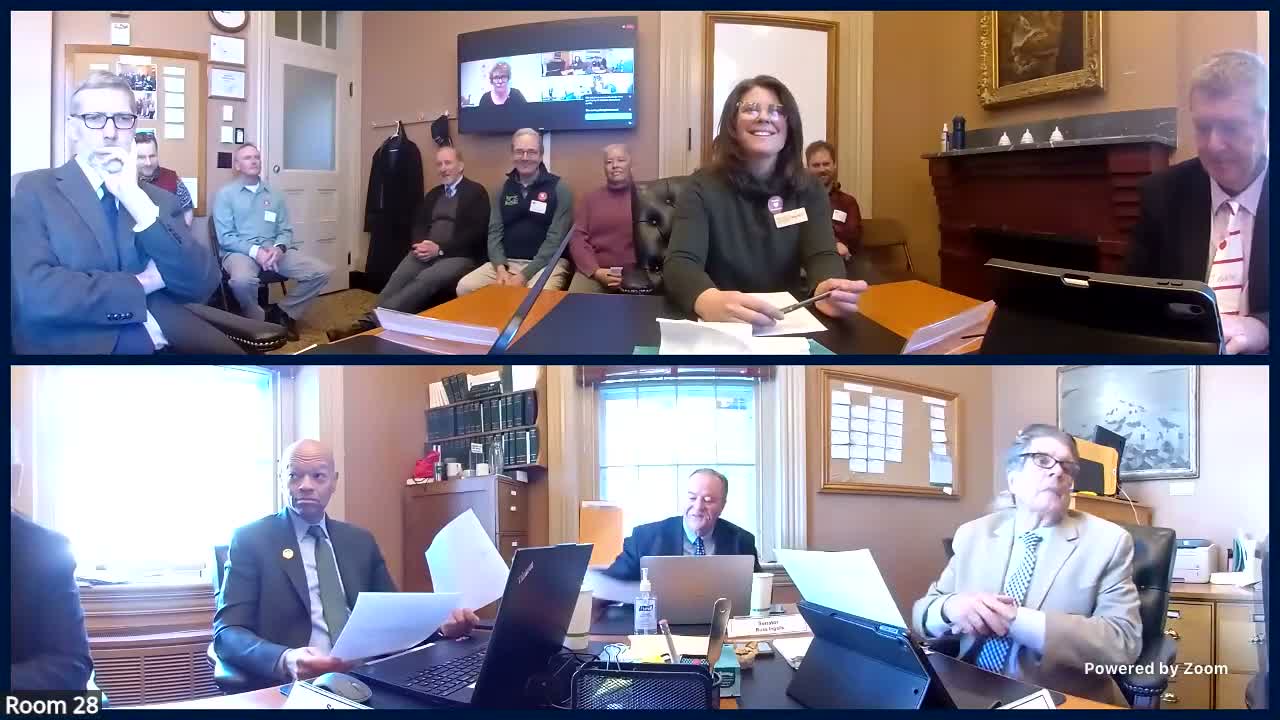
Vermont farmers, land‑trust leaders and housing advocates told the Senate Agriculture Committee on Friday that the governor’s proposed $37.6 million appropriation for the Vermont Housing & Conservation Board (VHCB) is critical to keeping working farms in production and preserving prime agricultural land.
Abby White, co‑chair of the Vermont Housing and Conservation Coalition and a Vermont Land Trust representative, opened the panel by asking the committee to back the governor’s fully funded VHCB request for fiscal 2027. “We advocate for robust investments in both housing and conservation,” White said, urging senators to “support that budget” and the board’s work that pairs housing and land preservation.
The committee then heard several first‑person accounts showing how VHCB‑supported projects translate into farms that remain viable and transferable. Scott McGuire, executive director of the South Hero Land Trust, described partnering with VHCB and the Vermont Land Trust on a recent 195‑acre conservation effort. He said VHCB seed funding enabled the trust to match local fundraising and federal Natural Resources Conservation Service dollars to complete the project and keep the land in farming.
“I could go on and on about why having small farms in our town is so important,” McGuire said, listing local economic, food‑security and stewardship benefits that conservation helps preserve.
Kathleen Swanson, a South Hero resident, recounted buying nearby parcels quickly in 2020 and working with a land trust and the Goulett family to reassemble a historic, multi‑parcel farm. Swanson told the committee that VHCB support made a competitive conservation proposal possible and allowed a third‑generation farmer to secure a contiguous, sustainable land base and pursue a transition plan.
Mark, who testified as a blueberry farmer representing A Kinder Way Berry Farm, described the financial strain of acquiring and operating a small farm but said public conservation and housing tools made long‑term ownership possible. After completing the conservation process and accessing program support, Mark said his monthly mortgage obligation fell “from $4,000 a month to $850 a month,” a change he credited with saving his farm and enabling him to plan for succession.
Sam Smith, farm business director at the Intervale Center, told the committee VHCB funding allows the Intervale to provide business planning, bookkeeping and marketing support to more than 130 farms a year. Smith asked the committee to “fund VHCB at its full statutory share of $37,600,000” in FY27, saying that stable state funding attracts federal and philanthropic leverage and underpins technical assistance that improves farm resilience.
Rosalie Williams, a longtime farmer, described conserving a 248‑acre family farm after a fire and financial hardship. She said the combination of land‑trust support and VHCB funding allowed her to keep the property in agriculture rather than selling to developers and to honor a promise to preserve the land.
Committee members asked for supplemental data on how often conservation projects enable generational transfers; Al Karnet of the Vermont Land Trust offered to compile numbers. The chair framed the testimony as part of a broader committee priority to protect prime agricultural land in Vermont while balancing competing demands for housing and renewable energy.
The committee did not take a vote on any appropriation during the hearing; senators said they would continue to review testimony and asked staff to include follow‑up data and context as they consider the budget.
Abby White, co‑chair of the Vermont Housing and Conservation Coalition and a Vermont Land Trust representative, opened the panel by asking the committee to back the governor’s fully funded VHCB request for fiscal 2027. “We advocate for robust investments in both housing and conservation,” White said, urging senators to “support that budget” and the board’s work that pairs housing and land preservation.
The committee then heard several first‑person accounts showing how VHCB‑supported projects translate into farms that remain viable and transferable. Scott McGuire, executive director of the South Hero Land Trust, described partnering with VHCB and the Vermont Land Trust on a recent 195‑acre conservation effort. He said VHCB seed funding enabled the trust to match local fundraising and federal Natural Resources Conservation Service dollars to complete the project and keep the land in farming.
“I could go on and on about why having small farms in our town is so important,” McGuire said, listing local economic, food‑security and stewardship benefits that conservation helps preserve.
Kathleen Swanson, a South Hero resident, recounted buying nearby parcels quickly in 2020 and working with a land trust and the Goulett family to reassemble a historic, multi‑parcel farm. Swanson told the committee that VHCB support made a competitive conservation proposal possible and allowed a third‑generation farmer to secure a contiguous, sustainable land base and pursue a transition plan.
Mark, who testified as a blueberry farmer representing A Kinder Way Berry Farm, described the financial strain of acquiring and operating a small farm but said public conservation and housing tools made long‑term ownership possible. After completing the conservation process and accessing program support, Mark said his monthly mortgage obligation fell “from $4,000 a month to $850 a month,” a change he credited with saving his farm and enabling him to plan for succession.
Sam Smith, farm business director at the Intervale Center, told the committee VHCB funding allows the Intervale to provide business planning, bookkeeping and marketing support to more than 130 farms a year. Smith asked the committee to “fund VHCB at its full statutory share of $37,600,000” in FY27, saying that stable state funding attracts federal and philanthropic leverage and underpins technical assistance that improves farm resilience.
Rosalie Williams, a longtime farmer, described conserving a 248‑acre family farm after a fire and financial hardship. She said the combination of land‑trust support and VHCB funding allowed her to keep the property in agriculture rather than selling to developers and to honor a promise to preserve the land.
Committee members asked for supplemental data on how often conservation projects enable generational transfers; Al Karnet of the Vermont Land Trust offered to compile numbers. The chair framed the testimony as part of a broader committee priority to protect prime agricultural land in Vermont while balancing competing demands for housing and renewable energy.
The committee did not take a vote on any appropriation during the hearing; senators said they would continue to review testimony and asked staff to include follow‑up data and context as they consider the budget.
View the Full Meeting & All Its Details
This article offers just a summary. Unlock complete video, transcripts, and insights as a Founder Member.
✓
Watch full, unedited meeting videos
✓
Search every word spoken in unlimited transcripts
✓
AI summaries & real-time alerts (all government levels)
✓
Permanent access to expanding government content
30-day money-back guarantee
