Senate Transportation walks through miscellaneous DMV bill, holds several sections for revision
February 14, 2026 | Senate Transportation, SENATE, Committees, Legislative , Vermont
This article was created by AI summarizing key points discussed. AI makes mistakes, so for full details and context, please refer to the video of the full meeting. Please report any errors so we can fix them. Report an error »
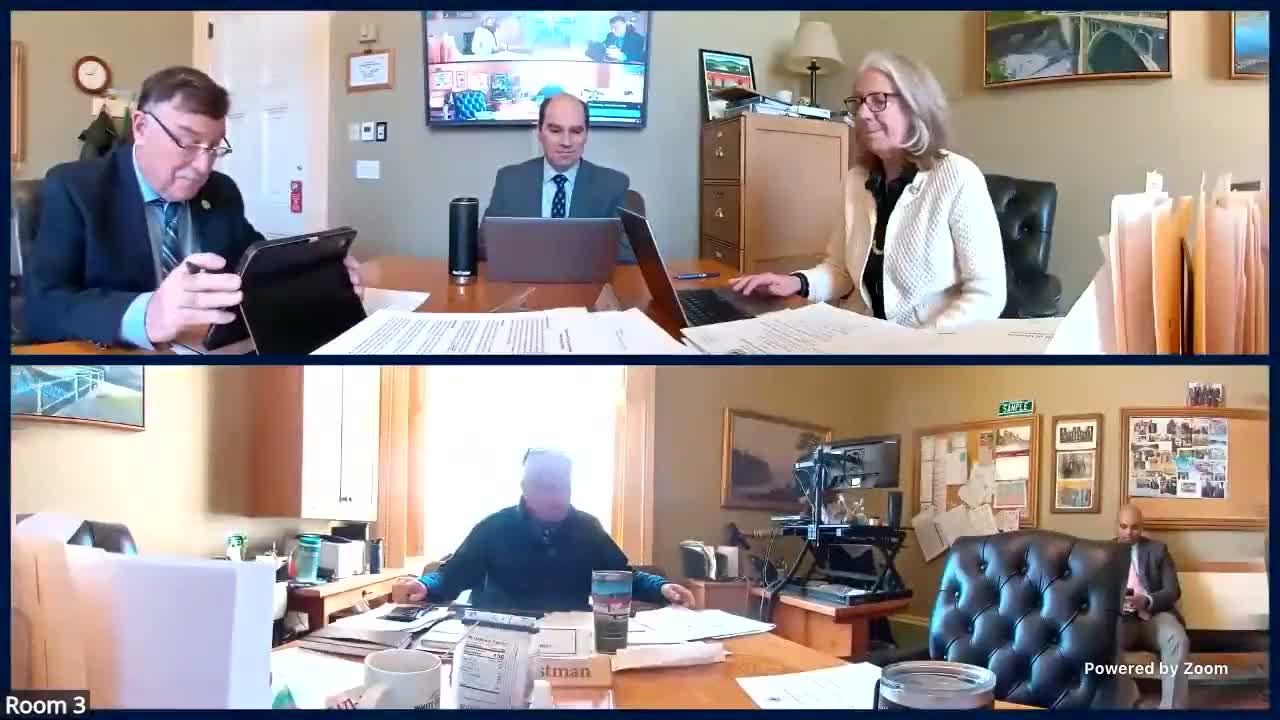
The Senate Transportation committee convened to walk through a draft miscellaneous Department of Motor Vehicles bill and agreed to hold or refine multiple sections after detailed discussion with legislative counsel and agency staff.
“For the record, I’m Damien Leonard from the Office of Legislative Council,” Leonard told the committee as he presented draft 1.1, a strike‑all amendment that recasts numerous DMV statutes and administrative procedures. The chair opened by saying the goal was to finish the walkthrough and, if possible, have the bill ready by next Friday to allow the committee to focus on other business.
Key provisions discussed included an administrative clarification allowing an individual to hold both a non‑driver ID and an operator’s license at the same time; an expanded ‘insufficient funds’ provision to cover electronic funds transfers and credit/debit transactions; tightened plate‑appearance language to prohibit coloring, tinting or covers that change the plate’s color or create glare; and a set of changes to salvage‑title processes to allow electronic signatures and remove notarization requirements.
On financial enforcement, members pressed DMV staff on process and timing. The draft gives the commissioner authority to suspend a license or registration when a required payment fails; senators asked that the statutory language reflect notice and cure periods rather than an "immediate" suspension. Committee members also asked DMV to provide data on returned payments and the frequency of bank re‑presentments; the $20 statutory return‑check fee was cited as potentially burdensome for some customers.
The committee debated a high‑profile penalty change for vehicles that get stuck in Smuggler’s Notch. The draft would raise monetary penalties for employers or operators (examples cited up to $10,000 and $20,000 in the text) and would assess five points against an operator’s license. Several senators expressed sympathy for drivers who follow employer routing instructions and worried that point assessments could unfairly jeopardize a driver’s livelihood. The committee agreed to retain elevated fines as a deterrent but remove or limit the points assessment pending consultation with the judiciary team.
Tax and title rules drew substantial comment. A new definition for “trailer coach” (tow‑behind campers or custom trailers with living quarters) would subject those trailers to the full purchase‑and‑use tax rather than to a capped tax that applies to ordinary trailers. Dealers and an Automotive Service Association representative said that change could substantially increase tax bills for costly RVs; senators asked staff to collect testimony and registration data and to work with stakeholders to draft clarifying language.
The committee also reviewed several safety and enforcement items. Leonard proposed requiring DMV to amend the vehicle‑inspection manual to focus on genuine safety issues and to eliminate outdated procedures; he recommended emergency rulemaking to speed interim changes with a placeholder deadline of 08/01/2026 but noted the bill should require adoption of permanent rules within a set timeframe. Members asked DMV for input on implementation and public‑comment plans, and flagged a related concern that overall enforcement (stops and ticketing) appears to have declined; they asked staff to convene DMV, judiciary and public‑safety representatives to discuss enforcement trends.
Other items discussed included: raising penalties for operating an unregistered snowmobile (first offense proposed to rise from $135 to $450 and a later offense to $500); motorboat registration validation‑sticker placement to meet federal spacing requirements (stickers within 6 inches of the registration number on specified sides of the vessel); proposed personal flotation device exceptions for hunters or bow‑fishers in very shallow water (committee members tentatively discussed a three‑foot depth threshold and asked counsel to draft explicit language); and new definitions and usage limits for mini trucks ("kei" vehicles), including a debated 55‑mph highway cap.
Several technical and federal‑law alignment issues were identified and sent back for drafting fixes. Leonard said the draft incorrectly referenced certain federal Code of Federal Regulations parts in a CDL exemption provision and committed to redrafting the cross‑reference to align the exemption for state emergency vehicle operators with the correct federal sections and the governor’s emergency declaration authority.
The committee did not take final votes on the draft. Members asked staff to produce a color‑coded tracking document showing which sections are closed and which remain open; parties involved in the trailer and payment discussions were asked to meet and return coordinated language. A public hearing on the bill was scheduled for May 24, and the committee said it expects revised language and additional testimony next week.
Next steps: staff and counsel will circulate revised text, DMV and stakeholders will meet to resolve tax and trailer definitions and to confirm operational impacts, and the committee will reconvene with a cleaner draft for further action.
The committee adjourned after setting deadlines and follow‑up meetings.
“For the record, I’m Damien Leonard from the Office of Legislative Council,” Leonard told the committee as he presented draft 1.1, a strike‑all amendment that recasts numerous DMV statutes and administrative procedures. The chair opened by saying the goal was to finish the walkthrough and, if possible, have the bill ready by next Friday to allow the committee to focus on other business.
Key provisions discussed included an administrative clarification allowing an individual to hold both a non‑driver ID and an operator’s license at the same time; an expanded ‘insufficient funds’ provision to cover electronic funds transfers and credit/debit transactions; tightened plate‑appearance language to prohibit coloring, tinting or covers that change the plate’s color or create glare; and a set of changes to salvage‑title processes to allow electronic signatures and remove notarization requirements.
On financial enforcement, members pressed DMV staff on process and timing. The draft gives the commissioner authority to suspend a license or registration when a required payment fails; senators asked that the statutory language reflect notice and cure periods rather than an "immediate" suspension. Committee members also asked DMV to provide data on returned payments and the frequency of bank re‑presentments; the $20 statutory return‑check fee was cited as potentially burdensome for some customers.
The committee debated a high‑profile penalty change for vehicles that get stuck in Smuggler’s Notch. The draft would raise monetary penalties for employers or operators (examples cited up to $10,000 and $20,000 in the text) and would assess five points against an operator’s license. Several senators expressed sympathy for drivers who follow employer routing instructions and worried that point assessments could unfairly jeopardize a driver’s livelihood. The committee agreed to retain elevated fines as a deterrent but remove or limit the points assessment pending consultation with the judiciary team.
Tax and title rules drew substantial comment. A new definition for “trailer coach” (tow‑behind campers or custom trailers with living quarters) would subject those trailers to the full purchase‑and‑use tax rather than to a capped tax that applies to ordinary trailers. Dealers and an Automotive Service Association representative said that change could substantially increase tax bills for costly RVs; senators asked staff to collect testimony and registration data and to work with stakeholders to draft clarifying language.
The committee also reviewed several safety and enforcement items. Leonard proposed requiring DMV to amend the vehicle‑inspection manual to focus on genuine safety issues and to eliminate outdated procedures; he recommended emergency rulemaking to speed interim changes with a placeholder deadline of 08/01/2026 but noted the bill should require adoption of permanent rules within a set timeframe. Members asked DMV for input on implementation and public‑comment plans, and flagged a related concern that overall enforcement (stops and ticketing) appears to have declined; they asked staff to convene DMV, judiciary and public‑safety representatives to discuss enforcement trends.
Other items discussed included: raising penalties for operating an unregistered snowmobile (first offense proposed to rise from $135 to $450 and a later offense to $500); motorboat registration validation‑sticker placement to meet federal spacing requirements (stickers within 6 inches of the registration number on specified sides of the vessel); proposed personal flotation device exceptions for hunters or bow‑fishers in very shallow water (committee members tentatively discussed a three‑foot depth threshold and asked counsel to draft explicit language); and new definitions and usage limits for mini trucks ("kei" vehicles), including a debated 55‑mph highway cap.
Several technical and federal‑law alignment issues were identified and sent back for drafting fixes. Leonard said the draft incorrectly referenced certain federal Code of Federal Regulations parts in a CDL exemption provision and committed to redrafting the cross‑reference to align the exemption for state emergency vehicle operators with the correct federal sections and the governor’s emergency declaration authority.
The committee did not take final votes on the draft. Members asked staff to produce a color‑coded tracking document showing which sections are closed and which remain open; parties involved in the trailer and payment discussions were asked to meet and return coordinated language. A public hearing on the bill was scheduled for May 24, and the committee said it expects revised language and additional testimony next week.
Next steps: staff and counsel will circulate revised text, DMV and stakeholders will meet to resolve tax and trailer definitions and to confirm operational impacts, and the committee will reconvene with a cleaner draft for further action.
The committee adjourned after setting deadlines and follow‑up meetings.
Don't Miss a Word: See the Full Meeting!
Go beyond summaries. Unlock every video, transcript, and key insight with a Founder Membership.
✓
Get instant access to full meeting videos
✓
Search and clip any phrase from complete transcripts
✓
Receive AI-powered summaries & custom alerts
✓
Enjoy lifetime, unrestricted access to government data
30-day money-back guarantee
