City staff urge archaeological survey before paving informal path by Bay Path Cemetery
February 13, 2026 | Springfield City, Hampden County, Massachusetts
This article was created by AI summarizing key points discussed. AI makes mistakes, so for full details and context, please refer to the video of the full meeting. Please report any errors so we can fix them. Report an error »
Springfield City officials said they will require a site survey and archaeological review before turning an informal dirt cut‑through next to Bay Path Cemetery in Blunt Park into a paved, ADA‑accessible walkway.
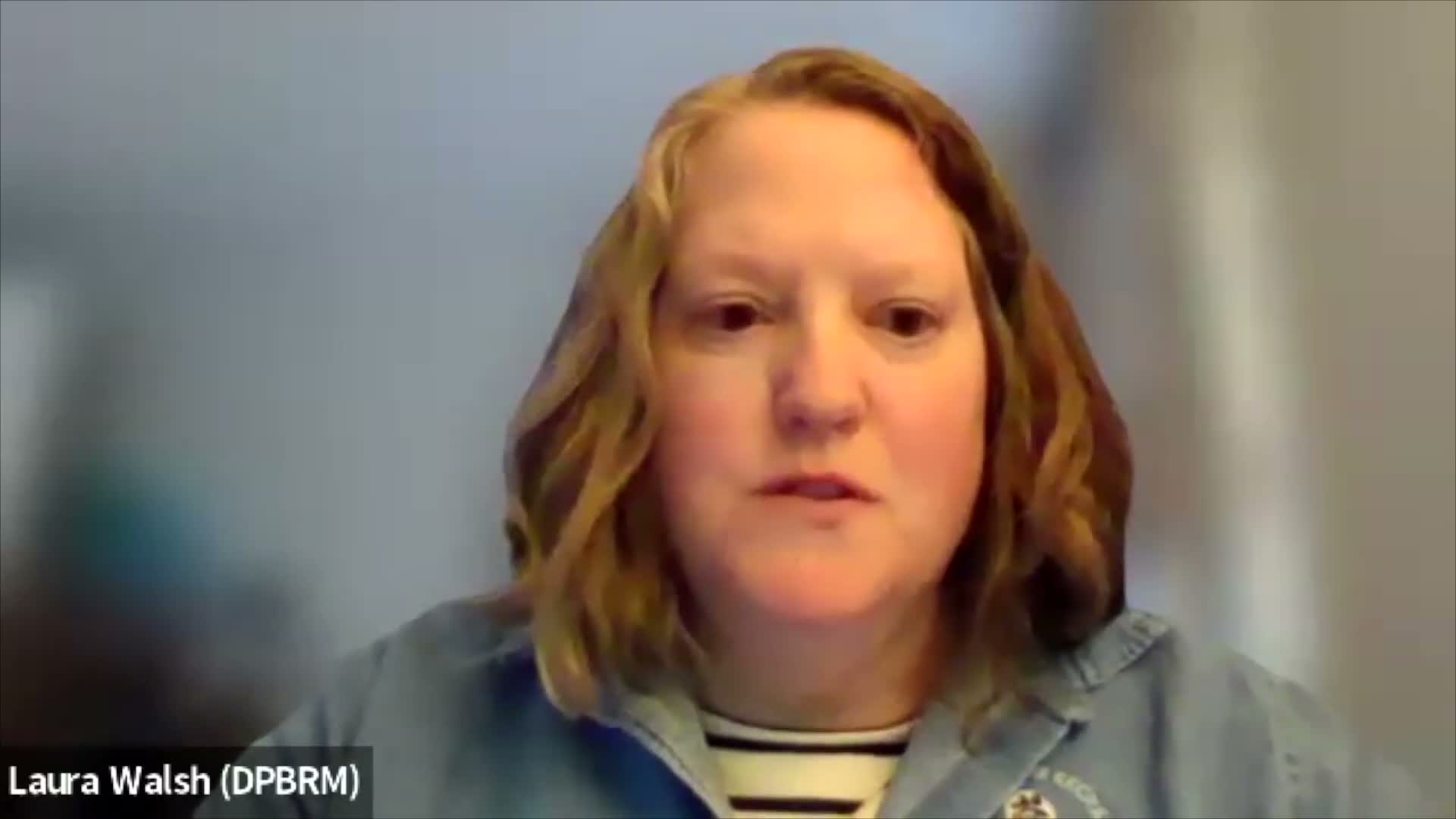
At a Feb. 12 maintenance meeting, Laura Walsh of the parks department described the path as a wooded 'boot' that residents use to connect the neighborhood to the park and to Roosevelt Avenue near the Ray Jordan Center. Walsh said staff found a granite slab in the walking line and cannot confirm whether the slab or other features are part of the cemetery.
"We would need to do some surveying and then an archaeological study…probably having to do some additional ground penetrating radar," Walsh said, adding that Bay Path Cemetery contains about 900 interments dating roughly from the 1870s to about 1951. She warned that if burials are found outside the fenced area, "that changes everything, and we wouldn't really be able to use it as a path."
Walsh also outlined construction constraints: converting a 4–5 foot dirt track to an ADA‑compliant paved path requires grading, drainage, and clearing roughly an additional 3–5 feet on either side of the trail center, which could disturb shallow‑rooted pine trees. She said stone‑dust surfacing would be less resilient in New England winters and that paving is the likelier long‑term surface.
When Councilor Hurst asked whether Community Preservation Act (CPA) funding could pay for the work, Walsh said she did not think the project would meet CPA criteria because CPA typically supports recreational amenities rather than access connections or maintenance; she recommended confirming eligibility with CPA staff.
Walsh gave a preliminary cost estimate: "we're thinking at least $150,000 to pave this area," and said the first formal steps are to identify funding sources, commission a survey, and follow it with an archaeological investigation that would include GPR. She told the council she would brief Director Ash and return with funding options and study timelines.
The meeting chair also put on record a Jan. 7 letter from the Bay Area Neighborhood Council outlining six requests: immediate snow and ice removal for the pass‑throughs, regular winter maintenance, a temporary lighting solution for short winter days, clarification on which city department is responsible for pathway upkeep, continued brush and overgrowth control, and a plan or timeline for safety improvements including paving or durable surfacing. The letter was signed by the neighborhood council president, Gwen Lynn Smith.
No formal vote or funding decision was taken at the meeting. Councilors and staff agreed to invite the Bay Area Neighborhood Council to a follow‑up meeting so neighbors can confirm which concerns remain and whether prior on‑site work has addressed them. Parks staff emphasized that, absent confirmation that the path is outside any burial area, they cannot proceed with excavation or paving.
The parks department also noted other, separately funded work at Blunt Park, including PRC‑funded renovations to courts and the playground and CPA‑funded improvements to Bay Path Cemetery such as fencing and signage. The parks presenter said she would share her presentation with council members and coordinate next steps with Director Ash.
At a Feb. 12 maintenance meeting, Laura Walsh of the parks department described the path as a wooded 'boot' that residents use to connect the neighborhood to the park and to Roosevelt Avenue near the Ray Jordan Center. Walsh said staff found a granite slab in the walking line and cannot confirm whether the slab or other features are part of the cemetery.
"We would need to do some surveying and then an archaeological study…probably having to do some additional ground penetrating radar," Walsh said, adding that Bay Path Cemetery contains about 900 interments dating roughly from the 1870s to about 1951. She warned that if burials are found outside the fenced area, "that changes everything, and we wouldn't really be able to use it as a path."
Walsh also outlined construction constraints: converting a 4–5 foot dirt track to an ADA‑compliant paved path requires grading, drainage, and clearing roughly an additional 3–5 feet on either side of the trail center, which could disturb shallow‑rooted pine trees. She said stone‑dust surfacing would be less resilient in New England winters and that paving is the likelier long‑term surface.
When Councilor Hurst asked whether Community Preservation Act (CPA) funding could pay for the work, Walsh said she did not think the project would meet CPA criteria because CPA typically supports recreational amenities rather than access connections or maintenance; she recommended confirming eligibility with CPA staff.
Walsh gave a preliminary cost estimate: "we're thinking at least $150,000 to pave this area," and said the first formal steps are to identify funding sources, commission a survey, and follow it with an archaeological investigation that would include GPR. She told the council she would brief Director Ash and return with funding options and study timelines.
The meeting chair also put on record a Jan. 7 letter from the Bay Area Neighborhood Council outlining six requests: immediate snow and ice removal for the pass‑throughs, regular winter maintenance, a temporary lighting solution for short winter days, clarification on which city department is responsible for pathway upkeep, continued brush and overgrowth control, and a plan or timeline for safety improvements including paving or durable surfacing. The letter was signed by the neighborhood council president, Gwen Lynn Smith.
No formal vote or funding decision was taken at the meeting. Councilors and staff agreed to invite the Bay Area Neighborhood Council to a follow‑up meeting so neighbors can confirm which concerns remain and whether prior on‑site work has addressed them. Parks staff emphasized that, absent confirmation that the path is outside any burial area, they cannot proceed with excavation or paving.
The parks department also noted other, separately funded work at Blunt Park, including PRC‑funded renovations to courts and the playground and CPA‑funded improvements to Bay Path Cemetery such as fencing and signage. The parks presenter said she would share her presentation with council members and coordinate next steps with Director Ash.
Don't Miss a Word: See the Full Meeting!
Go beyond summaries. Unlock every video, transcript, and key insight with a Founder Membership.
✓
Get instant access to full meeting videos
✓
Search and clip any phrase from complete transcripts
✓
Receive AI-powered summaries & custom alerts
✓
Enjoy lifetime, unrestricted access to government data
30-day money-back guarantee
