Costa Mesa officials say senior taxi program is unsustainable; outreach set for March
February 13, 2026 | Costa Mesa, Orange County, California
This article was created by AI summarizing key points discussed. AI makes mistakes, so for full details and context, please refer to the video of the full meeting. Please report any errors so we can fix them. Report an error »
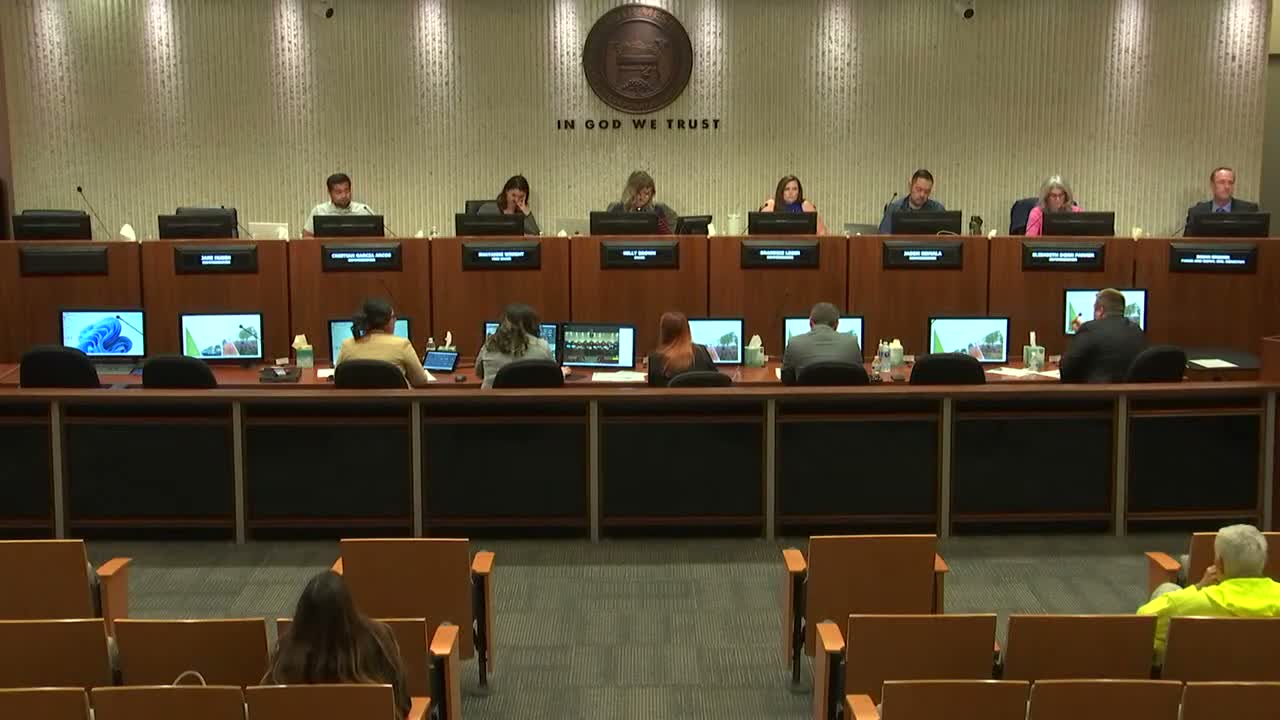
Costa Mesa officials told the Parks & Community Services Commission on Feb. 12 that the city's long-running senior transportation program is no longer financially sustainable and that the city will hold three member feedback sessions in March before returning policy proposals to the commission.
Kevin Stoddard, senior recreation supervisor, outlined the program's structure and funding. The city provides two services under the Senior Transportation Program (STP): an in‑city senior mobility service and non‑emergency medical trips to locations across northern Orange County. Today all rides are free for eligible users (Costa Mesa residents age 60 and older who are senior‑center members), and the current contractor — Orange County Yellow (previously California Yellow Cab) — operates under a professional services agreement that expires June 30, 2026.
Stoddard said the program logged about 24,290 rides last fiscal year and roughly 26,000 rides from Oct. 2024 to Sept. 2025. He also presented a concentration of use: "The top 20 percent — 97 people — took 19,881 rides," he said, and the city spent about $345,000 on those trips under current contract rates. Projected market rates would roughly double per‑ride costs, pushing total program costs toward $1 million in the next fiscal year while the city currently has about $200,000 in reliably available funding, leaving a deficit Stoddard characterized as "at least $800,000." "This program is not sustainable," he said.
Stoddard described funding sources and trade‑offs. Measure M2 (county transportation funds, marketed in some materials as OC Go) provides the program's primary stable funding; the city also has received declining community health grant funds from Hoag Hospital and a one‑time EMSD (Enhanced Mobility) grant that will not repeat next year. Under historic (2020) contract terms, city riders paid no fares; Stoddard said staff expect market contract rates to move from about $12.50 per ride (plus $2.50 per mile for out‑of‑city medical trips) to a projected $20–$21.50 per ride with higher per‑mile charges.
Staff reviewed models used elsewhere in Orange County — shuttles, city‑run volunteer programs, and hybrid taxi contracts — and emphasized that dispersed medical destinations make a shuttle model less efficient for many medical trips. "A taxi model is far more efficient, particularly for medical rides," Stoddard said, citing current medical trip costs under the taxi model of about $25 per trip.
Commissioners pressed operational and equity questions: how many unique riders use the service (about 500 unique riders overall, with 300 using only in‑city trips and 415 using medical trips in the cited year), whether trips should be limited by monthly allocations, whether destination restrictions should be used to reduce cost, and how to help seniors who cannot use smartphone apps. Commissioner Dorn Parker urged planning for seniors who do not use apps and proposed a centralized phone/dispatch option so users are not required to contact many providers to coordinate complex medical schedules. Stoddard said the contractor can enforce limits and that staff will examine trade‑offs between co‑pays, ride caps and location limits.
Several residents told the commission the taxi program is essential. Patrick Fogarty, a long‑time resident, said, "If it ain't broke, don't fix it," and callers described life‑saving medical access made possible by the service. A caller who identified herself only on Zoom said ongoing cancer treatment and a series of appointments would be at risk without the program.
Next steps: Stoddard said staff will send a mailed survey to the program's roughly 1,300 registered members, hold three member‑only feedback/Q&A sessions (March 4 at 9 a.m., March 5 at 10 a.m., March 10 at 1:30 p.m., all at the senior center) and return draft service models to the commission in March with the goal of recommending an approach to city council in April. The commission voted to receive and file the presentation and directed staff to hold the outreach sessions.
What’s next: Commissioners said they expect to weigh community feedback and fiscal constraints before making formal recommendations; Stoddard suggested a trial period of at least six months for any major change to test budget and rider impacts.
Kevin Stoddard, senior recreation supervisor, outlined the program's structure and funding. The city provides two services under the Senior Transportation Program (STP): an in‑city senior mobility service and non‑emergency medical trips to locations across northern Orange County. Today all rides are free for eligible users (Costa Mesa residents age 60 and older who are senior‑center members), and the current contractor — Orange County Yellow (previously California Yellow Cab) — operates under a professional services agreement that expires June 30, 2026.
Stoddard said the program logged about 24,290 rides last fiscal year and roughly 26,000 rides from Oct. 2024 to Sept. 2025. He also presented a concentration of use: "The top 20 percent — 97 people — took 19,881 rides," he said, and the city spent about $345,000 on those trips under current contract rates. Projected market rates would roughly double per‑ride costs, pushing total program costs toward $1 million in the next fiscal year while the city currently has about $200,000 in reliably available funding, leaving a deficit Stoddard characterized as "at least $800,000." "This program is not sustainable," he said.
Stoddard described funding sources and trade‑offs. Measure M2 (county transportation funds, marketed in some materials as OC Go) provides the program's primary stable funding; the city also has received declining community health grant funds from Hoag Hospital and a one‑time EMSD (Enhanced Mobility) grant that will not repeat next year. Under historic (2020) contract terms, city riders paid no fares; Stoddard said staff expect market contract rates to move from about $12.50 per ride (plus $2.50 per mile for out‑of‑city medical trips) to a projected $20–$21.50 per ride with higher per‑mile charges.
Staff reviewed models used elsewhere in Orange County — shuttles, city‑run volunteer programs, and hybrid taxi contracts — and emphasized that dispersed medical destinations make a shuttle model less efficient for many medical trips. "A taxi model is far more efficient, particularly for medical rides," Stoddard said, citing current medical trip costs under the taxi model of about $25 per trip.
Commissioners pressed operational and equity questions: how many unique riders use the service (about 500 unique riders overall, with 300 using only in‑city trips and 415 using medical trips in the cited year), whether trips should be limited by monthly allocations, whether destination restrictions should be used to reduce cost, and how to help seniors who cannot use smartphone apps. Commissioner Dorn Parker urged planning for seniors who do not use apps and proposed a centralized phone/dispatch option so users are not required to contact many providers to coordinate complex medical schedules. Stoddard said the contractor can enforce limits and that staff will examine trade‑offs between co‑pays, ride caps and location limits.
Several residents told the commission the taxi program is essential. Patrick Fogarty, a long‑time resident, said, "If it ain't broke, don't fix it," and callers described life‑saving medical access made possible by the service. A caller who identified herself only on Zoom said ongoing cancer treatment and a series of appointments would be at risk without the program.
Next steps: Stoddard said staff will send a mailed survey to the program's roughly 1,300 registered members, hold three member‑only feedback/Q&A sessions (March 4 at 9 a.m., March 5 at 10 a.m., March 10 at 1:30 p.m., all at the senior center) and return draft service models to the commission in March with the goal of recommending an approach to city council in April. The commission voted to receive and file the presentation and directed staff to hold the outreach sessions.
What’s next: Commissioners said they expect to weigh community feedback and fiscal constraints before making formal recommendations; Stoddard suggested a trial period of at least six months for any major change to test budget and rider impacts.
View the Full Meeting & All Its Details
This article offers just a summary. Unlock complete video, transcripts, and insights as a Founder Member.
✓
Watch full, unedited meeting videos
✓
Search every word spoken in unlimited transcripts
✓
AI summaries & real-time alerts (all government levels)
✓
Permanent access to expanding government content
30-day money-back guarantee
