Committee approves amendment clarifying veterinarian role in animal-seizure warrants
February 14, 2026 | Judiciary, HOUSE OF REPRESENTATIVES, Committees, Legislative , Vermont
This article was created by AI summarizing key points discussed. AI makes mistakes, so for full details and context, please refer to the video of the full meeting. Please report any errors so we can fix them. Report an error »
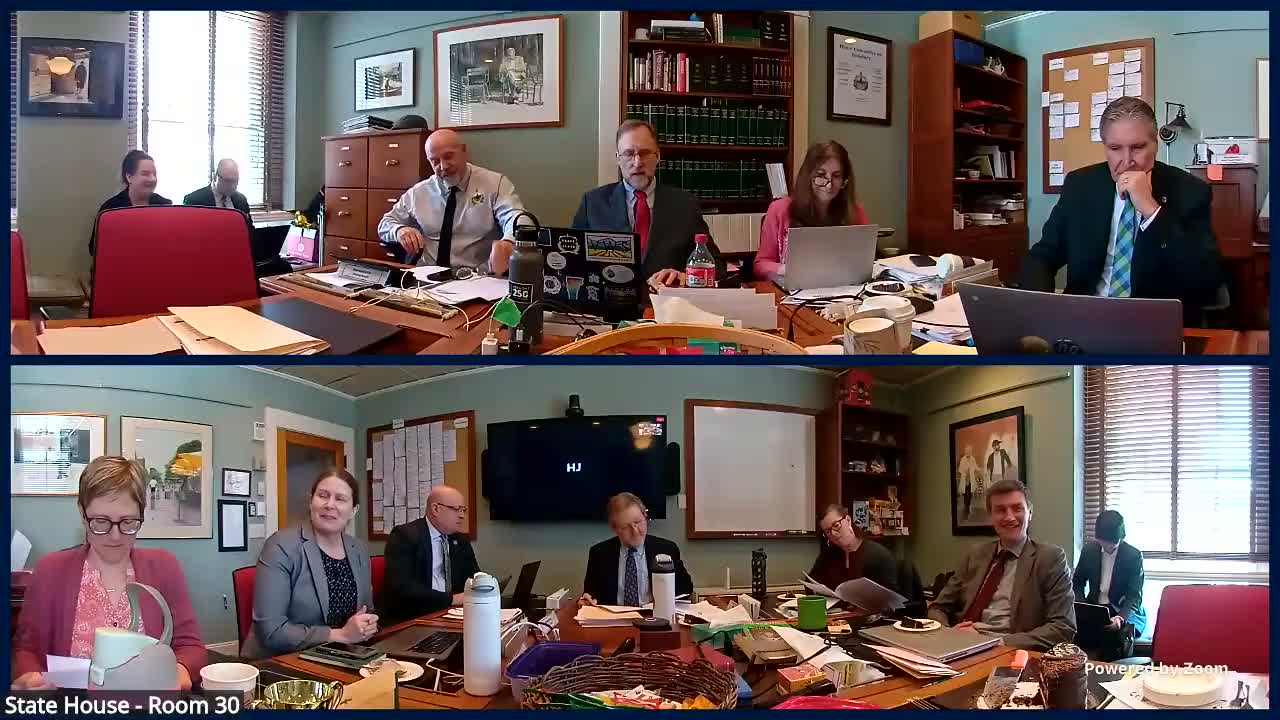
The House Judiciary Committee voted Feb. 13 to approve amendment 3.1 to H.578 and to report the bill favorably with that amendment, advancing the measure toward the floor and likely to Appropriations.
Eric Fitzpatrick, Legislative Counsel with the Office of Legislative Council, told the committee the key change — on page 15 — reverts language to require that a veterinarian accompany a humane officer 'shall if practicable' when executing a warrant to seize an animal alleged to be subjected to cruelty. Fitzpatrick said the revision also clarifies that the absence of a veterinarian does not automatically defeat an enforcement action.
That clarification, Fitzpatrick said, stitches together two earlier edits so the statute reads logically: 'If practicable, the veterinarian' will accompany the humane officer; if not, the enforcement action is not dismissed. The committee also approved a non-substantive editorial fix to list formatting on page 10.
Committee member Alicia raised concerns that the bill might be used to pursue 'frivolous claims' at the municipal level. Alicia asked, 'this can't be used for frivolous claims. Correct?' Fitzpatrick and the chair responded that criminal prosecutions related to animal cruelty would be brought by prosecutors exercising charging discretion and that the amendment does not create a new civil cause of action against municipalities.
A sponsor and other members framed the change as a practical clarification that preserves enforcement while encouraging veterinary involvement where possible. After discussion the committee moved to report the bill favorably with the amendment; the clerk called the roll and multiple members recorded 'yes' votes and one member (Harvey) was recorded absent. The motion passed and the committee signaled the bill will proceed to the floor, with committee staff monitoring whether it first goes to Appropriations.
The committee's action focuses on aligning statutory language with enforcement practice: it aims to encourage veterinarians to be present for animal seizures when feasible while preserving prosecutors' ability to proceed if a veterinarian is not available. The committee did not change the statutory standards for seizure or forfeiture.
The committee recessed and scheduled remaining business and further budget presentations for later sessions.
Eric Fitzpatrick, Legislative Counsel with the Office of Legislative Council, told the committee the key change — on page 15 — reverts language to require that a veterinarian accompany a humane officer 'shall if practicable' when executing a warrant to seize an animal alleged to be subjected to cruelty. Fitzpatrick said the revision also clarifies that the absence of a veterinarian does not automatically defeat an enforcement action.
That clarification, Fitzpatrick said, stitches together two earlier edits so the statute reads logically: 'If practicable, the veterinarian' will accompany the humane officer; if not, the enforcement action is not dismissed. The committee also approved a non-substantive editorial fix to list formatting on page 10.
Committee member Alicia raised concerns that the bill might be used to pursue 'frivolous claims' at the municipal level. Alicia asked, 'this can't be used for frivolous claims. Correct?' Fitzpatrick and the chair responded that criminal prosecutions related to animal cruelty would be brought by prosecutors exercising charging discretion and that the amendment does not create a new civil cause of action against municipalities.
A sponsor and other members framed the change as a practical clarification that preserves enforcement while encouraging veterinary involvement where possible. After discussion the committee moved to report the bill favorably with the amendment; the clerk called the roll and multiple members recorded 'yes' votes and one member (Harvey) was recorded absent. The motion passed and the committee signaled the bill will proceed to the floor, with committee staff monitoring whether it first goes to Appropriations.
The committee's action focuses on aligning statutory language with enforcement practice: it aims to encourage veterinarians to be present for animal seizures when feasible while preserving prosecutors' ability to proceed if a veterinarian is not available. The committee did not change the statutory standards for seizure or forfeiture.
The committee recessed and scheduled remaining business and further budget presentations for later sessions.
Don't Miss a Word: See the Full Meeting!
Go beyond summaries. Unlock every video, transcript, and key insight with a Founder Membership.
✓
Get instant access to full meeting videos
✓
Search and clip any phrase from complete transcripts
✓
Receive AI-powered summaries & custom alerts
✓
Enjoy lifetime, unrestricted access to government data
30-day money-back guarantee
