Witnesses tell Judiciary Committee Vermont pretrial supervision pilot enrolled very few people despite $1.5M committed
February 14, 2026 | Judiciary, HOUSE OF REPRESENTATIVES, Committees, Legislative , Vermont
This article was created by AI summarizing key points discussed. AI makes mistakes, so for full details and context, please refer to the video of the full meeting. Please report any errors so we can fix them. Report an error »
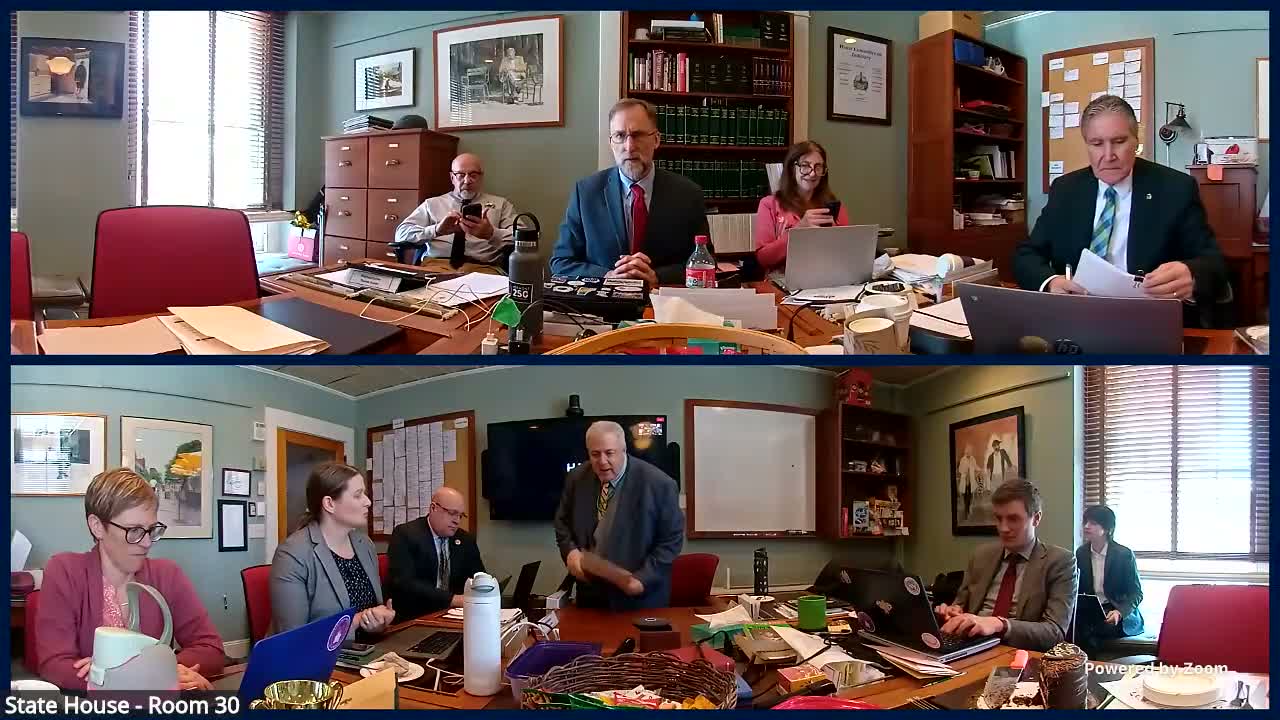
An invited witness told the House Judiciary Committee on Feb. 13 that Vermont's pretrial supervision pilot enrolled only a handful of people despite roughly $1,500,000 in carry-forward or committed funding, prompting lawmakers to question how to make the program more useful and scalable.
The witness, identified in the transcript as Unidentified Speaker 5, said the pilot’s design did not fit Vermont’s system and reported that 'there's been committed about $1,500,000, and we've dealt with, you know, 8 people' during the program's run. The witness said the program as originally conceived was unlikely to succeed statewide because of constitutional bail constraints, limited local treatment resources, and that many pretrial defendants decline programs for due-process reasons.
The committee heard the witness contrast the statewide pilot with a locally run '3B docket' in Burlington/Chittenden County that placed social workers, AHS screeners and Department of Corrections staff in courthouses to connect people with housing, transportation and treatment. The witness said the on-site arrangement 'did a great job' clearing dockets and quickly connecting eligible people to services, but cautioned that the approach depended on grant funding and local resources.
Committee members pressed for implementation details and numbers. The witness estimated that, even if eligibility were broadened, the statewide population that might be appropriate for pretrial supervision would likely be under 100 people (estimates during discussion ranged roughly from 50 to under 100). The witness described a possible staffing plan in which DOC would add one pretrial-supervision staff member per DOC district (roughly seven positions) to serve as courthouse liaisons and to perform supervisory duties for the small caseloads expected.
Members and the witness debated cost-benefit tradeoffs: the witness argued that focused courthouse-based services reduce caseloads and resolve many 'minor' cases that have accumulated during pandemic-era backlogs, while some members questioned whether the money might be better spent on other docket-clearing or wraparound-service approaches.
The committee did not take a formal vote on legislation tied to pretrial supervision at this hearing but directed further conversation with DOC and budget staff about staffing allocations, pilot design and how to replicate the on-site screening model in other counties.
The committee adjourned until 1:00 p.m., when it planned to hear the Department of State (Securities and Sheriffs) budget presentation.
The witness, identified in the transcript as Unidentified Speaker 5, said the pilot’s design did not fit Vermont’s system and reported that 'there's been committed about $1,500,000, and we've dealt with, you know, 8 people' during the program's run. The witness said the program as originally conceived was unlikely to succeed statewide because of constitutional bail constraints, limited local treatment resources, and that many pretrial defendants decline programs for due-process reasons.
The committee heard the witness contrast the statewide pilot with a locally run '3B docket' in Burlington/Chittenden County that placed social workers, AHS screeners and Department of Corrections staff in courthouses to connect people with housing, transportation and treatment. The witness said the on-site arrangement 'did a great job' clearing dockets and quickly connecting eligible people to services, but cautioned that the approach depended on grant funding and local resources.
Committee members pressed for implementation details and numbers. The witness estimated that, even if eligibility were broadened, the statewide population that might be appropriate for pretrial supervision would likely be under 100 people (estimates during discussion ranged roughly from 50 to under 100). The witness described a possible staffing plan in which DOC would add one pretrial-supervision staff member per DOC district (roughly seven positions) to serve as courthouse liaisons and to perform supervisory duties for the small caseloads expected.
Members and the witness debated cost-benefit tradeoffs: the witness argued that focused courthouse-based services reduce caseloads and resolve many 'minor' cases that have accumulated during pandemic-era backlogs, while some members questioned whether the money might be better spent on other docket-clearing or wraparound-service approaches.
The committee did not take a formal vote on legislation tied to pretrial supervision at this hearing but directed further conversation with DOC and budget staff about staffing allocations, pilot design and how to replicate the on-site screening model in other counties.
The committee adjourned until 1:00 p.m., when it planned to hear the Department of State (Securities and Sheriffs) budget presentation.
Don't Miss a Word: See the Full Meeting!
Go beyond summaries. Unlock every video, transcript, and key insight with a Founder Membership.
✓
Get instant access to full meeting videos
✓
Search and clip any phrase from complete transcripts
✓
Receive AI-powered summaries & custom alerts
✓
Enjoy lifetime, unrestricted access to government data
30-day money-back guarantee
