Findlay commission approves contractor-shop conditional use for Simple Basics LLC with lighting, screening and hours conditions
February 13, 2026 | Findlay City, Hancock County , Ohio
This article was created by AI summarizing key points discussed. AI makes mistakes, so for full details and context, please refer to the video of the full meeting. Please report any errors so we can fix them. Report an error »
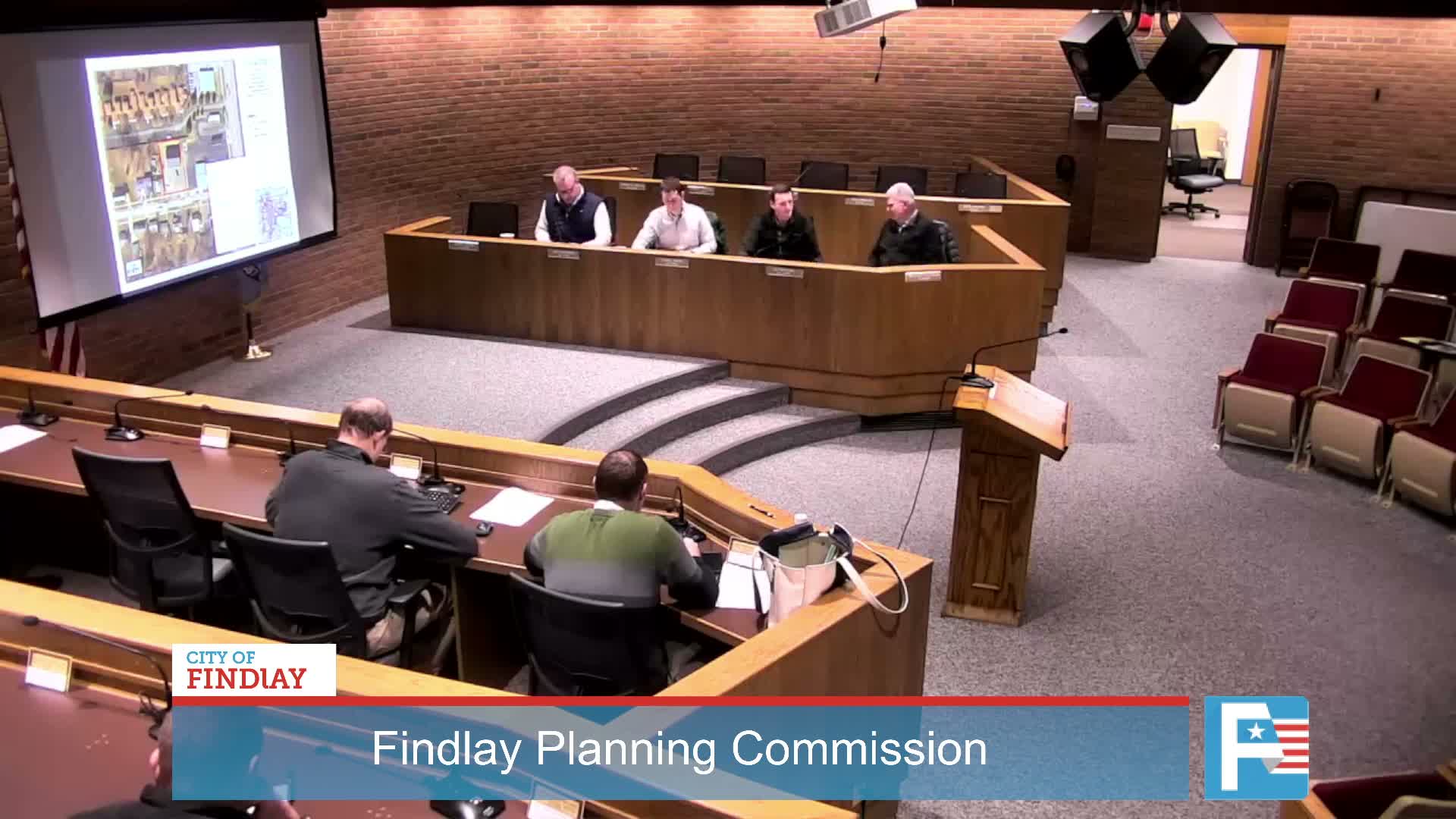
The Findlay City Planning Commission recommended approval Thursday of a conditional-use permit that will allow Simple Basics LLC to operate a contractor shop at 126 Lotz Avenue, contingent on a package of conditions aimed at limiting light glare, screening vehicle parking and restricting routine operating hours.
The action, taken at the Feb. 12 meeting, follows staff findings that the property — in the C-2 General Commercial district and approved as an accessory building in October 2023 — was sold and is now being used by Simple Basics as a contractor shop with outdoor vehicle parking. City staff told the commission the change of use requires conditional-use approval in the C-2 zone.
Why it matters: Neighbors complained that bright LED building lights and truck headlights shine into adjacent houses at night, and that nighttime activity has disturbed residents. The commission attached conditions meant to limit light trespass, improve screening and require inspections and protections for any fuel tanks on site.
Sean Hoover, owner of Simple Basics LLC, told the commission he "didn't even know it was a problem" until staff raised it and said he would move trucks so headlights do not point at the neighbor, "turn them around the other way," arrange a fire inspection and relocate fuel tanks. He also said he has purchased a larger site and expects to move most operations there in March.
Neighbor Susan Shook, who lives directly across the street, described repeated late-night activity and photos showing an open garage at about 1:55 a.m. She cited Findlay City zoning code provisions intended to protect residential areas and asked the commission to require adequate screening on the south side so that residents are not looking at parked trucks from their living-room windows.
Commissioners and staff discussed the absence of a photometric plan at the time the building was presented as an accessory structure and said LED technology has increased light output since the original approval. Staff and commissioners agreed to require a photometric lighting plan that meets code (1 foot-candle at the property line), to reduce and shield the number of fixtures on the building and to submit a plan for staff review.
On screening, the commission agreed to require a six-foot fence along the west side of the site that ties into the neighbor's existing fence and to add arborvitae and additional landscaping in the front planting bed to soften the streetscape and screen the south-facing view. Commissioners discussed fence material (vinyl for durability versus wood to match neighborhood character) and settled on a six-foot height to avoid blocking the adjacent home's windows.
Other conditions included a fire inspection and vehicle protection measures for any fuel tanks remaining on site, and an hours-of-operation limit for routine activity generally set at 6 a.m. to 8 p.m.; commissioners discussed a narrow exception for snow-removal operations during storms. Staff noted that conditional-use approvals run with the property and that new tenants would need to obtain a change-of-use permit and follow any outstanding conditions; the commission can revoke the permit for continued noncompliance.
The commission recorded a voice vote in which Mr. Martin, Mr. JohnBull, Mr. Embody and Mr. Klinger voted "aye," and the motion passed. The approval was accompanied by a requirement that staff and the applicant address the lighting immediately (short-term: turning lights off at night) and submit the photometric plan and landscaping proposals within the timelines set by staff for enforcement.
What's next: Staff will work with the applicant on a photometric plan and a final landscaping/screening plan; the applicant must obtain a change-of-use permit and the conditional-use permit from zoning and complete required items within the timelines specified by staff, or face potential reinspection and administrative enforcement. The commission adjourned after delivering the recommendation.
The action, taken at the Feb. 12 meeting, follows staff findings that the property — in the C-2 General Commercial district and approved as an accessory building in October 2023 — was sold and is now being used by Simple Basics as a contractor shop with outdoor vehicle parking. City staff told the commission the change of use requires conditional-use approval in the C-2 zone.
Why it matters: Neighbors complained that bright LED building lights and truck headlights shine into adjacent houses at night, and that nighttime activity has disturbed residents. The commission attached conditions meant to limit light trespass, improve screening and require inspections and protections for any fuel tanks on site.
Sean Hoover, owner of Simple Basics LLC, told the commission he "didn't even know it was a problem" until staff raised it and said he would move trucks so headlights do not point at the neighbor, "turn them around the other way," arrange a fire inspection and relocate fuel tanks. He also said he has purchased a larger site and expects to move most operations there in March.
Neighbor Susan Shook, who lives directly across the street, described repeated late-night activity and photos showing an open garage at about 1:55 a.m. She cited Findlay City zoning code provisions intended to protect residential areas and asked the commission to require adequate screening on the south side so that residents are not looking at parked trucks from their living-room windows.
Commissioners and staff discussed the absence of a photometric plan at the time the building was presented as an accessory structure and said LED technology has increased light output since the original approval. Staff and commissioners agreed to require a photometric lighting plan that meets code (1 foot-candle at the property line), to reduce and shield the number of fixtures on the building and to submit a plan for staff review.
On screening, the commission agreed to require a six-foot fence along the west side of the site that ties into the neighbor's existing fence and to add arborvitae and additional landscaping in the front planting bed to soften the streetscape and screen the south-facing view. Commissioners discussed fence material (vinyl for durability versus wood to match neighborhood character) and settled on a six-foot height to avoid blocking the adjacent home's windows.
Other conditions included a fire inspection and vehicle protection measures for any fuel tanks remaining on site, and an hours-of-operation limit for routine activity generally set at 6 a.m. to 8 p.m.; commissioners discussed a narrow exception for snow-removal operations during storms. Staff noted that conditional-use approvals run with the property and that new tenants would need to obtain a change-of-use permit and follow any outstanding conditions; the commission can revoke the permit for continued noncompliance.
The commission recorded a voice vote in which Mr. Martin, Mr. JohnBull, Mr. Embody and Mr. Klinger voted "aye," and the motion passed. The approval was accompanied by a requirement that staff and the applicant address the lighting immediately (short-term: turning lights off at night) and submit the photometric plan and landscaping proposals within the timelines set by staff for enforcement.
What's next: Staff will work with the applicant on a photometric plan and a final landscaping/screening plan; the applicant must obtain a change-of-use permit and the conditional-use permit from zoning and complete required items within the timelines specified by staff, or face potential reinspection and administrative enforcement. The commission adjourned after delivering the recommendation.
View the Full Meeting & All Its Details
This article offers just a summary. Unlock complete video, transcripts, and insights as a Founder Member.
✓
Watch full, unedited meeting videos
✓
Search every word spoken in unlimited transcripts
✓
AI summaries & real-time alerts (all government levels)
✓
Permanent access to expanding government content
30-day money-back guarantee
