Appeals Court Considers When an Insured Is 'Totally Disabled' and Which State Law Applies
February 12, 2026 | Judicial - Appeals Court Oral Arguments, Judicial, Massachusetts
This article was created by AI summarizing key points discussed. AI makes mistakes, so for full details and context, please refer to the video of the full meeting. Please report any errors so we can fix them. Report an error »
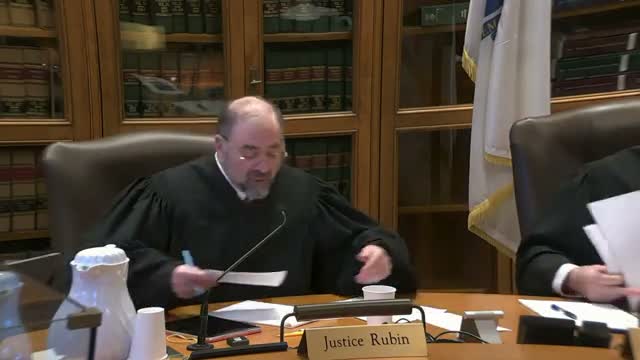
May it please the court. Rita Gontumis, arguing for appellant Dr. Richard Constantino, told the Appeals Court that the trial court improperly resolved a factual dispute on summary judgment by treating the insured’s occupation (hospitalist versus broader physician practice) and his proof‑of‑loss as legal questions for the judge rather than factual issues for a jury.
Gontumis said the policy requires an inquiry into the insured’s "important duties" at the time of disability and that the record includes attending‑physician statements and claimant letters indicating the insured could not perform his hospital duties. “Whether the important duties of his occupation comprised his hospital practice or something broader is a factual inquiry,” she said, urging reversal of summary judgment.
Paul Revere’s counsel, Chris Collins, countered that clinic records and CPT billing codes show the doctor continued substantial office work — roughly 60–65 percent of his billed activity — and argued those undisputed facts justified summary disposition. Collins also pressed that the policy is a monthly indemnity policy requiring continuing, periodic proof of loss, and defended the superior court’s interpretation of the contractual "period" and proof‑of‑loss deadlines.
The panel questioned whether the insurer’s handling of a presumptive disability payment and subsequent correspondence changed the governing legal framework and whether Chapter 93A or New York law controlled claims by a New York resident insured of a Massachusetts‑based company. Counsel also debated whether the insured submitted written proof of total disability before 2017; Gontumis pointed to a 2015 claimant letter and attending‑physician statements as evidence.
The court heard argument on both sides and submitted the case for decision.
Gontumis said the policy requires an inquiry into the insured’s "important duties" at the time of disability and that the record includes attending‑physician statements and claimant letters indicating the insured could not perform his hospital duties. “Whether the important duties of his occupation comprised his hospital practice or something broader is a factual inquiry,” she said, urging reversal of summary judgment.
Paul Revere’s counsel, Chris Collins, countered that clinic records and CPT billing codes show the doctor continued substantial office work — roughly 60–65 percent of his billed activity — and argued those undisputed facts justified summary disposition. Collins also pressed that the policy is a monthly indemnity policy requiring continuing, periodic proof of loss, and defended the superior court’s interpretation of the contractual "period" and proof‑of‑loss deadlines.
The panel questioned whether the insurer’s handling of a presumptive disability payment and subsequent correspondence changed the governing legal framework and whether Chapter 93A or New York law controlled claims by a New York resident insured of a Massachusetts‑based company. Counsel also debated whether the insured submitted written proof of total disability before 2017; Gontumis pointed to a 2015 claimant letter and attending‑physician statements as evidence.
The court heard argument on both sides and submitted the case for decision.
View the Full Meeting & All Its Details
This article offers just a summary. Unlock complete video, transcripts, and insights as a Founder Member.
✓
Watch full, unedited meeting videos
✓
Search every word spoken in unlimited transcripts
✓
AI summaries & real-time alerts (all government levels)
✓
Permanent access to expanding government content
30-day money-back guarantee
