Nonprofits Tell Senate Panel VHCB Funding Spurs Housing, Historic‑preservation and Local Economy
February 13, 2026 | Economic Development, Housing & General Affairs, SENATE, Committees, Legislative , Vermont
This article was created by AI summarizing key points discussed. AI makes mistakes, so for full details and context, please refer to the video of the full meeting. Please report any errors so we can fix them. Report an error »
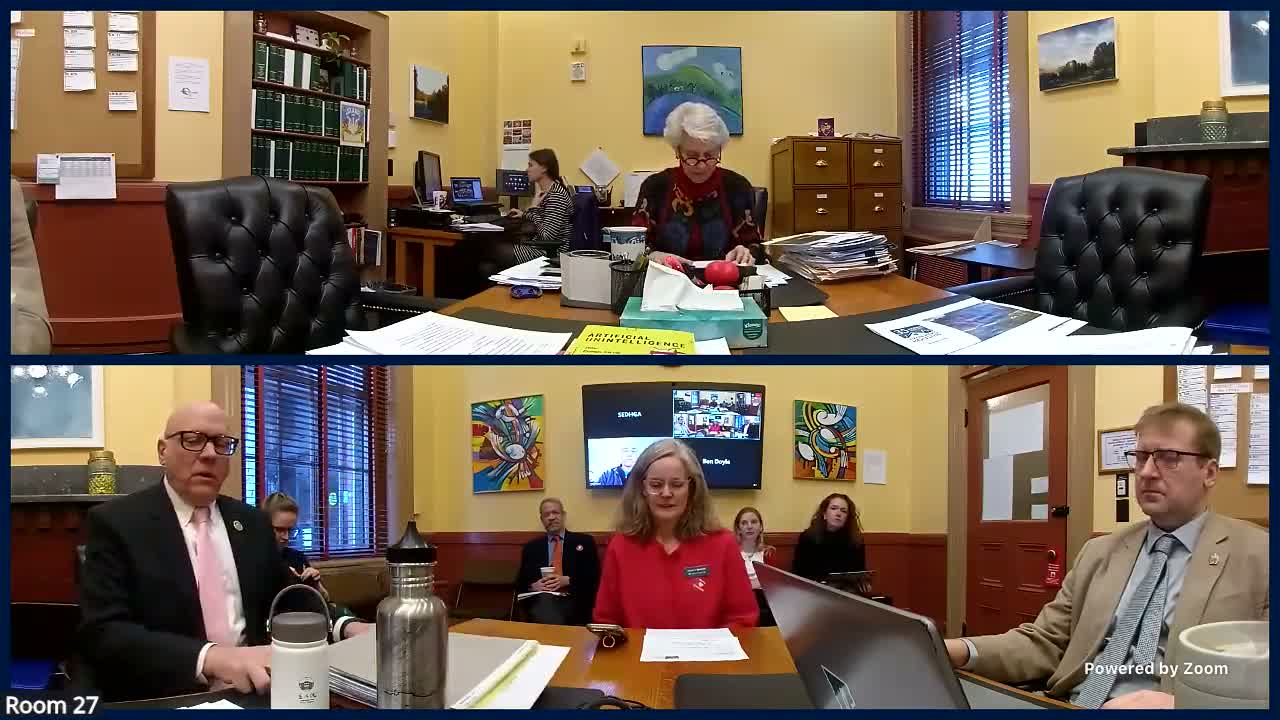
Nonprofit leaders testifying at the Senate Economic Development, Housing & General Affairs hearing said investments by the Vermont Housing & Conservation Board (VHCB) have unlocked community projects that combine affordable housing, historic preservation and conservation.
"For the record, my name is Molly Dugan. I work at Cathedral Square," Molly Dugan told the committee, opening the panel of witnesses and asking lawmakers to support the governor's budget recommendation for VHCB funding. David Newell, president of the Prospect Mountain Association, described a 2018 VHCB grant that helped his nonprofit buy and operate the Prospect Mountain Nordic Trail Center in Woodford and said VHCB support has produced recurring economic benefits for Southern Vermont, including overnight stays and regional events. "That would not have been possible without the great initial grant we got from the VHCB," Newell said.
Ben Doyle, president of the Preservation Trust of Vermont, described multiple downtown general‑store restoration projects that combined preservation easements with affordable housing. He said one renovated store now contains three perpetual affordable units and cited project budgets and cleanup grants VHCB helped assemble. "When VHCB makes a grant for a historic preservation project, that is accompanied by a preservation easement," Doyle said, noting his organization monitors easements and provides technical support.
Andrew Winters (as identified in testimony) described Twin Pines' recent projects, including an 18‑unit Riverwalk development intended for chronically homeless households and a Wentworth Street redevelopment. Winters said Riverwalk cost about $394,000 per unit and that the project relied on a mix of philanthropic, federal and VHCB funding. Winters also acknowledged operational challenges: his organization has filed evictions in a small number of recent placements and said stronger landlord‑tenant tools and resident supports are important for long‑term success. "We are in the process of evicting" specific problematic placements, he said while describing steps to address criminal activity and service coordination on site.
Witnesses emphasized VHCB's leveraging role: small VHCB grants or feasibility awards often helped communities secure larger federal funds, philanthropic investments and private capital. Several presenters urged the committee to "endorse the governor's" funding proposal for VHCB, framing the board's combined mission—housing, land conservation and historic preservation—as essential to rural community viability.
The committee did not take a formal vote during the hearing. Members asked witnesses to provide written testimony and follow‑up details on project budgets, designs and outcomes. The chair closed the session and directed members to continue the discussion at a joint hearing in Room 10.
The committee heard multiple requests for more precise materials: members asked presenters to submit written testimony and slide details (site maps, unit counts, and funding sources) for the record.
"For the record, my name is Molly Dugan. I work at Cathedral Square," Molly Dugan told the committee, opening the panel of witnesses and asking lawmakers to support the governor's budget recommendation for VHCB funding. David Newell, president of the Prospect Mountain Association, described a 2018 VHCB grant that helped his nonprofit buy and operate the Prospect Mountain Nordic Trail Center in Woodford and said VHCB support has produced recurring economic benefits for Southern Vermont, including overnight stays and regional events. "That would not have been possible without the great initial grant we got from the VHCB," Newell said.
Ben Doyle, president of the Preservation Trust of Vermont, described multiple downtown general‑store restoration projects that combined preservation easements with affordable housing. He said one renovated store now contains three perpetual affordable units and cited project budgets and cleanup grants VHCB helped assemble. "When VHCB makes a grant for a historic preservation project, that is accompanied by a preservation easement," Doyle said, noting his organization monitors easements and provides technical support.
Andrew Winters (as identified in testimony) described Twin Pines' recent projects, including an 18‑unit Riverwalk development intended for chronically homeless households and a Wentworth Street redevelopment. Winters said Riverwalk cost about $394,000 per unit and that the project relied on a mix of philanthropic, federal and VHCB funding. Winters also acknowledged operational challenges: his organization has filed evictions in a small number of recent placements and said stronger landlord‑tenant tools and resident supports are important for long‑term success. "We are in the process of evicting" specific problematic placements, he said while describing steps to address criminal activity and service coordination on site.
Witnesses emphasized VHCB's leveraging role: small VHCB grants or feasibility awards often helped communities secure larger federal funds, philanthropic investments and private capital. Several presenters urged the committee to "endorse the governor's" funding proposal for VHCB, framing the board's combined mission—housing, land conservation and historic preservation—as essential to rural community viability.
The committee did not take a formal vote during the hearing. Members asked witnesses to provide written testimony and follow‑up details on project budgets, designs and outcomes. The chair closed the session and directed members to continue the discussion at a joint hearing in Room 10.
The committee heard multiple requests for more precise materials: members asked presenters to submit written testimony and slide details (site maps, unit counts, and funding sources) for the record.
View the Full Meeting & All Its Details
This article offers just a summary. Unlock complete video, transcripts, and insights as a Founder Member.
✓
Watch full, unedited meeting videos
✓
Search every word spoken in unlimited transcripts
✓
AI summaries & real-time alerts (all government levels)
✓
Permanent access to expanding government content
30-day money-back guarantee
